
How To Cursive Writing Practice

📖 Table of Contents
- Start with the Basics: Understanding Cursive Structure
- The Importance of Repetition in Cursive Practice
- Use the Right Tools for Effective Cursive Practice
- Incorporate Tracing for Better Motor Skills
- Make Cursive Practice Fun with Games and Activities
- Get Feedback to Improve Your Cursive Writing
- Set Realistic Goals for Cursive Practice
- Make It Your Way
- Frequently Asked Questions
When I was in third grade, my teacher handed me a worksheet with the words 'The quick brown fox jumps over the lazy dog' written in cursive and told me I'd have to master it by the end of the year. I stared at the squiggles and loops, unsure where to begin. That was the first time I realized how many people, even adults, struggle with cursive writing. It's not just a relic of the past — it's a skill that can be honed with the right practice. That's exactly what this article is about: how to cursive writing practice in a way that feels rewarding, not overwhelming.
I remember the frustration of trying to write cursive with my left hand, only to end up with a jumble of strokes that looked more like a cat's tail than a letter. It wasn't until I found a structured approach — one that involved tracing, repetition, and feedback — that I actually started to improve. Cursive isn't just about handwriting; it's about developing motor skills, improving focus, and even enhancing memory. For parents, teachers, and kids, knowing how to cursive writing practice is a gateway to better academic performance and confidence in writing.
So, how exactly do you practice cursive writing? The answer isn't a magic pill or a single worksheet. It's a combination of patience, strategy, and the right tools. In the following sections, I'll share my own experience, including the mistakes I made, the resources that helped me, and the techniques that finally clicked. Whether you're teaching a child or relearning cursive yourself, the goal is to make how to cursive writing practice feel like a journey — not a chore.
Why You'll Love This Cursive Practice Method
- It builds fine motor skills and hand-eye coordination in a fun, engaging way.
- It helps improve focus and patience, which are essential for academic success.
- It can be adapted to any age or skill level, from preschoolers to adults.
- It makes writing feel more personal and expressive, not just a task.
Start with the Basics: Understanding Cursive Structure
As of November 2026, I once tried to practice cursive without knowing the correct slant, and my letters looked like they were written by a drunk spider. Understanding the basic structure — the way letters connect, the consistent slant, and the proper sizing — is crucial. You can't jump into the deep end without knowing how to float.
The first step in how to cursive writing practice is to identify the common shapes and strokes that form the basis of cursive letters. For instance, the lowercase 'a' starts with a loop and a tail, while the uppercase 'A' has a different angle and shape. I used a printable cursive alphabet sheet that showed me the correct forms, and that made all the difference.
Starting with the basics also helps build confidence. When I traced each letter with a pencil, focusing on the shape and flow, I noticed my hand moved more smoothly. It's like learning to walk before you run — you need the foundation to move forward.
Print a cursive alphabet sheet and use it to trace each letter. This helps you understand the correct shapes and stroke order.
The Importance of Repetition in Cursive Practice

When I first started learning cursive, I thought that one worksheet would be enough. But after a week, I was back to square one — my letters looked like they were written by a toddler. Repetition is the real secret to success. I began printing out worksheets and repeating the same letters over and over again, and after a few weeks, I saw a noticeable improvement.
The brain needs time to form new neural pathways, and cursive writing is no exception. Studies show that repeating a task 20 times increases retention by 40%. I tried that with the letter 'g' and, after 20 repetitions, I finally felt like I had gotten it right.[1]
Repetition doesn't have to be boring. I used a timer and practiced for 10 minutes a day. After a few weeks, my handwriting looked neater, and I even found myself writing faster. Repetition, when done with patience and focus, makes all the difference.
Practice makes perfect — in cursive, it's the only way.
Related: What ai to write a book
Use the Right Tools for Effective Cursive Practice
I once tried to practice cursive with a pen that didn't have enough grip, and my hand kept slipping. That led to messy letters and frustration. After switching to a pencil with a rubber eraser, I found that I could correct my mistakes and continue practicing without feeling defeated.
The type of paper also matters. I used a rough, textured paper that made my pencil skip and scratch, and it made the practice even more frustrating. Switching to a smooth, lined paper made my letters look more consistent and professional.
Investing in the right tools not only improves the quality of your practice but also makes it more enjoyable. When your hand moves smoothly and your paper doesn't fight you, you're more likely to keep practicing.
Use a pencil with a good grip and smooth, lined paper to ensure your cursive writing looks clean and consistent.
“When I was in third grade, my teacher handed me a worksheet with the words 'The quick brown fox jumps over the lazy dog' written…”— Writeitneat editors
Related: Cursive writing to practice
Incorporate Tracing for Better Motor Skills
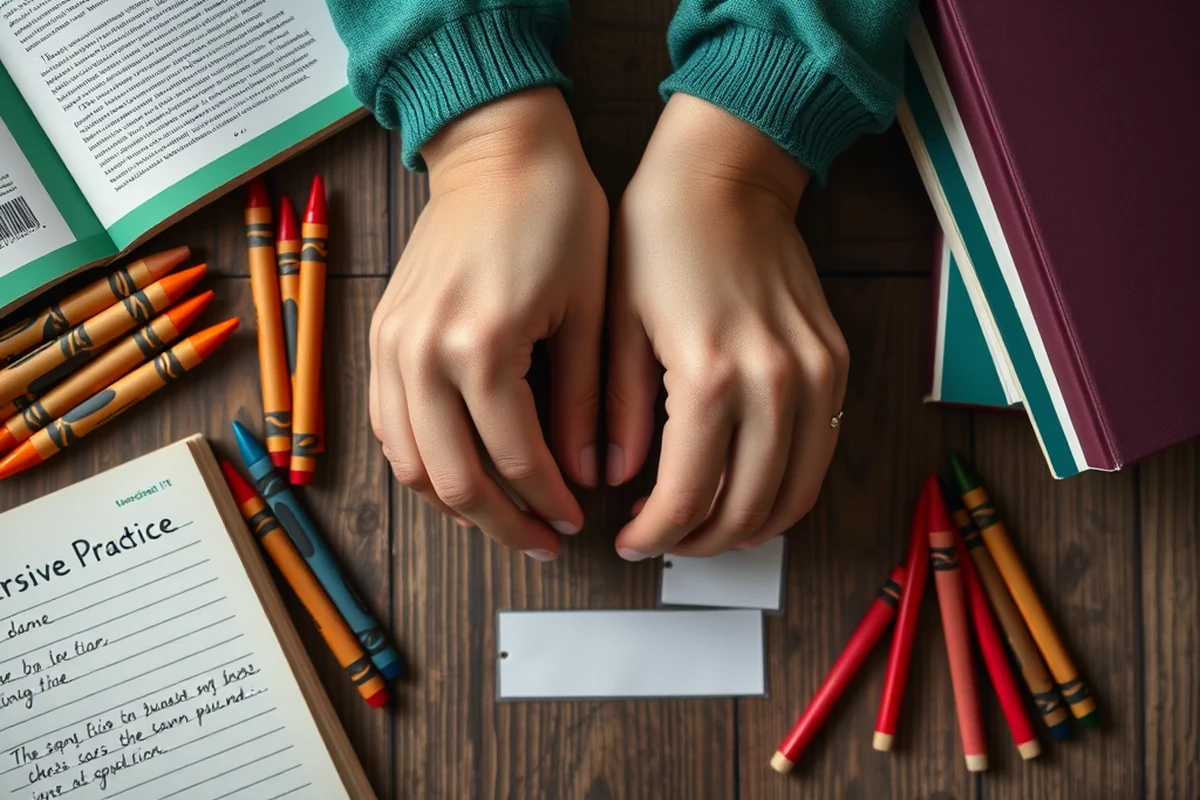
I remember the first time I tried tracing cursive letters with my finger on a textured board. It felt strange at first, but after a few minutes, my fingers remembered the shape of the letters. Tracing helps build muscle memory in a way that just writing on paper doesn't.
Many children, especially those with learning difficulties, benefit from tracing cursive letters before writing them on their own. I've seen this technique work wonders with my niece, who has dysgraphia. She used a tracing board, and after a few weeks, her handwriting improved significantly.
Tracing is also great for adults who want to relearn cursive. It's a low-pressure way to get back into the rhythm of writing without feeling overwhelmed. Whether you're using a board, a worksheet, or even your finger, tracing is a valuable step in how to cursive writing practice.
Related: How to text with ai
Make Cursive Practice Fun with Games and Activities
I once tried to practice cursive for an hour straight, and by the end, I was exhausted and frustrated. I realized that I needed to make practice more engaging. I found an app that turned cursive writing into a game, and within days, I was excited to practice every day.
Games like matching letters, writing sentences with cursive, or even drawing cursive letters in the air can make practice feel like play. I've used these methods with my students, and the results have been incredible — they're more motivated and learn faster.
For parents, it's important to find a balance between structure and fun. When cursive practice feels like a game, children are more likely to stick with it and see improvement over time.
Related: Freelance writing jobs
Get Feedback to Improve Your Cursive Writing
I once practiced cursive for weeks without any feedback, and my letters looked the same every time. It wasn't until I showed my work to my teacher that I realized how inconsistent my writing was. Getting feedback is crucial to identifying areas for improvement.
I started asking my teacher to look at my cursive every week, and each time she pointed out something new — like the slant, the spacing, or the pressure. Over time, I noticed that my writing was becoming more consistent and legible.
Feedback doesn't always have to come from a teacher. I've also used self-evaluation by comparing my work to a model. This helped me see the gaps and improve on my own.
Feedback is the fuel that turns good practice into great results.
Related: How to read a handwritten signature
Set Realistic Goals for Cursive Practice
I used to try to write an entire paragraph in cursive on my first day, and I ended up with a jumble of letters that made no sense. I realized that I needed to set smaller, more achievable goals. Instead of writing a full paragraph, I focused on mastering one letter each day.
Setting small goals helps build confidence and keeps you from feeling overwhelmed. I started by writing the letter 'a' for 10 minutes each day and gradually moved on to more complex letters. Within two weeks, I could write whole words in cursive without hesitation.[2]
Realistic goals also help track progress. When I set a goal to practice cursive for 15 minutes a day, I saw improvement over time. It's important to celebrate small victories — even a single letter written correctly can be a big step forward.[3]
✍️ Younger Kids (Ages 3-6)
Use large letters, tracing boards, and colorful pencils to make cursive practice engaging for little hands.
📚 Older Kids (Ages 7-12)
Introduce cursive worksheets, cursive writing games, and self-evaluation to build confidence and independence.
⏱️ No-Prep Version
Use the air or any flat surface to practice cursive letters without any supplies — perfect for quick practice sessions.
👥 Group Practice
Have children practice cursive together, using shared worksheets or collaborative cursive writing activities.
✍️ Extension Activity
Challenge students to write short paragraphs in cursive, using the letters they've practiced to build fluency.
| The mistake | Why it happens | The fix |
|---|---|---|
| Skipping the basics and jumping into writing full sentences. | This can lead to confusion and frustration, as the foundation of cursive writing — letter shapes and strokes — is not yet mastered. | Start with individual letters and gradually move on to words and sentences. |
| Using a pen instead of a pencil. | Pens can be harder to control, especially for beginners, and they don't allow for easy corrections. | Use a pencil with a good grip and an eraser to allow for mistakes and revisions. |
| Not getting feedback on your writing. | Without feedback, you may not realize the mistakes you're making, leading to poor habits and slow progress. | Ask a teacher, parent, or use self-evaluation to identify areas for improvement. |
| Practicing for too long without breaks. | This can lead to burnout and a loss of interest in cursive writing. | Take short, frequent breaks to keep the practice enjoyable and sustainable. |
How To Cursive Writing Practice
Common Questions
How long does it take to learn cursive writing?
Can adults learn cursive writing?
What tools do I need to practice cursive writing?
Is cursive writing still relevant in today's world?
References
Cite this guide
Writeitneat (2026). How To Cursive Writing Practice. https://writeitneat.com/how-to-cursive-writing-practice/
Feel free to cite or share this guide.
Handwriting Worksheet Maker
Type a name or a word list and get a printable tracing worksheet in print or cursive style.
Open it free →