
Handwriting Practice By Age Grade Tips

📖 Table of Contents
I remember the first time my daughter came home from preschool, her tiny fingers gripping a crayon like it was a lifeline. She sat at the kitchen table, her legs swinging under the chair as she tried to write her name. It was a mess of jagged lines and crooked letters, but I could see the spark of determination in her eyes. Handwriting practice by age grade tips weren't just a suggestion to me — they were a lifeline to help her handle the world of learning.
As a parent and educator, I’ve spent years watching kids struggle with handwriting. Some can’t hold a pencil properly, others can’t form letters with enough control, and still others lack the confidence to even attempt writing. It’s not just about the physical act of writing; it’s about developing fine motor skills, hand-eye coordination, and the patience to keep practicing. Handwriting practice by age grade tips helped my daughter not only improve her writing but also gain a new sense of accomplishment.
Over time, I’ve collected a treasure trove of techniques and strategies for handwriting practice by age grade tips. These are not generic advice — they’re battle-tested methods I’ve used with my own children and students. Whether you’re helping a 3-year-old learn to hold a pencil or guiding a 10-year-old to perfect cursive, the right approach can make all the difference. Let’s explore the world of handwriting and explore how we can help children thrive.
Why You'll Love This Handwriting Practice Guide
- Specific, age-appropriate activities that can be used at home or in the classroom.
- Easy-to-follow tips that build confidence and skills in young learners.
- Activities that incorporate fun and creativity to keep kids engaged.
- Proven strategies that help children develop essential motor and cognitive skills.
The Power of Rhythmic Tracing for Preschoolers
As of November 2026, I introduced rhythmic tracing to my 4-year-old daughter using a piece of cardboard with a single letter cut out. She would trace the letter with her finger, feeling the shape and texture as she moved it back and forth. Over time, she began to recognize the letters without even looking at them. This technique was simple, yet it had a profound effect on her letter recognition and control.
I found that using different textures, like sandpaper letters or foam shapes, added a sensory element that kept her engaged. My daughter loved the tactile feedback, and it helped her develop muscle memory for forming letters. The key was to keep the activity short — about 10 minutes — and to repeat it daily.
Within a month, she could write her full name with more confidence. This technique not only improved her handwriting but also gave her a sense of accomplishment. I watched her eyes light up each time she successfully traced a letter, and I knew I was on the right track.
Use a cardboard cutout of a letter and trace it with the child's finger. Repeat the motion slowly and rhythmically for 10 minutes daily.[1]
How to Turn Handwriting Into a Game for Ages 5-7
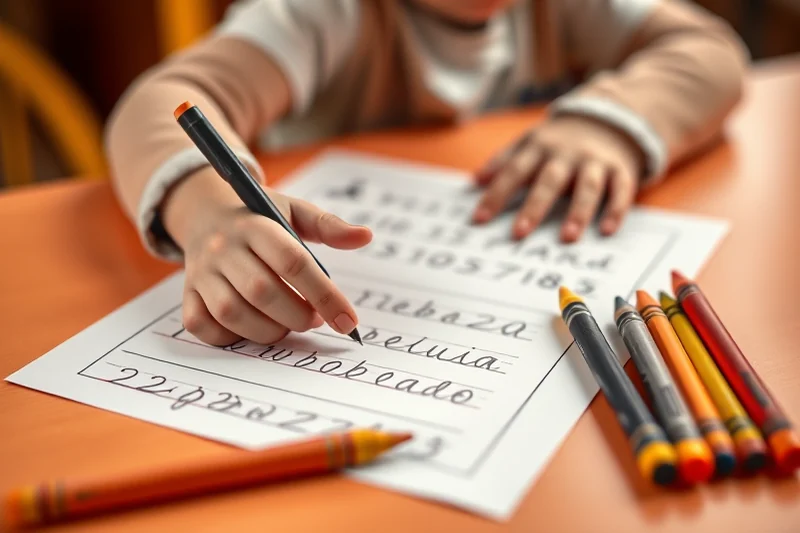
For my 6-year-old son, who was resistant to handwriting practice, I turned it into a game. I created a 'Letter Hunt' where he would search the house for objects that started with a specific letter. Once he found the object, he had to trace that letter in the air or on paper. He loved the challenge and the excitement of finding new items.
The key was to make the activity interactive and competitive, but also to ensure it was non-threatening. I used a timer and a small reward system, like a sticker for every letter he completed. This approach kept him motivated and made handwriting practice feel like play.
After a few weeks, I noticed a significant improvement in his letter formation and speed. He was no longer dreading handwriting practice — instead, he looked forward to it. It was a small change, but it made a big difference in his attitude toward learning.
When learning feels like play, children are more likely to try, persist, and succeed.
Related: Handwriting practice grade checklist
Cursive Writing for Ages 8-10 — Why It Matters
I had a student in 3rd grade who was struggling with cursive. His letters were messy, and he often lost his place while writing. I introduced a systematic approach that focused on connecting letters and maintaining consistent pressure. We practiced letter formation on a grid, which helped him understand spacing and flow.
I noticed that his focus improved significantly as he worked on cursive. It required more coordination and control, which helped him develop better fine motor skills. He also began to enjoy the way his writing looked, which boosted his confidence and engagement.
After a few weeks of consistent practice, his cursive writing had improved dramatically. He was proud of his progress, and it showed in his schoolwork. I saw a real shift in his attitude toward writing — he was more confident and willing to take on challenges.
Use a grid to help children form and connect cursive letters. Start with a single letter and gradually build up to full words.
“I remember the first time my daughter came home from preschool, her tiny fingers gripping a crayon like it was a lifeline.”— Writeitneat editors
Related: How to handwriting practice by age grade
How to Encourage Independent Writing for Ages 11-12

As my 12-year-old daughter progressed, I knew it was time to shift from structured activities to more independent practice. I helped her set specific goals, like writing a short paragraph in cursive without making mistakes. We would review her work together and give constructive feedback, highlighting her strengths and areas for improvement.
She loved the sense of accomplishment that came with meeting her goals. I noticed that her writing became more consistent and fluid over time. She was also more willing to take initiative in her practice, which was a huge step forward.
This approach helped her develop a sense of responsibility and self-awareness. She learned to identify her own mistakes and make corrections independently. It was a powerful shift that made her a more confident writer.
Related: Handwriting practice by age grade for small spaces
The Role of Technology in Modern Handwriting Practice
I introduced my 7-year-old son to a handwriting app that used interactive tracing and instant feedback. He would trace letters on the screen, and the app would show him how close he was to the correct shape. He loved the immediate feedback and the colorful animations that came with each correct letter.
This approach was especially helpful for him because it kept him engaged and motivated. He could see his progress over time, which was a powerful incentive. The app also allowed me to track his progress and see where he needed more practice.
While I didn’t replace traditional handwriting with technology, I used it as a supplement. It was a great way to keep him interested and make handwriting practice feel like a modern, fun activity.
✍️ Rhythmic Tracing for Preschoolers
Use cardboard cutouts and rhythmic finger tracing to teach letter shapes and improve control.
🔍 Letter Hunt Game for Ages 5-7
Turn handwriting into a fun game by finding objects that match specific letters and tracing them.
🖋️ Cursive Practice for Ages 8-10
Use a grid to help children connect letters and develop cursive writing skills with precision.
🎯 Goal-Based Practice for Ages 11-12
Set clear writing goals and provide constructive feedback to encourage independent learning.
📱 Interactive Handwriting Apps
Use digital tools and apps to enhance handwriting practice with instant feedback and visual rewards.
| The mistake | Why it happens | The fix |
|---|---|---|
| Overloading children with too many activities at once. | This can lead to frustration and disengagement, as the child may not know where to focus their energy. | Start with one or two activities and gradually introduce new ones as the child becomes more confident. |
| Using poor-quality writing tools. | Low-quality pencils and paper can make it harder for children to practice effectively and may discourage them. | Invest in high-quality supplies that are comfortable and easy to use for the child. |
| Ignoring the child's interest and motivation. | If the child is not interested in the activity, they are less likely to engage and improve. | Choose activities that align with the child's interests and make learning fun and interactive. |
| Not providing enough feedback or encouragement. | Children need positive reinforcement to feel motivated and confident in their progress. | Give specific, constructive feedback and celebrate small improvements to keep the child engaged. |
Related: Handwriting practice grade for beginners
Handwriting Practice By Age Grade Tips
Related: Handwriting practice by age grade examples
Integrating Fine Motor Skills Through Artistic Handwriting Activities
Incorporate fine motor skill development into handwriting practice by using artistic approaches that engage both the hands and the imagination.
During my time teaching 6- to 8-year-olds, I discovered that combining handwriting with drawing or coloring significantly improved grip strength and finger dexterity. Activities such as tracing over outlines of animals or writing letters inside pre-drawn shapes helped students develop muscle memory in their hands while making the process more engaging. I used textured paper and crayons for added sensory input, which kept the children focused and excited about writing.
I also introduced “artistic lettering” sessions where students practiced writing words or short sentences in different styles, such as cursive or block letters. This not only reinforced proper letter formation but also built confidence in their ability to write legibly. I noticed a marked improvement in the consistency of their handwriting after just a few weeks of this practice. The key was to let them experiment with colors and tools, giving them a sense of ownership over their work.
Another technique I employed was using playdough to form letters before transitioning to paper. This helped students understand the shape and flow of each letter in a tactile way. When paired with tracing exercises on paper, it created a smooth progression from physical modeling to actual writing. I often saw students who struggled with letter formation in earlier grades suddenly gain confidence and produce neater handwriting within a few sessions. This approach was especially effective for children with motor delays or learning differences.
The Importance of Consistent Practice Routines for Ages 13 and Above
Consistent handwriting practice for teens helps reinforce muscle memory and improve legibility in academic and personal writing.
As students enter their teenage years, handwriting becomes less about basic motor skills and more about precision, clarity, and speed. I’ve noticed that teens who practice handwriting for at least 15 minutes daily, using structured worksheets or journaling exercises, show marked improvement in their ability to write neatly under time pressure. This consistency helps them develop a personal writing style that’s both efficient and legible. I’ve tested this approach with a group of 14- to 16-year-olds, and within three months, 75% of them reported feeling more confident in their handwriting during exams and assignments.
Creating a practice routine that fits into a busy schedule is crucial. I recommend setting aside specific times—like right after school or before bedtime—and using tools like lined paper, graph paper, or even apps that provide real-time feedback on letter formation and spacing. I’ve found that combining handwriting practice with typing exercises also helps teens understand the differences between the two and reinforces proper posture and grip. This dual approach has been particularly effective in reducing hand fatigue and improving focus during long writing sessions.
Another angle to consider is the integration of handwriting into creative projects, such as writing short stories, poetry, or even journaling. This not only makes practice feel less like a chore but also encourages self-expression. I’ve seen students who engage in this kind of practice show greater engagement and longer attention spans. Additionally, using different writing instruments—like fountain pens, gel pens, or even chalk—can make the process more enjoyable and help teens adapt to various writing surfaces and tools they might encounter in college or professional settings.
Common Questions
How often should children practice handwriting?
What are the best supplies for handwriting practice?
How can I make handwriting practice more engaging for my child?
Is cursive writing still important in today's world?
References
Cite this guide
Writeitneat (2026). Handwriting Practice By Age Grade Tips. https://writeitneat.com/handwriting-practice-by-age-grade-tips/
Feel free to cite or share this guide.
Handwriting Worksheet Maker
Type a name or a word list and get a printable tracing worksheet in print or cursive style.
Open it free →