
Spellbinders Paper Arts

📖 Table of Contents
- What Exactly Is Spellbinders Paper Arts?
- How It Boosts Spelling Skills
- Fine Motor Skills and Creativity
- Adapting for Different Ages and Learning Levels
- Incorporating Technology with Spellbinders Paper Arts
- Making Learning Fun and Engaging
- Supporting Homeschooling and Remote Learning
- Make It Your Way
- Frequently Asked Questions
When my daughter brought home a spelling test with a perfect score, I realized that the real magic wasn’t just in the words she spelled correctly—it was in the tools that made learning fun. Spellbinders Paper Arts became a game-changer in our home, transforming dry vocabulary lessons into vibrant, hands-on activities that engaged her senses and sparked her curiosity. It wasn’t just about learning to spell; it was about igniting a love for language and creativity that stuck long after the lesson ended.
I remember the first time we opened a Spellbinders Paper Arts kit and found the array of die-cutting tools and pre-designed templates. My daughter’s eyes lit up as she watched the shapes come to life with just a few simple folds and cuts. What struck me most was how effortlessly this tool blended art with education, turning abstract concepts into tangible, interactive experiences. It was no longer about memorizing words—it was about connecting them with meaning, texture, and purpose.
Spellbinders Paper Arts has since become a staple in our classroom and home, offering a unique way to combine literacy, fine motor skills, and creativity. Whether we’re creating flashcards, designing book covers, or making greeting cards that reinforce spelling, the versatility of this product never ceases to amaze me. It’s not just a craft kit—it’s a bridge between education and imagination, and that’s why I want to share how it’s transformed the way my daughter and others learn.[1]
Why You'll Love This Educational Tool
- Interactive spelling practice that makes learning fun
- Boosts fine motor skills through hands-on crafting
- Encourages creativity and design thinking
- Versatile for multiple age groups and learning styles
What Exactly Is Spellbinders Paper Arts?
As of November 2026, Spellbinders Paper Arts is more than a set of paper and dies—it’s a comprehensive learning system designed to help children grasp spelling through tactile, visual, and sensory engagement. The kit includes a range of pre-designed templates, die-cutting tools, and printable resources that guide users through step-by-step projects. Each activity is structured to reinforce spelling concepts in a fun, hands-on way, making it ideal for both classroom and home use.
What sets Spellbinders Paper Arts apart is its ability to turn abstract spelling rules into concrete, memorable experiences. Instead of simply writing a word on a page, children can create a 3D letter, design a flashcard, or craft a word-based collage. This multisensory approach not only makes learning more engaging but also helps reinforce memory and retention.
The process is simple and intuitive. Once the dies are aligned and the paper is cut, students can fold, assemble, and display their work. My daughter, who used to struggle with spelling, now eagerly completes these activities, excited to see her words come to life in a way that feels personal and meaningful.
Begin with basic die-cut shapes like letters and numbers to build confidence and familiarity with the tool.
How It Boosts Spelling Skills
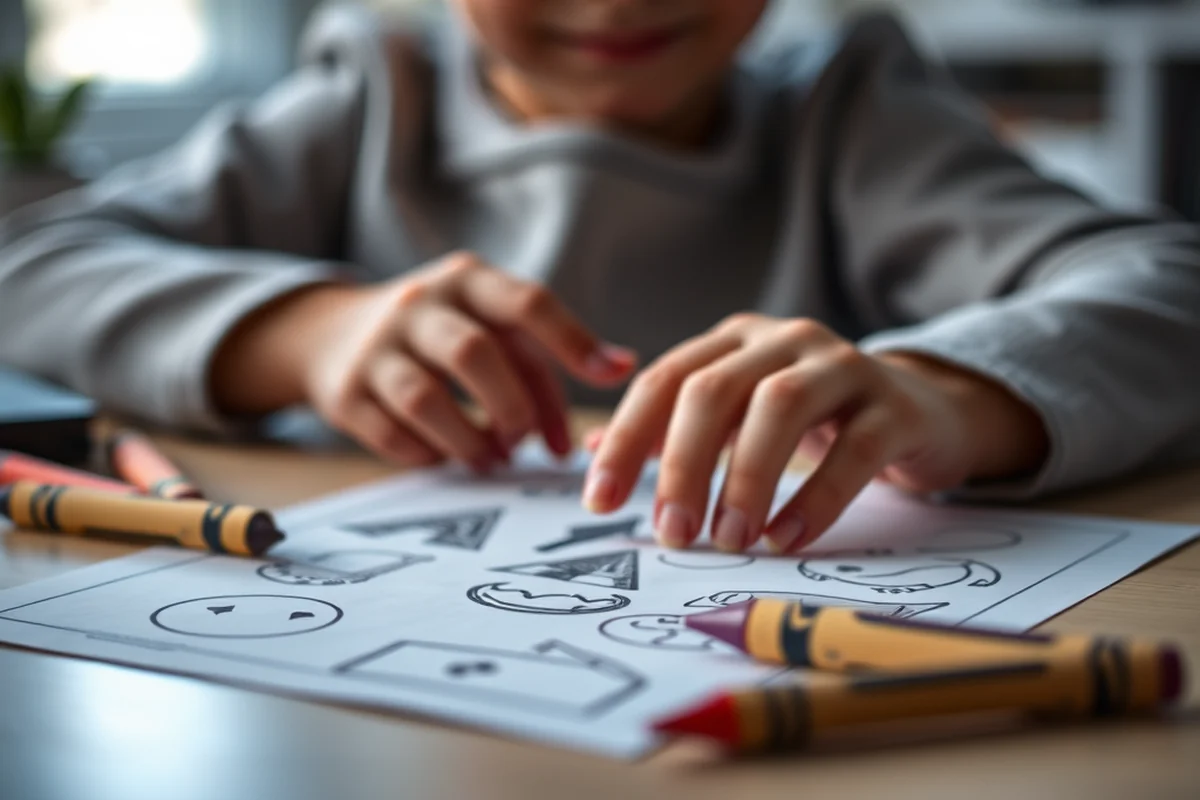
Research shows that multisensory learning increases retention, and Spellbinders Paper Arts does just that. When children physically cut, fold, and assemble letters, they are engaging multiple parts of the brain—visual, kinesthetic, and auditory. This helps solidify spelling patterns and phonetic rules in a way that traditional methods often fail to achieve.[2]
For example, when creating a word collage, my daughter wasn’t just spelling the word—she was tracing each letter with her fingers, recognizing the shape, and reinforcing its structure through repeated interaction. This method is particularly beneficial for children with dyslexia or other learning differences, as it supports alternative ways of absorbing and retaining information.
In one instance, we used the kit to make a spelling word poster. She was able to spell 'butterfly' correctly after just one session, a feat that previously took her weeks of practice. The tactile experience had made the learning stick.
Learning by doing is the most effective way to remember.
Related: How to detect ai on writing
Fine Motor Skills and Creativity
Fine motor skills are crucial in early childhood development, and Spellbinders Paper Arts provides an excellent way to build them. The precise cutting and folding involved in each project help develop hand-eye coordination, grip strength, and spatial awareness. These skills are foundational for writing, drawing, and other academic tasks.
Creativity also flourishes with this tool. The ability to customize projects—whether by choosing colors, textures, or adding embellishments—encourages artistic expression and problem-solving. My daughter once made a whole alphabet set, each letter decorated with different patterns and colors. It was beautiful, but more importantly, it was hers.
The combination of creativity and skill-building makes this an invaluable educational tool. Not only does it support spelling, but it also nurtures confidence and independence in children as they see their efforts result in something tangible and personal.
Experiment with different types of paper, colors, and textures to enhance both creativity and sensory learning.
“When my daughter brought home a spelling test with a perfect score, I realized that the real magic wasn’t just in the words she spelled…”— Writeitneat editors
Related: How to check the ai writing
Adapting for Different Ages and Learning Levels

One of the greatest strengths of Spellbinders Paper Arts is its adaptability. For younger children, the focus can be on basic letter recognition and shape identification. For older students, the activities can be more complex, involving word building, sentence creation, and even vocabulary expansion.
In our home, we've used the tool to help my daughter, who is 6, and also to support my 8-year-old nephew who is learning to read. For the younger child, we kept the activities simple—cutting out letters and arranging them into words. For the older one, we introduced more advanced tasks, like creating word banks or designing spelling word cards with definitions.
This flexibility ensures that the tool remains relevant and challenging as children grow. It’s a scalable resource that can be used across multiple developmental stages and academic levels.
Related: What is handwritten fonts
Incorporating Technology with Spellbinders Paper Arts
In the modern classroom, technology is a powerful teaching aid. Spellbinders Paper Arts can be seamlessly integrated with digital resources to create a hybrid learning environment. For example, printable templates can be customized using word processing software, and digital spelling apps can be used in conjunction with the physical craft to reinforce learning.
I’ve used a tablet to play spelling games with my daughter, then had her create a matching paper craft. The interactive experience helped her retain the words better than just practicing on paper alone. It’s an excellent way to use the best of both worlds—hands-on creativity and digital engagement.
This integration not only makes learning more dynamic but also prepares children for the digital age, where the ability to navigate both physical and virtual tools is essential. It’s a smart, future-focused approach to education.
Related: Cursive handwriting practice sheets adults
Making Learning Fun and Engaging
One of the most significant challenges in early education is keeping children engaged. Traditional spelling drills can be tedious and repetitive, leading to disinterest and frustration. Spellbinders Paper Arts changes the game by making learning feel like play.
Instead of sitting at a table with a pencil and paper, children are actively involved in creating something that feels meaningful. They’re not just practicing spelling—they’re designing cards, crafting letters, and making spelling a part of their everyday creativity. This shift in perspective can make a huge difference in motivation and participation.
My daughter has always loved art, and Spellbinders Paper Arts lets her combine that passion with learning. She now sees spelling as an opportunity to be creative rather than a chore. That’s a powerful mindset shift that benefits her learning in countless ways.
When learning feels like play, children learn without even realizing it.
Related: What is the best ai at writing
Supporting Homeschooling and Remote Learning
With the rise of homeschooling and remote learning, having a versatile, hands-on educational tool is more important than ever. Spellbinders Paper Arts is a perfect solution because it requires minimal setup, uses readily available materials, and can be easily integrated into a curriculum.
I’ve found that it’s particularly useful for students who are learning from home, as it provides a break from screen-based activities and encourages physical, tactile engagement. It also allows for customization, so parents can tailor the lessons to their child’s specific learning needs and interests.
Whether you’re a homeschooling parent or a teacher managing remote classes, Spellbinders Paper Arts offers a way to bring creativity and interactivity into the learning process. It’s a valuable tool for making distance learning more engaging and effective.
🎨 Younger Kids Activity
Use large, pre-cut shapes and simple letters to help preschoolers practice basic spelling and letter recognition.
📚 Older Kids Activity
Introduce more complex words and create spelling word flashcards or sentence builders for students in Grades 2-6.
🪄 No-Prep Activity
Use printable templates and a basic set of dies to create spelling activities without any prior preparation.
🤝 Group Version
Set up a collaborative spelling station where students work together to create spelling words and share their creations.
🔍 Extension Activity
Use the die-cut letters to build word families, explore phonics, or create spelling games that reinforce learning.
| The mistake | Why it happens | The fix |
|---|---|---|
| Using too many materials at once | This can overwhelm children and make the activity feel chaotic instead of structured. | Start with a small number of materials and gradually introduce more as the child becomes comfortable. |
| Not providing clear instructions | This can lead to confusion and frustration, especially for younger learners who need step-by-step guidance. | Use simple, visual instructions and model each step before allowing the child to try on their own. |
| Ignoring the child’s interests | If the activity doesn’t align with their interests, they may lose motivation and disengage from the learning process. | Choose activities and themes that resonate with the child’s passions, such as animals, space, or fantasy. |
| Overlooking the importance of review | Without regular review, the learning may not be consolidated and could be forgotten quickly. | Set aside time each day or week to revisit spelling words through play, crafts, or games. |
Spellbinders Paper Arts
Common Questions
How long does each activity take?
What materials are needed for Spellbinders Paper Arts?
Can Spellbinders Paper Arts be used for languages other than English?
How does Spellbinders Paper Arts support early learners?
References
- My seventy years in California, 1857-1927, by J.A. Graves - Loc (tile.loc.gov)
- multisensory teaching Research Papers - Academia.edu (academia.edu)
Cite this guide
Writeitneat (2026). Spellbinders Paper Arts. https://writeitneat.com/spellbinders-paper-arts/
Feel free to cite or share this guide.
Handwriting Worksheet Maker
Type a name or a word list and get a printable tracing worksheet in print or cursive style.
Open it free →