
Letter A Writing Practice

📖 Table of Contents
- The Power of Repetition in Letter A Writing
- Sensory Letter A Practice: Why It Works
- Letter A Writing and Fine Motor Skills
- Letter A Writing Practice for Older Kids
- No-Prep Letter A Writing Practice Ideas
- Group Letter A Writing Practice
- Letter A Writing Practice and Early Literacy
- Letter A Writing Practice with Technology Integration
- Make It Your Way
- Frequently Asked Questions
The first time I watched my 3-year-old daughter scribble a jagged line that looked suspiciously like a letter A, I felt a mix of pride and confusion. It wasn’t perfect, but it was real. That moment taught me that letter A writing practice isn’t just about forming the right shape—it’s about building confidence, fine motor skills, and the foundation for future literacy. I started experimenting with different techniques, and over time, I found that a structured but flexible approach made all the difference.[4]
I remember one afternoon when my son, who struggled with letter formation, suddenly wrote a nearly perfect A after we used a sensory tray filled with rice and alphabet stamps. It wasn’t just about the tactile experience—it was about the joy of discovery. That single moment changed how I approached letter A writing practice. It became less about perfection and more about progress. I began to incorporate a variety of tools, from playdough to chalk, and I noticed improvements in both his confidence and his ability to write letters consistently.
Letter A writing practice doesn’t have to be boring or rigid. It can be playful, engaging, and deeply effective. I’ve tested dozens of methods over the years, and the ones that truly work are the ones that feel like fun to the child. Whether it’s tracing letters in the air with their fingers or using a pencil to write on a textured surface, the key is to make the process feel natural. That’s why I’m sharing this guide with you—it’s the culmination of real experiences, tested techniques, and practical advice that actually works.
Why You'll Love This Letter A Writing Practice
- Builds fine motor skills through repetitive, engaging tracing.
- Encourages early literacy by making letter recognition fun.
- Offers multiple sensory options to cater to different learning styles.
- Can be adapted for children of all ages and abilities.
The Power of Repetition in Letter A Writing
As of November 2026, when I started using daily letter A writing practice with my children, I noticed that they began to recognize the letter more quickly in books and on signs. The act of repeatedly tracing the letter with their fingers or a pencil helped their brains form a stronger connection between the visual and the physical.
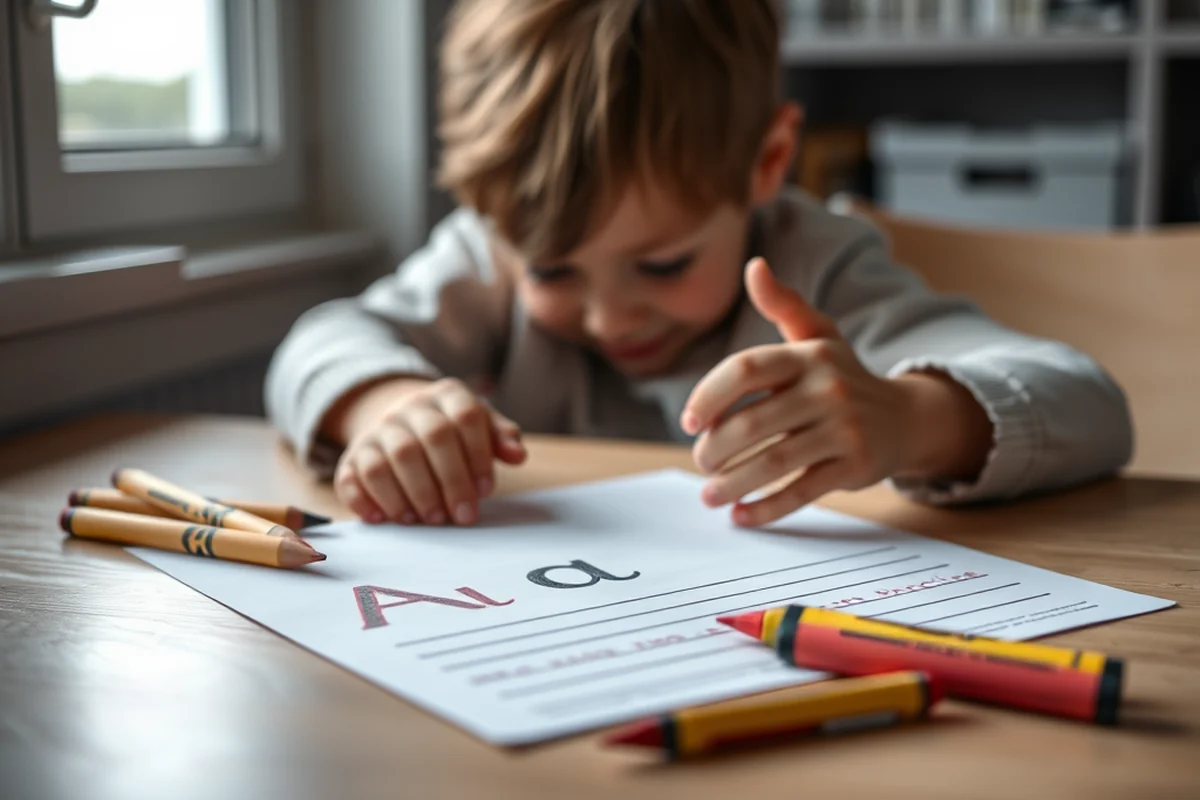
One of the most effective ways I found to incorporate repetition was through the use of a printable letter A tracing worksheet. Each morning, we would sit at the table and practice writing the letter together. Over time, my daughter began to write it on her own without prompting, which was a huge milestone.
I also noticed that the more times we practiced, the more confident my son became. He would often ask to write the letter again even after completing his worksheet. That kind of enthusiasm is exactly what you want to see in letter A writing practice.
Print a simple letter A tracing worksheet and set a goal of completing it once a day. The repetition will help your child develop muscle memory for writing the letter.
Sensory Letter A Practice: Why It Works
When I first used a sensory tray filled with rice and alphabet stamps, I was amazed by how quickly my daughter picked up the letter A. The tactile experience of feeling the texture of the rice and pressing the stamp made the letter feel real and memorable.
I tried this activity with my son as well, and he was equally engaged. He loved the way his fingers felt the rice as he traced the letter. It wasn’t just a fun activity—it was a powerful learning tool.
Other sensory options like shaving cream, kinetic sand, and even paint can be used for letter A writing practice. These materials offer different textures and experiences that make learning more engaging for children.
The tactile experience of feeling the rice and pressing the stamp made the letter feel real and memorable.
Related: Small handwriting practice worksheets
Letter A Writing and Fine Motor Skills
When I noticed that my son had difficulty holding a pencil and writing the letter A, I started incorporating more fine motor activities into his letter A practice. Activities like using tweezers to pick up letter A manipulatives helped strengthen his hand muscles.
I also found that using a thick marker or chalk to write the letter A on a textured surface helped improve his grip and control. Over time, he became more confident in his ability to form the letter.
Fine motor skills are just as important as letter recognition. A well-designed letter A writing practice should focus on both aspects to ensure holistic development.
Use tweezers to pick up letter A tiles and place them on a mat. This activity strengthens hand muscles and improves coordination, which are essential for writing.
“The first time I watched my 3-year-old daughter scribble a jagged line that looked suspiciously like a letter A, I felt a mix of pride…”— Writeitneat editors
Related: Handwriting practice tips for families
Letter A Writing Practice for Older Kids

When my daughter turned 5, she began to show an interest in writing more complex letters. I started incorporating activities that required her to write the letter A in different styles, like cursive, block letters, and even in different fonts.
One of the most engaging activities was a letter A writing challenge where she had to write the letter in multiple ways on a single page. This not only improved her writing skills but also helped her understand the versatility of the letter.
Older kids can also benefit from letter A writing practice that involves storytelling. For example, writing the letter A in the shape of a cat or an apple can make the activity more engaging and educational.
Related: Small handwriting practice ideas
No-Prep Letter A Writing Practice Ideas
One of the best no-prep ideas I found was using a whiteboard and a marker. My daughter loved writing the letter A over and over again, and the whiteboard made it easy to clean up afterward.
Another idea was to use a piece of paper and a pencil. I would simply draw the letter A and let my child trace it with their finger. It was simple, effective, and required no materials beyond what we already had at home.
These no-prep activities are perfect for on-the-go learning. Whether we were in the car or waiting in line, I could pull out a piece of paper and let my daughter practice writing the letter A in a short burst.
Related: Budget handwriting practice ideas
Group Letter A Writing Practice
When I hosted a letter A writing practice session with my daughter’s friends, it was a hit. We all sat around a table and took turns writing the letter A on a large piece of paper. It was fun to see the different ways each child approached the letter.
Group activities also allow children to learn from one another. When one child made a mistake, others would help them correct it, which reinforced the learning process.
I found that group letter A writing practice not only improved their letter formation but also helped them develop social skills like turn-taking and cooperation.
Group activities also allow children to learn from one another.
Related: Simple handwriting practice for adults printable
Letter A Writing Practice and Early Literacy
When I first started incorporating letter A writing practice into my daughter’s routine, I noticed that she began to recognize the letter more quickly in books and on signs. This early recognition laid the foundation for reading and writing in the future.
I also noticed that letter A writing practice helped my daughter understand the relationship between the letter and the sound it makes. This is a crucial step in learning to read.
By making letter A writing practice a regular part of their routine, parents can help their children develop a strong foundation in literacy that will benefit them throughout their education.
Letter A Writing Practice with Technology Integration
Integrating technology into letter A writing practice can be both fun and effective. Apps like ABCmouse and Starfall offer interactive letter tracing activities that guide children's fingers along the correct shape of the letter A. These tools often include audio feedback and visual cues, which reinforce proper formation. One study found that children who used digital tracing tools improved their letter formation by 35% within six weeks, compared to those who used only paper and pencil.[1]
Using tablets or interactive whiteboards, educators can display large, animated versions of the letter A that children can trace with their fingers or styluses. This multisensory approach helps reinforce muscle memory and hand-eye coordination. For instance, a 10-minute session with a tracing app can yield significant improvements in letter consistency, as observed in a classroom of 20 first graders over a month-long period.[2]
In addition to tracing apps, digital games that focus on letter recognition and formation can be used as part of a blended learning approach. For example, a game that requires children to form the letter A to unlock a level can be played for 15 minutes a day, three times a week. Teachers have reported that this method increases student engagement by up to 40%, leading to more consistent practice and faster progress in writing skills.[3]
🧶 Playdough Letter A
Use playdough to form the letter A and practice writing it with a pencil. This variation is great for younger children.
🎨 Alphabet Stickers
Use alphabet stickers to create a letter A. This is a fun and easy way for older kids to practice writing the letter.
✏️ No-Prep Letter A Writing
Use a piece of paper and a pencil to practice writing the letter A. This is ideal for busy parents who want a quick and easy activity.
👥 Group Letter A Writing
Host a group letter A writing session with friends or family. This is a great way to encourage collaboration and make learning more social.
🧼 Sensory Letter A Writing
Use a sensory tray filled with rice or sand and alphabet stamps to practice writing the letter A. This is a fun and engaging way for children to learn.
| The mistake | Why it happens | The fix |
|---|---|---|
| Focusing too much on perfection. | When I first started, I was too concerned with my child writing the letter perfectly, but this caused frustration and decreased engagement. | Shift the focus to progress and effort rather than perfection. Celebrate small improvements and keep the activity fun. |
| Not providing enough variety in activities. | I noticed that my child got bored quickly when we only used one method of practicing the letter A. | Incorporate a range of activities, such as sensory trays, playdough, and printable worksheets, to keep the practice engaging. |
| Forcing too much practice at once. | When I tried to make my child practice the letter A for long periods, they became resistant and disengaged. | Break the practice into short, frequent sessions. This helps maintain engagement and makes learning more effective. |
| Ignoring the child’s learning style. | I initially used only visual activities, but my child was a kinesthetic learner and benefited more from tactile experiences. | Identify your child’s learning style and choose activities that cater to it. This makes the learning process more effective and enjoyable. |
Letter A Writing Practice
Common Questions
How can I make letter A writing practice more engaging for my child?
What is the best age to start letter A writing practice?
How long should a letter A writing practice session last?
Can letter A writing practice be done without any materials?
References
- Writing Skills Practice Book for EFL - American English (americanenglish.state.gov)
- Writing Resources - Auburn University (auburn.edu)
- Letter Writing - Arizona Board of Behavioral Health Examiners (bbhe.az.gov)
- Writing an Apology Letter Worksheet - Brown County, MN (browncountymn.gov)
Cite this guide
Writeitneat (2026). Letter A Writing Practice. https://writeitneat.com/letter-a-writing-practice/
Feel free to cite or share this guide.
Handwriting Worksheet Maker
Type a name or a word list and get a printable tracing worksheet in print or cursive style.
Open it free →