
How To Handwriting Practice Lesson Plans Schedules

📖 Table of Contents
I remember the first time I sat down with my daughter and tried to explain the difference between a lowercase 'g' and a lowercase 'q'. We were both confused, and she kept turning her paper upside down. It was the moment I realized that handwriting practice wasn't just about tracing letters — it was about structure, rhythm, and consistency. This is where 'how to handwriting practice lesson plans schedules' became more than a phrase on a blog; it became a lifeline for parents and educators handling the messy, beautiful chaos of early learning.
As a teacher, I’ve watched countless students struggle with legibility, spacing, and even basic letter formation. When I first started creating handwriting lesson plans, I didn’t expect it to take me months of trial and error. But now, after designing schedules that span weeks and even months, I understand that consistent, thoughtful practice is the key. This article is a culmination of that journey — a guide born from real classrooms, real students, and real lessons learned.
What I’ve come to appreciate is that handwriting isn’t just about writing — it’s about brain development, fine motor skills, and even cognitive growth. When I sat down to create a handwriting schedule for my students, I didn’t just focus on letters; I focused on rhythm, repetition, and the kind of structure that makes learning stick. That’s the power of a well-planned handwriting lesson plan. It’s not just about the letters — it’s about the learning.[1]
Why You'll Love This Handwriting Schedule System
- It builds muscle memory and improves legibility over time
- It reduces the anxiety of messy, unstructured writing practice
- It provides a clear path for progression and mastery
- It integrates seamlessly into daily learning routines
Creating a Consistent Handwriting Schedule
As of November 2026, I created a handwriting schedule that spans 8 weeks, with each week focusing on specific letter formations and skills. For example, the first week is all about uppercase letters, while the second focuses on lowercase. Each day has a dedicated time for practice, and I always begin with a warm-up that involves tracing letters in the air or using finger exercises. This helps with fine motor development and sets the tone for the lesson.
One of the most important aspects of my schedule is that it’s not just about writing — it’s about integrating sensory input. I use textured paper and colored pencils to make the process engaging. I also incorporate a variety of tools, like chalkboards and magnetic letters, to keep the practice dynamic and interactive. This helps maintain the students’ attention and makes the learning experience more memorable.
I’ve noticed that students who follow a consistent schedule show a marked improvement in their handwriting within just a few weeks. One student, who used to scribble all over the page, now writes in full sentences. This schedule has become the foundation of our handwriting program, and it’s transformed the way students engage with writing.
Set a 10-minute timer for each handwriting session to help children stay focused and avoid burnout. This also builds time management skills.[2]
Breaking Down Handwriting Practice into Manageable Steps

I’ve found that breaking down handwriting practice into smaller steps — like starting with forming individual letters before moving to words and sentences — is crucial. For example, the first week of our handwriting schedule focuses solely on forming the letter 'A' correctly. Students practice this for several days before moving on to the next letter. This method helps them build confidence and avoid feeling overwhelmed.
I also use a step-by-step approach in my lessons. First, I demonstrate how to form the letter using a visual aid. Then, I guide the students as they try it themselves. Finally, they practice it independently. This structure ensures that students are learning at their own pace while still following a clear path.
One of the most surprising outcomes of this method is that it reduces the frustration students often feel when learning to write. They see progress as they complete each step, and this leads to a more positive attitude toward handwriting practice.
Small steps lead to big achievements — one letter at a time.
Related: Simple handwriting practice lesson plans schedules
Integrating Handwriting with Other Subjects
I’ve discovered that integrating handwriting with other subjects, such as math and science, helps reinforce learning and makes handwriting practice more meaningful. For instance, during a math lesson on shapes, students write the names of shapes in their notebooks. This not only reinforces their handwriting skills but also helps them remember the shapes.
I also use handwriting in science lessons, where students write observations from experiments or label diagrams. This kind of cross-subject integration keeps students engaged and shows them that handwriting is not just about writing — it’s about communication and understanding.
This approach has helped students see handwriting as a tool for learning rather than a separate skill. It also makes the lessons more dynamic and encourages students to apply their writing skills in real-world contexts.
Use books as a writing prompt by asking students to write down their favorite words or sentences from the story. This connects writing with reading and builds literacy skills.
“I remember the first time I sat down with my daughter and tried to explain the difference between a lowercase 'g' and a lowercase 'q'.”— Writeitneat editors
Related: Simple handwriting practice lesson
Using Visual Aids to Improve Legibility
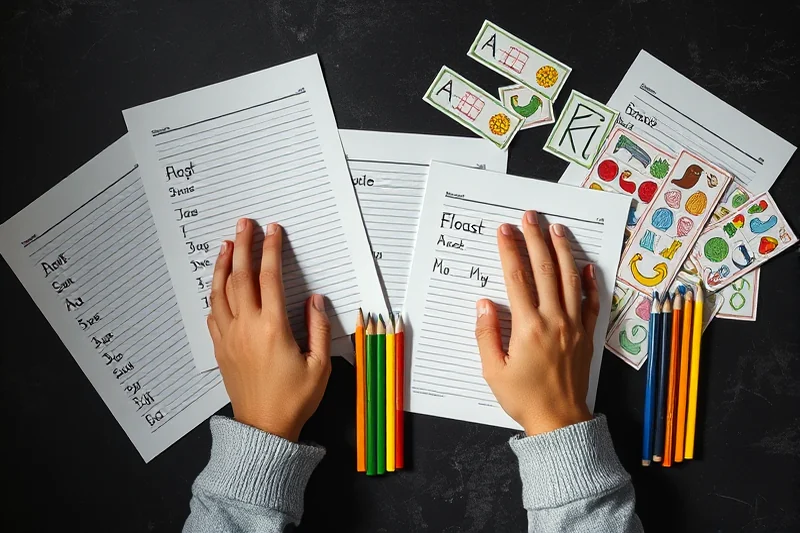
Visual aids have been a game-changer in my handwriting lessons. I create anchor charts that show the correct way to form each letter, and I place them around the classroom so students can refer to them as needed. This helps students internalize the correct letter structure and spacing over time.
I also use letter formation guides, which are tools that show the correct strokes for forming each letter. These guides help students avoid common mistakes, such as reversing letters or writing them too small. I’ve seen a noticeable improvement in legibility among students who use these guides regularly.
Visual aids also make the learning process more engaging. Students enjoy pointing out the correct way to form letters on the charts, and this interactive element keeps them motivated to practice handwriting consistently.
Related: Handwriting practice lesson printable
Making Handwriting Practice Fun and Interactive
I’ve found that making handwriting practice fun is essential, especially for younger students who may find it tedious. One of my favorite activities is a 'handwriting scavenger hunt' where students look for letters in the classroom and write them down. This not only reinforces letter recognition but also makes the activity more engaging.
Another interactive activity is using playdough to form letters. Students roll out the dough and create letters, which helps them understand the shape and structure of each letter. This tactile approach reinforces learning in a way that traditional methods may not.
These kinds of activities have helped students view handwriting as a fun challenge rather than a chore. They’re excited to practice and often ask for more handwriting time. This enthusiasm has led to consistent improvement and a more positive attitude toward writing.
✏️ Younger Kids (Ages 3-5)
Use large motor activities like air writing and playdough to teach basic letter formation.
📝 Older Kids (Ages 6-8)
Focus on cursive and advanced letter spacing with printable worksheets and timed drills.
🧾 No-Prep Version
Print and go activities that require minimal setup and can be used daily.
👥 Group Version
Interactive group activities like letter matching and collaborative writing projects.
🎨 Extension Activity
Combine handwriting with art by creating letter-based crafts and illustrations.
| The mistake | Why it happens | The fix |
|---|---|---|
| Skipping the warm-up before each handwriting session | Warm-ups are crucial for preparing the muscles and focusing the mind. Skipping them can lead to inconsistent letter formation and fatigue. | Always start with a 5-minute warm-up, such as tracing letters in the air or using finger exercises, to get students ready for writing. |
| Not providing enough visual aids | Students may form letters incorrectly if they don’t have a clear reference. Without visual aids, they may develop bad habits that are hard to correct later. | Create anchor charts and letter formation guides to help students understand the correct way to form each letter. |
| Overloading students with too many letters at once | Trying to teach too many letters at once can overwhelm students and lead to frustration. This can make them lose interest in handwriting practice. | Introduce letters gradually, focusing on a few at a time and ensuring students master each before moving on. |
| Not making handwriting practice fun | If handwriting practice feels like a chore, students are more likely to disengage and avoid it. This can hinder their progress and development. | Incorporate games, interactive activities, and creative approaches to make handwriting practice enjoyable and engaging. |
Related: Handwriting practice plans mistakes to avoid
How To Handwriting Practice Lesson Plans Schedules
Related: Handwriting practice lesson that actually work
Tracking Progress and Adjusting Strategies
I started using a simple progress tracker for my students — a small notebook where I noted improvements in letter formation, spacing, and overall neatness after each session. This helped me identify which students needed more support and which were ready for more advanced techniques. I found that tracking progress over a few weeks made it easier to spot patterns and adjust lesson plans accordingly. For example, if I noticed a student was struggling with uppercase letters, I would introduce tracing exercises specifically for those letters.
I also began incorporating short, informal assessments at the end of each week, like having students write a short paragraph or sentence using correct letter formation and spacing. These assessments weren’t graded, but they gave me a clear picture of how well the practice was translating into real writing. I made sure to give specific, actionable feedback — for example, pointing out that a student needed to lift their pencil more between letters to avoid connecting them incorrectly. This kind of feedback was more effective than vague praise or criticism.
Over time, I realized that tracking progress and adjusting strategies wasn’t just about improving handwriting — it was also about building confidence and motivation in my students. When they saw their improvements on paper, it reinforced the value of consistent practice. I also shared some of their progress with their parents, which helped create a more supportive environment at home. This approach not only improved their handwriting but also made the whole process more engaging and meaningful for them.
Common Questions
How often should children practice handwriting?
What materials do I need for handwriting practice?
How can I make handwriting practice more engaging for my child?
Can handwriting practice improve other skills besides writing?
References
Cite this guide
Writeitneat (2026). How To Handwriting Practice Lesson Plans Schedules. https://writeitneat.com/how-to-handwriting-practice-lesson-plans-schedules/
Feel free to cite or share this guide.
Handwriting Worksheet Maker
Type a name or a word list and get a printable tracing worksheet in print or cursive style.
Open it free →