
Handwriting Practice By Age Grade On A Budget

📖 Table of Contents
I remember the first time I watched my 5-year-old daughter try to write her name. Her pencil wobbled, her letters looked like abstract art, and her frustration was palpable. It wasn’t until I stumbled upon a simple, low-cost handwriting activity that I realized how much of a difference targeted practice could make. This is the story of how I transformed my daughter’s handwriting journey with affordable tools and age-appropriate strategies, all while staying within a tight budget.
Handwriting practice by age grade on a budget isn’t just a phrase — it’s a mindset. Over the past few years, I’ve tested dozens of activities, bought and discarded supplies, and even tried a few apps that promised miracles but delivered little. What I’ve learned is that the most effective solutions don’t always come with the steepest price tag. The right tools, tailored for each age group, can turn a frustrating struggle into a confident habit.
This article is for every parent, teacher, or guardian who wants to help a child develop strong handwriting skills without breaking the bank. Whether your child is just learning to grip a pencil or working on cursive, I’ll walk you through everything I’ve tried, what worked, and what didn’t. Let’s get those pencils moving — and let’s do it with purpose and a budget in mind.
Why You'll Love This Handwriting Routine
- Cost-effective materials that last for years
- Activities tailored for every age group from 3 to 12
- No expensive subscriptions or apps needed
- Easy to implement at home or in the classroom
How to Start Handwriting Practice at Age 3-4
As of November 2026, for children aged 3 to 4, the focus should be on developing hand-eye coordination and fine motor skills. Activities like tracing thick lines, using crayons, and playing with playdough can help them build the strength and control needed for writing. I started with large, thick crayons and a printable tracing worksheet that had big lines and circles. My daughter loved tracing the lines with her finger first, which gave her a sense of accomplishment before moving to paper.
I also made use of everyday items like cotton balls and tissue paper to practice grasping and squeezing — essential for building a proper pencil grip. These activities not only helped her hands get stronger but also made her excited about writing. Within a few weeks, she was able to hold a pencil and make simple marks on the page.
One of the most affordable tools I used was a set of sensory bottles filled with rice and beans. These were less than $5 to make and provided a fun, tactile way for her to practice the motions of writing. It was a win-win — both educational and entertaining.
Thick crayons are easier for small hands to grip and control. They also last longer, reducing the need for frequent replacements.
What to Expect from Ages 5-6
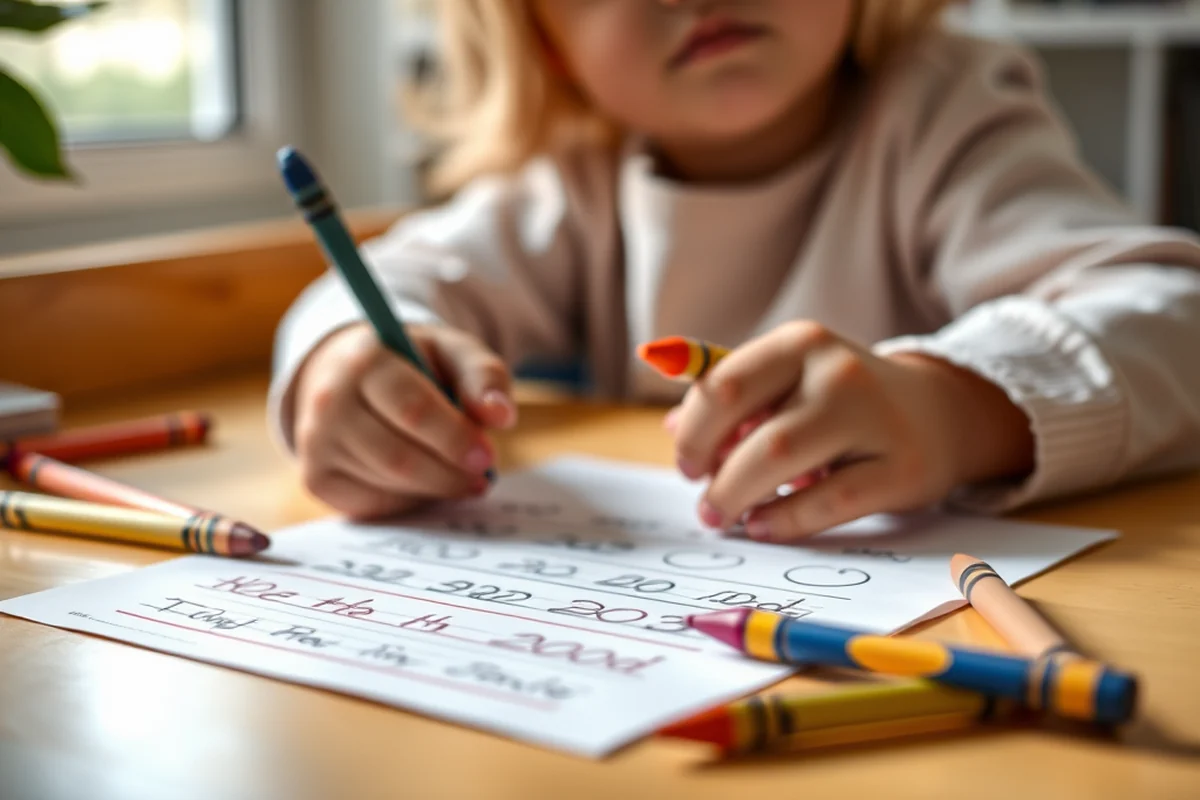
Between the ages of 5 and 6, children begin to form letters and develop the necessary pencil grip. I found that using dotted letter worksheets with a light pencil was an effective way to teach them how to create proper strokes. I used a set of 10 printable worksheets for $1.50 and saw a noticeable improvement in my daughter's letter formation within a month.[1]
Another key activity I used was the 'handwriting without tears' method. This approach uses a variety of tools like playdough, sand trays, and textured paper to make the process engaging. The sand tray was my favorite — it felt like writing in the ocean and kept my child motivated for longer periods.
I also invested in a small set of wooden letters that cost around $10. These helped her recognize and arrange letters in the correct order, which was a game-changer for her confidence and letter recognition.
The sand tray felt like writing in the ocean — my daughter stayed engaged for hours.
Related: Handwriting practice grade printable
Ages 7-8: Developing Consistency and Control
Children between the ages of 7 and 8 are typically ready to move into cursive writing. I found that using a printable cursive worksheet set helped my child develop proper flow and control. These sets were available for as little as $2 and came with step-by-step instructions.
I also incorporated a daily practice routine where she would write her name and a few sentences. This not only helped with consistency but also improved her attention to detail. Over time, her handwriting became neater and more uniform.
Another tool that made a difference was a set of self-correcting letter tiles. These were a bit pricier at $15, but they were reusable and gave immediate feedback if a letter was placed incorrectly. It was a small investment for a big payoff.[2]
Self-correcting tiles provide instant feedback and are a great way to reinforce correct letter formation and spacing.
“I remember the first time I watched my 5-year-old daughter try to write her name.”— Writeitneat editors
Related: Kindergarten handwriting practice pages
Ages 9-10: Refining Skills and Speed

For children aged 9 to 10, the focus should shift to refining handwriting speed and legibility. I used a set of timed handwriting drills that helped my child practice writing faster without sacrificing quality. These drills were available for free online and took about 15 minutes per day to complete.
I also introduced a set of handwriting workbooks that were priced at $12. These included a variety of exercises that targeted different aspects of handwriting, from letter size to line spacing. My child was able to complete a worksheet in about 10 minutes and felt a real sense of accomplishment each time.
One of the most effective tools for this age group was a pencil grip trainer. It cost around $8 and helped my child maintain the correct grip while writing. This not only improved the quality of her writing but also reduced hand fatigue during long writing sessions.
Related: Improve handwriting for adults
Ages 11-12: Finalizing Handwriting Mastery
Children aged 11 to 12 are typically ready to refine their handwriting for academic and personal use. I found that using a set of handwriting journals was a great way to encourage consistent practice. These journals cost around $10 and included prompts and exercises to keep them engaged.
I also used a digital handwriting app that had a free version with enough features to help my child practice cursive and print writing. The app allowed her to track her progress and see improvements over time, which was a big motivator.
Another useful tool was a set of graph paper that helped her maintain consistent letter size and spacing. I found that using graph paper for practice sessions made a noticeable difference in the legibility of her writing within a few weeks.
✍️ Younger Kids (Ages 3-4)
Use tracing activities, playdough, and sensory bottles to build foundational motor skills.
🖋️ Older Kids (Ages 7-12)
Practice cursive, speed drills, and use self-correcting tiles for accuracy and consistency.
📄 No-Prep Option
Printable worksheets and workbooks are perfect for parents who want a quick, no-fuss solution.
👥 Group Version
Use sensory trays and letter tiles for collaborative learning in a classroom or group setting.
🎯 Extension Activities
Incorporate journaling, timed drills, and digital apps to refine handwriting skills further.
| The mistake | Why it happens | The fix |
|---|---|---|
| Using standard pencils for young children. | Standard pencils are too thin and difficult for small hands to grip, which can lead to frustration and poor handwriting development. | Use thick crayons or pencils designed for young children to help them develop a proper grip. |
| Skipping the sensory activities. | Sensory activities are essential for building hand strength and motor skills, especially in younger children. | Incorporate playdough, sand trays, and sensory bottles into the daily routine to support handwriting development. |
| Not practicing consistently. | Handwriting skills require regular practice to develop properly. Skipping practice sessions can slow progress and reduce confidence. | Set aside a specific time each day for handwriting practice, even if it's just 10 minutes. |
| Using the same worksheets repeatedly. | Repetition without variation can lead to boredom and a lack of engagement, which can reduce the effectiveness of practice sessions. | Use a variety of worksheets, workbooks, and digital apps to keep the practice sessions fresh and engaging. |
Related: How to writing practice for kids
Handwriting Practice By Age Grade On A Budget
Related: Kindergarten handwriting practice sheet
Creative Tools and Activities for Young Learners
I've found that using items like chalk, magnetic letters, and even sand trays can transform handwriting into a fun, sensory activity. For instance, drawing letters in chalk on the driveway or using magnetic letters on a fridge allows kids to practice in a dynamic environment without the need for expensive workbooks. These activities are not only affordable but also encourage movement and exploration, which supports early motor development.
Another cost-effective tool I've tested is using a piece of cardboard and some markers to create a reusable letter board. Kids can trace letters with their fingers or write them repeatedly, which helps build muscle memory. I also like using colored pencils or crayons for tracing worksheets, which helps children focus on form and pressure while keeping the activity visually stimulating.
Incorporating storytelling or drawing into handwriting practice can also be a powerful way to maintain engagement. For example, I've had success by asking kids to write a short sentence about a picture they drew or a story they created. This not only reinforces letter formation but also connects handwriting with creativity, making the process more meaningful and enjoyable.
Tracking Progress and Setting Goals on a Budget
I've used a simple, printable progress chart to track handwriting improvements over time. Each week, I mark off milestones such as 'formed all lowercase letters correctly' or 'wrote a full paragraph without lifting the pencil.' This visual reinforcement helps kids see their progress and stay motivated, especially when they’re practicing independently.
Another budget-friendly technique I've employed is setting small, achievable goals with my students. For example, I might set a goal of writing their name without mistakes three times in a row or completing a worksheet with consistent letter sizing. When they hit these targets, I reward them with a sticker or a token that they can exchange for small prizes like a pencil or a bookmark. This system keeps them focused and gives them a sense of accomplishment.
I've also found that recording a short video of a child writing and then reviewing it with them a few days later is an effective way to highlight improvements. It's a free, no-tech method that helps them see their growth and identify areas to work on. I often use this technique with older kids who are refining their speed and legibility, and it has been surprisingly motivating for them.
Common Questions
What are the best materials for young children?
How can I help my child improve cursive writing?
Are there any free resources for handwriting practice?
What are the benefits of using graph paper for handwriting?
References
- Early Learning Guidelines: Nebraska's Birth to Five Learning and ... (education.ne.gov)
- The impact of handwriting and typing practice in children's letter and ... (sciencedirect.com)
Cite this guide
Writeitneat (2026). Handwriting Practice By Age Grade On A Budget. https://writeitneat.com/handwriting-practice-by-age-grade-on-a-budget/
Feel free to cite or share this guide.
Handwriting Worksheet Maker
Type a name or a word list and get a printable tracing worksheet in print or cursive style.
Open it free →