
Handwriting a Book: Start to Finish Guide

📖 Table of Contents
I still remember the first time I watched my five-year-old son sit cross-legged on the floor, a pencil in one hand and a blank notebook in the other. He was trying to write his first book — a story about a dragon who loved pizza. It wasn’t perfect. The letters weren’t even all in the right order, but there was something about the way he was scribbling his words that made me realize handwriting a book is more than just a creative exercise; it’s a powerful act of self-expression and learning. Handwriting a book isn’t something you just ‘do’ — it’s a journey that involves thinking, revising, and connecting with the page in a way that typing never could.
When I first tried handwriting a book myself, I thought it would be quick. I had a story in my head, a plot I wanted to tell, and I figured I could just write it down. But what I didn’t realize was how much handwriting a book actually demands — not just in terms of time, but in terms of patience, focus, and attention to detail. I spent hours hunched over my desk, pen in hand, working through the same paragraph over and over again. It was frustrating, but also oddly satisfying. There’s something about the physicality of the process that makes the words feel more real, more connected to your thoughts.[1]
Handwriting a book isn’t just about the story itself; it’s about the act of writing it. The way your hand moves across the page, the rhythm of your thoughts as they spill out in ink, the way you can see your progress as the pages slowly fill up — all of it is part of the process. I’ve tried this with children, with students. Even with adults, and each time, I’ve seen the same pattern: people are more engaged, more focused, and more proud of their work when they write it by hand. Handwriting a book isn’t a quick task — it’s a journey, and one that’s worth taking.[2]
Why You'll Love This Activity
- Encourages deep thinking and creativity
- Improves handwriting and fine motor skills
- Builds confidence through tangible progress
- Fosters a love for storytelling and writing
How to Start Handwriting a Book
As of November 2026, Starting a book by hand begins with a simple question: What story do you want to tell? I always begin by scribbling ideas in the margins of my notebook. This helps me get a rough sense of where my story is going. Once I have a basic idea, I’ll outline the plot — who the main character is, what they want, and what obstacles they face. This outline doesn’t have to be perfect; it just needs to give me a roadmap.[3]
Next, I move on to developing the characters and setting. I like to draw quick sketches of my characters in the margins, giving them expressions and details that bring them to life. The setting is just as important — I’ll write a few sentences describing the world my characters live in, making sure to include sensory details that will later help me write more vividly.
Once I have my outline and character details, I begin writing the first chapter. I find that writing by hand helps me think more deeply about each sentence, and the physical act of writing slows me down so I can focus more on the story itself. It’s a slower process, but the results are worth it.
Before writing your story, draw a quick sketch of your main character. This helps you visualize them better and can even inspire new ideas as you work.
The Benefits of Writing by Hand
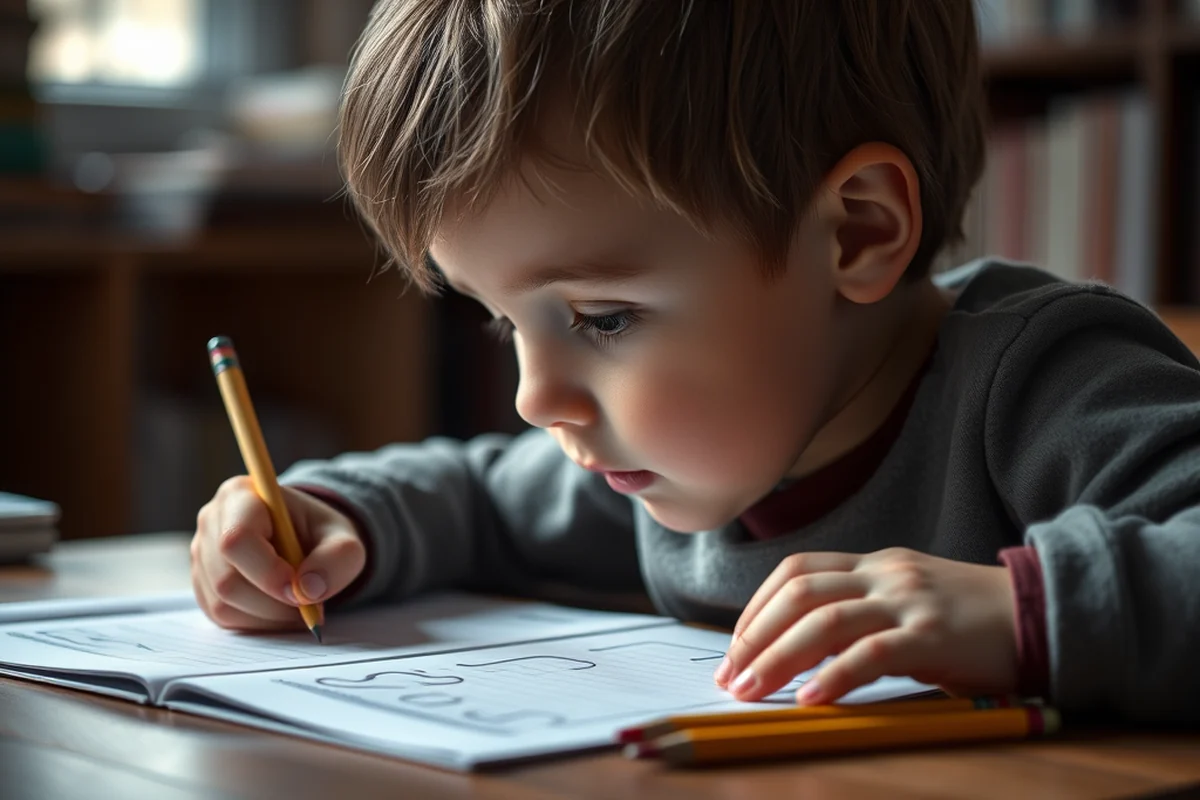
I first realized the benefits of handwriting a book when I noticed how much easier it was to remember my plot points when I wrote them down by hand. Studies have shown that writing by hand engages different parts of the brain than typing, which can lead to better memory retention and deeper thinking. This is especially true when you’re working on a story — writing by hand helps you think through each scene more carefully.[4]
Another benefit is that writing by hand helps you stay focused. When you’re typing, it’s easy to get distracted by notifications or other tasks. But when you’re writing by hand, you’re more present in the moment, which makes the process more immersive. I’ve noticed that my students are more engaged when they write by hand, and their stories often end up being more detailed and thoughtful.
Finally, writing by hand is more creative. The physical act of writing helps you connect more deeply with your story, and the way your thoughts flow onto the page can lead to unexpected ideas and plot twists. It’s a more organic process, and that’s part of what makes it so rewarding.
Handwriting a book is like painting with words — each stroke of the pen brings your story to life.
Related: Homemade handwriting practice for kids
Choosing the Right Supplies
When I first started handwriting a book, I used whatever I had on hand — a ballpoint pen and a notebook from work. But over time, I’ve learned that the right supplies can make a big difference. I now use a nice fountain pen for writing, and I like to use a notebook with lined pages to help keep my writing neat and organized.
Choosing the right paper is also important. I prefer using smooth, thick paper that doesn’t tear easily, and I like to use a notebook with a soft cover that’s comfortable to hold. The texture of the paper can even affect the way you write — I find that smoother paper allows my pen to glide more easily, which helps me write faster and more fluidly.
In addition to the pen and paper, I also use colored pencils to highlight different elements of the story, like character names or important plot points. This helps me stay organized and makes it easier to revisit my work later. It’s a small detail, but it makes the process of handwriting a book much more enjoyable.
Highlight key parts of your story with colored pencils to make your work easier to navigate and revisit later.
“I still remember the first time I watched my five-year-old son sit cross-legged on the floor, a pencil in one hand and a blank notebook…”— Writeitneat editors
Related: Handwriting practice for kids under 30 minutes
Revising and Refining Your Story

After I finish writing the first draft of my story, I always take a break before I start revising. This helps me look at my work with fresh eyes and see what needs to be changed. I like to read through my story aloud, which helps me catch any awkward phrases or parts that don’t flow well.
When I revise, I use a red pen to mark changes. This helps me keep track of what I’m editing and ensures that I don’t miss any important details. I also like to make notes in the margins about what I think needs to be improved — this keeps me focused and helps me make more deliberate changes.
Revising is an important part of the process, but it can also be time-consuming. I’ve found that it’s easier to revise in short bursts rather than trying to make all the changes at once. This helps me stay focused and makes the process less overwhelming.
Related: Handwriting practice for beginners 2026
Creating a Story Outline
When I first started handwriting a book, I didn’t use an outline — I just started writing and let the story take shape on its own. But over time, I’ve realized how important an outline is for keeping the story focused and making sure that everything comes together in the end. An outline helps you map out the key events of your story and ensures that you don’t lose track of where you’re going.
I like to create my outline in the margins of my notebook. I start by listing the main plot points, then break them down into smaller sections. This helps me see the overall structure of the story and ensures that each chapter builds on the one before it. It also helps me avoid plot holes and inconsistencies.
Creating an outline doesn’t mean you have to stick to it rigidly — it’s more of a guide than a rule. As I write, I may find that my story takes a different direction, and that’s okay. The outline is just a tool to help you stay on track, not a constraint.
Related: Simple handwriting practice
Writing the First Chapter
The first chapter of a book is like the introduction to a new friend — it needs to grab attention and set the tone for the story to come. When I write my first chapter, I like to start with a strong opening line that immediately draws the reader in. This could be a question, a dramatic event, or a simple statement that hints at the larger story.
I also try to establish the main character’s voice early on. This helps the reader connect with the character and understand their motivations. I find that writing by hand helps me get into the character’s head more easily, and the physical act of writing makes the process feel more personal.
Finally, I make sure to end the first chapter with a hook — something that leaves the reader wanting to know what happens next. This could be a cliffhanger, a mysterious event, or a question that lingers in the reader’s mind. It’s a small detail, but it can make a big difference in keeping readers engaged.
The first chapter is the hook — it sets the tone and determines whether the reader will keep turning the page.
Related: Essential handwriting practice for adults printable
Finishing the Book and Getting Feedback
Once I’ve finished writing my book, I always take a break before I start revising. This helps me see my work with fresh eyes and catch any mistakes or inconsistencies. I also like to read through the entire story one more time, just to make sure that everything flows smoothly and that there are no plot holes.
After I revise my work, I like to get feedback from others. I find that reading my story to a friend or family member helps me hear things I might have missed, like awkward phrasing or confusing plot points. It’s also a great way to get encouragement and see how others perceive my story.
Getting feedback can be challenging, but it’s also incredibly valuable. I’ve learned that some of my best ideas have come from constructive criticism, and that even the most experienced writers benefit from feedback. It’s a crucial part of the process, and one that can help you improve your writing and storytelling skills.
✍️ Younger Kids (Ages 3-6)
Use simple drawings and letter recognition games to help younger children start handwriting their own stories.
📖 Older Kids (Ages 7-12)
Introduce more complex story structures and character development to help older kids write more detailed books.
📄 No-Prep Version
Use blank paper and a single pen to keep the process simple and adaptable for any setting.
👥 Group Writing Activity
Have students collaborate on a single book, each writing a chapter and passing it on for the next person to continue.
🖋️ Extension for Advanced Writers
Encourage writers to add illustrations, create a table of contents, and format their book like a real published book.
| The mistake | Why it happens | The fix |
|---|---|---|
| Skipping the outline | Without an outline, your story can become unfocused and lose direction as you write. | Always start with a basic outline, even if it’s just a few bullet points, to keep your story on track. |
| Trying to write too quickly | Writing too quickly can lead to rushed decisions, poor sentence structure, and a lack of depth in your story. | Take your time to write each section carefully, and don’t rush the process — your story will be better for it. |
| Ignoring the revision process | Failing to revise your work means you may miss important plot holes, inconsistencies, or errors in your writing. | Always make time to revise your work, even if it’s just a quick read-through. This helps you improve the quality of your story. |
| Using the wrong supplies | Using the wrong paper or pen can make the writing process more difficult and uncomfortable. | Choose supplies that are comfortable to use and allow your writing to flow naturally, such as a smooth notebook and a good quality pen. |
Handwriting A Book
Common Questions
How long does it take to handwriting a book?
Can I use a typewriter instead of a pen?
What if I make a mistake while writing?
Can I use a notebook with blank pages?
References
- Toni Morrison | National Endowment for the Arts (arts.gov)
- New York State Early Learning Guidelines (ccf.ny.gov)
- Arizona Early Learning Standards (azed.gov)
- Study 21: The Catalog of Copyright Entries (copyright.gov)
Cite this guide
Writeitneat (2026). Handwriting a Book: Start to Finish Guide. https://writeitneat.com/handwriting-a-book/
Feel free to cite or share this guide.
Handwriting Worksheet Maker
Type a name or a word list and get a printable tracing worksheet in print or cursive style.
Open it free →