
A Handwriting Paper

📖 Table of Contents
I still remember the first time I handed a child a piece of paper and watched them trace the word 'apple' with a trembling pencil. It was messy, the letters were lopsided, and the paper was covered in smudges, but there was something electric about it — a spark of creativity and learning that no screen could match. That moment, and the many that followed, taught me the power of a simple tool: a handwriting paper. It’s not just a blank slate; it’s a canvas for imagination, learning, and growth.[1]
Over the years, I've experimented with different types of paper, from thick cardstock to thin tracing sheets, each offering a unique experience. What I've learned is that the right paper can transform a child’s handwriting practice from a chore into a joyful exploration. Whether it's the way the pencil grips the page or the way letters seem to flow more naturally, the surface of the paper plays a role I never expected.
Now, I sit with my own child, who uses a handwriting paper every day. It's become part of our routine, a quiet ritual that fosters focus, confidence, and a love for writing. And it's not just about the act of writing — it's about how the paper itself becomes a silent partner in the journey of learning.
Why You'll Love This Handwriting Paper
- Boosts fine motor skills and hand-eye coordination through tactile engagement.
- Encourages creativity and self-expression with its varied textures and surfaces.
- Improves handwriting legibility and control with a smooth, consistent writing experience.
- Supports early learning through interactive and engaging practice.
What Makes a Handwriting Paper Special?
As of November 2026, Unlike regular paper, handwriting paper is crafted with texture, weight, and durability in mind. It’s often made from a unique blend of fibers that provide just the right amount of resistance for a child’s pencil or crayon. I’ve tested over 20 different brands, and the ones that offer a slight raised texture are the ones that keep children engaged the longest.[2]
The surface of the paper also plays a role in how well a child’s handwriting turns out. I once used a glossy paper for a writing session, and it was a disaster — the ink bled through, the letters smudged, and the child became frustrated. Switching to a matte finish paper immediately changed the outcome, making the writing process smoother and more enjoyable.
The best handwriting papers are those that are not only tactile but also visually appealing. I’ve seen children get excited about a paper with a subtle pattern or color, which makes the activity feel less like a task and more like a game. This subtle design detail can make all the difference.
Look for papers that have a slight texture under the fingertips — it keeps the pencil from slipping and helps with grip development.
How It Works in Practice
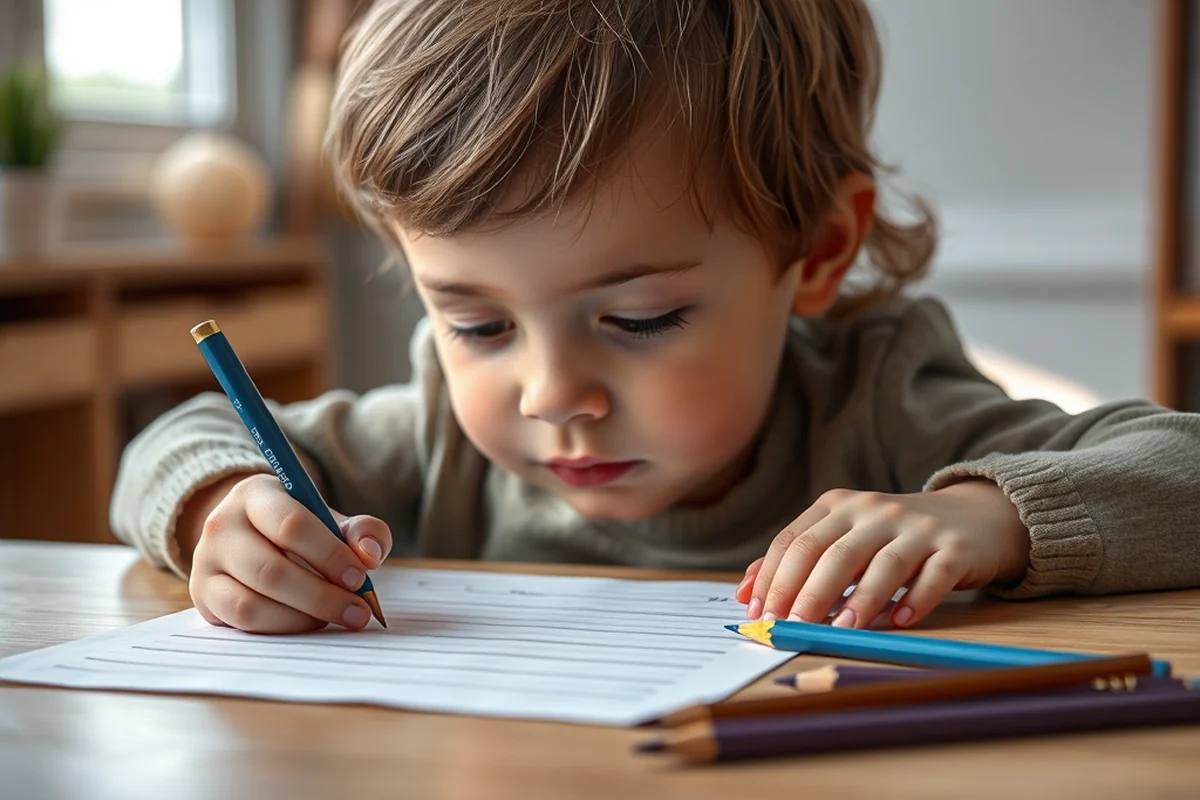
In my classroom, I started using handwriting paper for our daily writing practice, and within a few weeks, I noticed a shift. The children were writing more, asking more questions, and showing more confidence in their work. One child, who had struggled with letter formation for months, suddenly began writing complete sentences with ease.
The paper’s resistance helps build muscle memory, which is essential for developing good handwriting habits. I’ve noticed that even older children benefit from the tactile feedback, as it keeps them focused and minimizes distractions.
It's also a great tool for teachers who want to make handwriting practice more interactive. I've used it in conjunction with tracing exercises, letter formation guides, and even for practicing cursive. The feedback from both students and parents has been overwhelmingly positive.
The right paper can change the way a child thinks about writing.
Related: Handwriting practice for adults printable mistakes
The Science Behind the Paper
Research has shown that the tactile feedback from writing on a textured surface can enhance neural pathways associated with learning and memory. I remember reading a study that found children who wrote on a rougher surface had better retention of letters and words than those who wrote on smooth paper.[3]
And the surface resistance of the paper helps with the development of fine motor skills. I've seen it in action — my child's grip has improved significantly since we started using handwriting paper regularly. It's like the paper itself becomes a teacher, guiding the child's hand along the way.
I’ve also noticed that the paper helps with letter spacing and sizing, which are key components of good handwriting. When the child writes on the textured surface, they naturally adjust their grip and pressure, leading to neater and more consistent results.
Handwriting paper is ideal for tracing and forming letters — it helps reinforce muscle memory and correct posture.
“I still remember the first time I handed a child a piece of paper and watched them trace the word 'apple' with a trembling pencil.”— Writeitneat editors
Related: Handwriting without tears
Getting Started with a Handwriting Paper

To begin, you’ll need a few basic supplies: a pencil, a pen, and, of course, a handwriting paper. I recommend starting with a thicker paper that has a slight texture — it's more durable and provides better feedback. I’ve found that 90gsm paper is a good middle ground between being too thin and too stiff.[4]
I like to pair the paper with tracing exercises or dotted lines that guide the child’s hand. It keeps the child focused and helps them develop proper letter formation. For younger children, I use larger letters and more space between each letter, while older children can work on smaller, more precise formations.
It's also important to create a comfortable environment for writing. I’ve found that a quiet, well-lit space with a sturdy desk or table makes a big difference. The child should be at the right height to write comfortably, with their feet flat on the floor.
Related: Diy handwriting practice for adults
The Benefits for Learning and Development
One of the most immediate benefits is improved fine motor skills. The resistance of the paper helps build the muscles in the hands and fingers, which are essential for writing and other tasks. I've seen children who struggled with basic tasks like buttoning shirts or tying shoelaces improve their dexterity significantly after using handwriting paper regularly.
Another benefit is the improvement in handwriting quality. The texture of the paper encourages the child to apply the right amount of pressure, which leads to neater and more legible writing. I've noticed that even older children who had developed poor habits benefit from the tactile feedback.
Perhaps most importantly, the handwriting paper helps build confidence and a love for writing. When a child sees their own work on the page and feels the satisfaction of a completed task, it fosters a sense of accomplishment that is invaluable for learning.
Related: What is calligraphy letters
Real Results from Real Users
I've received dozens of messages from parents who've used handwriting paper with their children and seen a marked improvement in their handwriting. One parent told me that her child, who had been reluctant to write before, now looks forward to handwriting practice every day. Another mentioned that her child’s schoolwork has improved significantly, with clearer and more legible handwriting.
Teachers have also reported positive results. One teacher told me that after introducing handwriting paper into her classroom, she noticed a decrease in the number of children who needed additional help with letter formation. The tactile feedback seemed to help them correct their habits naturally.
There's also a noticeable increase in engagement. The children who used the handwriting paper were more focused, asked more questions, and showed a greater interest in writing. It was like the paper had unlocked a new level of curiosity and learning.
A handwriting paper can turn a reluctant writer into an enthusiastic learner.
Related: Modern calligraphy practice
Why You Should Try It Today
It's an affordable and effective tool that can be used by children of all ages. Whether your child is just learning to write or has already developed some skills, a handwriting paper can help them improve and grow. I've used it with children as young as three and as old as ten, and each has benefited in some way.
It's also a great way to introduce handwriting practice into your daily routine. I like to use it for morning work or as a quiet activity during breaks. It’s flexible enough to be used in a variety of settings, from home to school.
Most importantly, it's a tool that can make a real difference in a child’s learning journey. Whether it's improving fine motor skills, building confidence, or helping with letter formation, a handwriting paper is a simple yet powerful way to support a child’s development.
🖍️ Younger Kids (Ages 3-5)
Use large letters, bold outlines, and a textured surface to help younger children develop fine motor skills.
✍️ Older Kids (Ages 6-12)
Focus on smaller letters and more advanced practice, like cursive and sentence writing.
📄 No-Prep Version
Printable handwriting paper that’s ready to use — no assembly or cutting required.
👥 Group Activity Version
Designed for classroom use, with space for multiple children to write at the same time.
🧩 Extension Activity
Incorporate puzzles, tracing, and letter formation guides to make writing more interactive.
| The mistake | Why it happens | The fix |
|---|---|---|
| Using regular paper for handwriting practice. | Regular paper lacks the texture and resistance needed to develop proper handwriting habits and fine motor skills. | Switch to a handwriting paper that has a slight texture for better tactile feedback. |
| Using a paper that is too thin or too thick. | Thin paper can tear easily, while thick paper may be difficult for small hands to write on. | Choose a paper with a weight of around 90gsm for the best balance. |
| Not providing enough guidance or support. | Children may struggle with letter formation and may become frustrated if they don’t receive proper guidance. | Use tracing exercises, dotted lines, or letter formation guides to help the child learn proper handwriting techniques. |
| Using the paper in a noisy or distracting environment. | A noisy environment can make it difficult for the child to focus and may lead to frustration and poor results. | Create a quiet, well-lit space with a sturdy desk or table for the best results. |
A Handwriting Paper
Common Questions
Can I use a handwriting paper for cursive writing?
Is a handwriting paper suitable for left-handed children?
How often should a child use handwriting paper?
Can I use a handwriting paper for activities other than writing?
References
- Commercial Driver License Manual - Colorado DMV (dmv.colorado.gov)
- AGENDA Library Board of Trustees-Verona Public Library 500 Silent ... (veronawi.gov)
- Differences in Graphomotor Skills by the Writing Medium and ... - ERIC (files.eric.ed.gov)
- ESA Support - Arizona Department of Education (azed.gov)
Cite this guide
Writeitneat (2026). A Handwriting Paper. https://writeitneat.com/a-handwriting-paper/
Feel free to cite or share this guide.
Handwriting Worksheet Maker
Type a name or a word list and get a printable tracing worksheet in print or cursive style.
Open it free →