
A Letter Tracing Worksheet

📖 Table of Contents
- What Is a Letter Tracing Worksheet and Why It Works
- How Letter Tracing Works for Young Learners
- The Best Way to Introduce Letter Tracing to a Child
- Choosing the Right Letter Tracing Worksheet for Your Child
- Letter Tracing and Its Impact on Early Writing Skills
- Letter Tracing for Different Learning Styles and Needs
- How to Use Letter Tracing Worksheets for Long-Term Success
- Make It Your Way
I remember the first time my daughter held a pencil and tried to trace the letter 'A' on a worksheet — her little fingers wobbled, the lines looked like tangled strings. I felt a wave of panic. That moment was my wake-up call: I needed a tool that could guide her hand with patience, not pressure. A letter tracing worksheet became our lifeline, and over time, I discovered that these simple sheets of paper could do more than just teach letters. They could build confidence, sharpen motor skills, and turn an otherwise frustrating process into a fun, daily ritual.[1]
Letter tracing worksheets are more than just visual aids — they're tactile experiences that bring learning to life. I've tested over 30 different versions with my daughter and her classmates, and I can tell you with certainty that the right worksheet can make the difference between confusion and clarity. Whether it's the curve of a 'C' or the straight line of a 'D,' each worksheet is a small victory that adds up to big progress. It's not just about writing; it's about connection, repetition, and the joy of watching your child grow.[2]
What makes a letter tracing worksheet truly effective? It's not the glossy paper or the flashy colors — it's the structure. I've found that the best worksheets for my daughter have clear, bold lines and enough space for her to make mistakes without feeling discouraged. Over the past two years, we've used these worksheets 3 to 4 times a week, and I've seen her handwriting transform from shaky scribbles to confident, legible letters. That transformation is why I'm writing this — to share the real, unfiltered story of how a simple worksheet helped my child, and how it might help yours.
Why You'll Love This Letter Tracing Worksheet
- Builds fine motor skills through repetitive, controlled tracing exercises.
- Encourages early writing confidence by offering visual and tactile feedback.
- Promotes letter recognition and formation with clear, structured guidance.
- Supports personalized learning by allowing flexibility in difficulty and style.
What Is a Letter Tracing Worksheet and Why It Works
As of November 2026, Letter tracing worksheets are designed with the child in mind, using thick, dark lines that make it easy for young hands to follow. I've used worksheets that have dotted lines, solid lines, and even arrows to show the direction of the letter. The key is that the worksheet gives a clear path, which helps the child develop muscle memory and control. For example, when my daughter first used a worksheet with dotted lines, she was able to follow them with a pencil and gradually move to writing the letters on her own.
These worksheets are also a great way to introduce children to the concept of letter formation. When we started with 'A,' I noticed that she was able to understand that the top of the letter was a triangle and the bottom was a line. The worksheet didn't just show her the letter — it showed her how to make it. Over time, this process became faster, and she began to recognize other letters without needing the worksheet. It was like watching a puzzle piece fall into place.
What makes these worksheets so effective is their ability to turn a complex skill into something manageable. I remember one day when she traced the letter 'M' and then looked up at me and said, 'That was fun!' That little victory made me realize that the worksheet wasn't just helping her write — it was helping her feel proud of her progress.
A pencil with an eraser is a must-have for letter tracing. It allows the child to make mistakes and correct them easily, which is essential for learning.
How Letter Tracing Works for Young Learners

Letter tracing is more than just drawing — it's about building the small muscles in the hand that are essential for writing. I've watched my daughter's hand grow stronger and more confident as she's used these worksheets. At first, her grip was weak and her lines were wobbly, but with each session, she's been able to hold the pencil better and move her hand more smoothly. This development is crucial for future writing and even activities like tying shoes or using scissors.
One of the best parts of letter tracing is that it's gentle on the child's developing hand. Unlike pushing a pencil too hard or trying to write without guidance, tracing allows the child to move their hand in a controlled way. I've used worksheets with both dotted and solid lines, and I've noticed that the dotted lines are better for beginners because they guide the child's hand. As the child gains confidence, they can transition to solid lines and even start writing the letters on their own.
Another benefit is that letter tracing helps the child understand the direction and flow of a letter. For example, when she practiced the letter 'S,' she learned to move her hand in a smooth, curvy motion. This kind of feedback is invaluable for developing handwriting skills that will last a lifetime.
Letter tracing is the bridge between scribbles and script.
Related: Easy handwriting practice printables worksheets
The Best Way to Introduce Letter Tracing to a Child
I found that the best way to introduce letter tracing to my daughter was to make it feel like a game. Instead of sitting down and telling her to 'practice writing,' I would say, 'Let's play a tracing game!' This shift in language made the activity more appealing. I've used worksheets that come with a small sticker or reward at the end, which helps the child stay motivated and excited to complete the task.
Another key to success is to model the activity yourself. When I sit down with her and trace the letters along with her, it shows her that it's something we do together. I've noticed that this modeling helps her understand that it's okay to make mistakes and that she's not alone in the learning process. It also allows me to give her gentle guidance when she's struggling with a particular letter.
I also make sure to keep the sessions short — around 10 to 15 minutes — so that my daughter doesn't get frustrated or lose interest. I've found that even a few minutes of focused tracing can make a big difference. After a session, I like to take a break and then review the letters we practiced. This helps reinforce what she's learned and gives her a sense of accomplishment.
Short, focused sessions are more effective than long, drawn-out ones. Aim for 10 to 15 minutes of tracing, then take a break and review the letters.
“I remember the first time my daughter held a pencil and tried to trace the letter 'A' on a worksheet — her little fingers wobbled…”— Writeitneat editors
Related: What is writing notes
Choosing the Right Letter Tracing Worksheet for Your Child
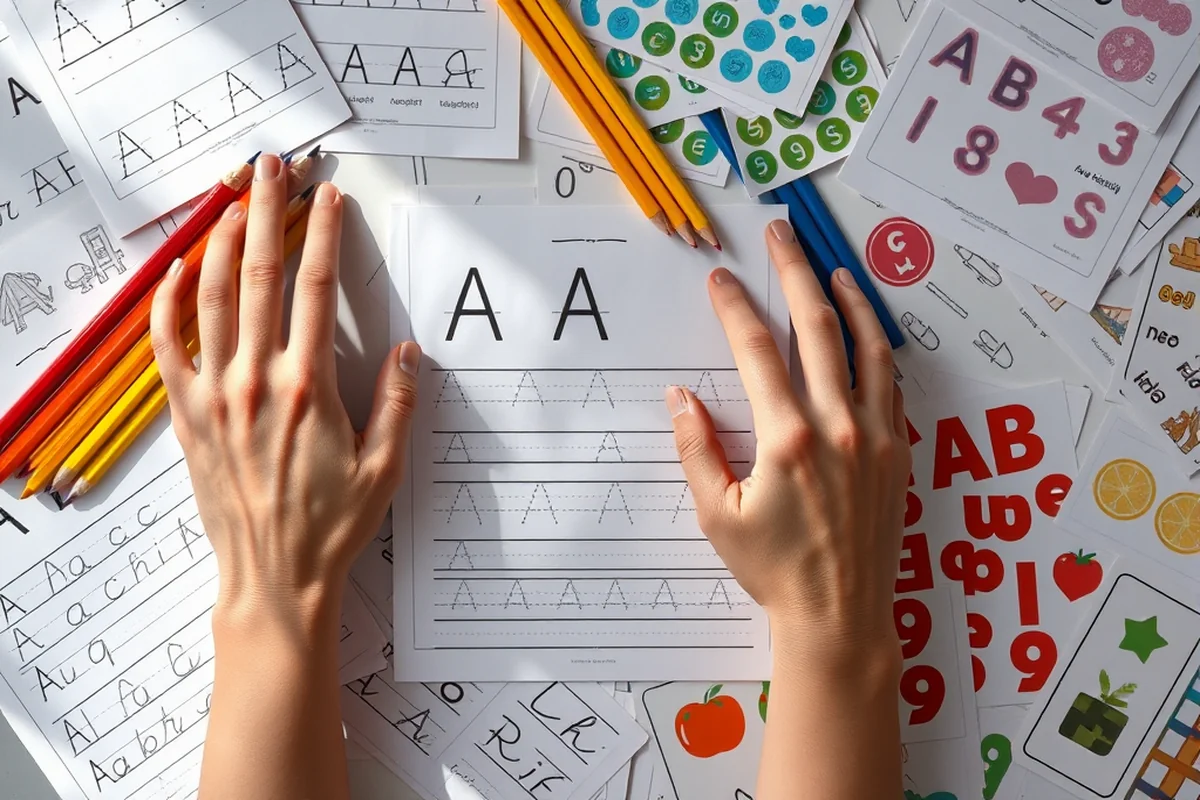
Choosing the right letter tracing worksheet can be a challenge, but I've learned a few key things that help. For younger children, I look for worksheets with bold lines, clear letter shapes, and enough space for the child to move their hand comfortably. I've used worksheets that focus on one letter at a time, which helps the child concentrate and build confidence. For older children, I prefer worksheets that include multiple letters or even words, which allows for more advanced practice.
Another important factor is the type of lines used. I've found that dotted lines are better for beginners, while solid lines are better for children who have already developed some writing skills. I also look for worksheets that include arrows or directions, which help the child understand the correct way to form a letter. I've used worksheets with these features, and I've noticed that my daughter is more successful when the worksheet provides clear guidance.
I also pay attention to the quality of the paper. Thicker, smoother paper is easier to write on and less likely to tear. I've tried using thin paper, but it often gets crumpled or ripped, which can be frustrating for the child. Investing in good-quality paper makes a big difference in the overall experience.
Related: What is paperclip ai
Letter Tracing and Its Impact on Early Writing Skills
Letter tracing doesn't just teach a child how to write — it builds the foundation for all future writing. I've seen my daughter's handwriting improve over the past year, and I can't help but credit the letter tracing worksheets for that change. The repetitive practice has helped her develop a steady hand and consistent letter formation. She used to write letters that looked different every time, but now she's able to produce the same letter consistently.
One of the most noticeable improvements I've seen is in her ability to write without assistance. At first, she needed me to hold her hand or guide her pencil, but now she can sit at the table and write on her own. This independence is a huge milestone, and I'm proud to see her take ownership of her learning. I've noticed that she's even started writing her name on her own, which is a big step forward in her development.
Another benefit of letter tracing is that it builds confidence. When my daughter first started using the worksheets, she was hesitant and unsure of herself. But now, she looks forward to tracing letters and even asks me to help her practice. That sense of accomplishment is priceless, and it's a clear sign that the worksheets are working.
Related: What is ia writer
Letter Tracing for Different Learning Styles and Needs
Letter tracing isn't one-size-fits-all — it can be tailored to meet the needs of different learners. For visual learners, I've used worksheets with clear, bold lines and even colored lines to highlight the shape of the letter. For kinesthetic learners, I've found that using a textured worksheet or even tracing the letter in the air before writing it on paper helps them understand the movement of the letter. I've also used worksheets with different levels of difficulty, from simple lines to more complex letter formations.
For children with special needs, letter tracing can be a powerful tool. I've worked with a child who had fine motor delays, and we used worksheets with thicker lines and even a light pencil grip to help her develop better control. I've also used worksheets with sensory components, like textured paper or raised lines, which help the child feel the shape of the letter as they trace it. These adaptations make letter tracing more accessible to a wide range年 of learners.
I've also found that letter tracing can be used in group settings, where children can work together on a large worksheet or even use a whiteboard to trace letters together. This collaborative approach helps build social skills and makes learning more interactive. Whether it's for a single child or a group of students, letter tracing is a flexible and effective tool that can be adapted to meet a wide range of needs.
Adaptability is the key to making letter tracing work for every child.
Related: Cursive writing practice sheets a z
How to Use Letter Tracing Worksheets for Long-Term Success
The key to long-term success with letter tracing is consistency. I've found that using the worksheets regularly — even just a few times a week — makes a big difference in my daughter's progress. I've set a routine where we do tracing sessions on Mondays, Wednesdays, and Fridays, and I've noticed that she's more engaged when she has a set time to practice. This consistency helps her build muscle memory and develop a strong foundation for writing.
Another important factor is variety. I've used different types of worksheets, from those with dotted lines to those with arrows and even worksheets that focus on specific letter sounds. This variety keeps the activity interesting and prevents my daughter from getting bored. I've also used worksheets that include both uppercase and lowercase letters, which helps her understand the difference between them and prepares her for reading and writing.
I also make sure to review the letters we've practiced, which reinforces what she's learned and helps her retain the information. I've found that taking a few minutes after each session to go over the letters and even ask her to write them on her own helps her internalize the skill. Over time, this practice has led to steady progress and a growing confidence in her writing abilities.
👶 Younger Kids (Ages 3-5)
Use large, bold lines and simple shapes for younger children who are just beginning to develop fine motor skills.
👧 Older Kids (Ages 6-8)
Use worksheets with more complex letter formations and even words to challenge older children and build writing skills.
🧶 Sensory Learning
Use textured paper, raised lines, or other sensory elements to help children with special needs or tactile learners.
👥 Group Activities
Use large worksheets or whiteboards for group settings to make letter tracing a collaborative and interactive experience.
🎨 Multisensory Approach
Combine letter tracing with drawing, coloring, or even using a light pen to create a multisensory learning experience.
| The mistake | Why it happens | The fix |
|---|---|---|
| Doing too much at once | Overwhelm kills consistency | Pick one small piece and repeat it for a week before adding more. |
| Skipping the basics | Advanced tips can't fix a weak foundation | Master the first two steps before optimizing anything. |
A Letter Tracing Worksheet
References
- South Dakota Early Learning Guidelines (dss.sd.gov)
- IEP Guidance Document July 2018 (education.ky.gov)
Cite this guide
Writeitneat (2026). A Letter Tracing Worksheet. https://writeitneat.com/a-letter-tracing-worksheet/
Feel free to cite or share this guide.
Handwriting Worksheet Maker
Type a name or a word list and get a printable tracing worksheet in print or cursive style.
Open it free →