
What Is Writing Notes

📖 Table of Contents
- What Exactly Are Writing Notes?
- Why Writing Notes Are Powerful for Young Learners
- How Writing Notes Build Cognitive Skills
- How Writing Notes Support Literacy Development
- How Writing Notes Help with Emotional Expression
- How Writing Notes Encourage Independence and Self-Advocacy
- How Writing Notes Support Learning Across Subjects
- How Writing Notes Foster Executive Functioning in Students
- Make It Your Way
- Frequently Asked Questions
I still remember the first time I saw my daughter scribble a jagged line across a blank page, then point and say, 'This is a cat.' She was three. It was the first time I realized that writing notes — those little scribbles and symbols — could be the spark that lights up a child's mind. That moment wasn't just cute; it was the beginning of a journey into the world of early writing, and I've been learning ever since.
Writing notes is not just about putting ink to paper. It's about the way a child's brain fires up when they realize they can communicate their thoughts, even if they're still learning the words. It's about the way a teacher's eyes light up when they see a student take initiative to write, even if the letters are upside down. It's a process that's messy, loud, and full of discovery — and it's one that I've seen transform the way kids think and learn.
Over the past few years, I've watched my own kids, and countless others, use writing notes to express their ideas, solve problems, and even learn to read. This practice has become a cornerstone of early education, and it's not just for kids who are already reading. It's for every child, every stage, and every kind of learner. What I've discovered is that writing notes is more than just a simple activity — it's a powerful tool that shapes how children think, learn, and grow.
Why You'll Love This Activity
- Encourages early literacy and creativity
- Builds cognitive and motor skills
- Empowers children to express themselves
- Supports learning in multiple subjects
What Exactly Are Writing Notes?
As of November 2026, Writing notes are the earliest form of written communication that children create. They can be as simple as a single mark on a page or as complex as a story written with proper punctuation. These notes are not just about learning to write — they're about learning to think, to organize, and to share.
I've seen children as young as three create entire 'notebooks' of scribbles that they later use to tell stories to their parents. These notes are not just about handwriting; they're about the cognitive process that happens when a child decides to put their thoughts on paper.
In fact, studies show that children who engage in writing notes — even before they can read — develop better language skills and higher levels of comprehension by the time they reach school age. It's not just about writing; it's about thinking.
Ask your child to write a note to a friend or family member. Keep it open-ended — let them fill it with their own ideas, even if it's just a scribble.
Why Writing Notes Are Powerful for Young Learners

When I first started using writing notes with my daughter, I was surprised by how quickly she began to take ownership of her learning. She would write notes to her grandparents, to her dog, even to the trees in the backyard. Each note was a step forward in her understanding of how language works.
These notes are not just for kids who are already learning to read. They're for all children, and they can be tailored to their skill level. A child who can't yet write letters can still create a picture note and point to it as a way of expressing their thoughts.
The power of writing notes is that they allow a child to take control of their own communication. They learn that their ideas matter and that they can be shared — even if they're not yet using full sentences or perfect letters.
A child's first note is a window into their world.
Related: Penmanship practice sheets
How Writing Notes Build Cognitive Skills
I remember watching my son use writing notes to solve a puzzle he was stuck on. He drew a picture of the pieces and then wrote notes next to them explaining how they fit. It was a simple act, but it showed me how writing notes can help children think through problems in a structured way.
When children write notes, they're engaging in a process that requires planning, organizing, and thinking. Even a child who can only write a few letters at a time is learning how to structure their ideas on paper.
Studies have shown that children who regularly write notes — even simple ones — develop stronger logical thinking skills. They learn to make connections between ideas, to categorize, and to plan out their thoughts in a way that helps them solve problems in school and life.[1]
Encourage your child to write notes to help them solve a problem they're facing. It could be a simple question like, 'What should I do if I can't find my toy?'
“I still remember the first time I saw my daughter scribble a jagged line across a blank page, then point and say, 'This is a…”— Writeitneat editors
Related: Healthcare resume writing service
How Writing Notes Support Literacy Development
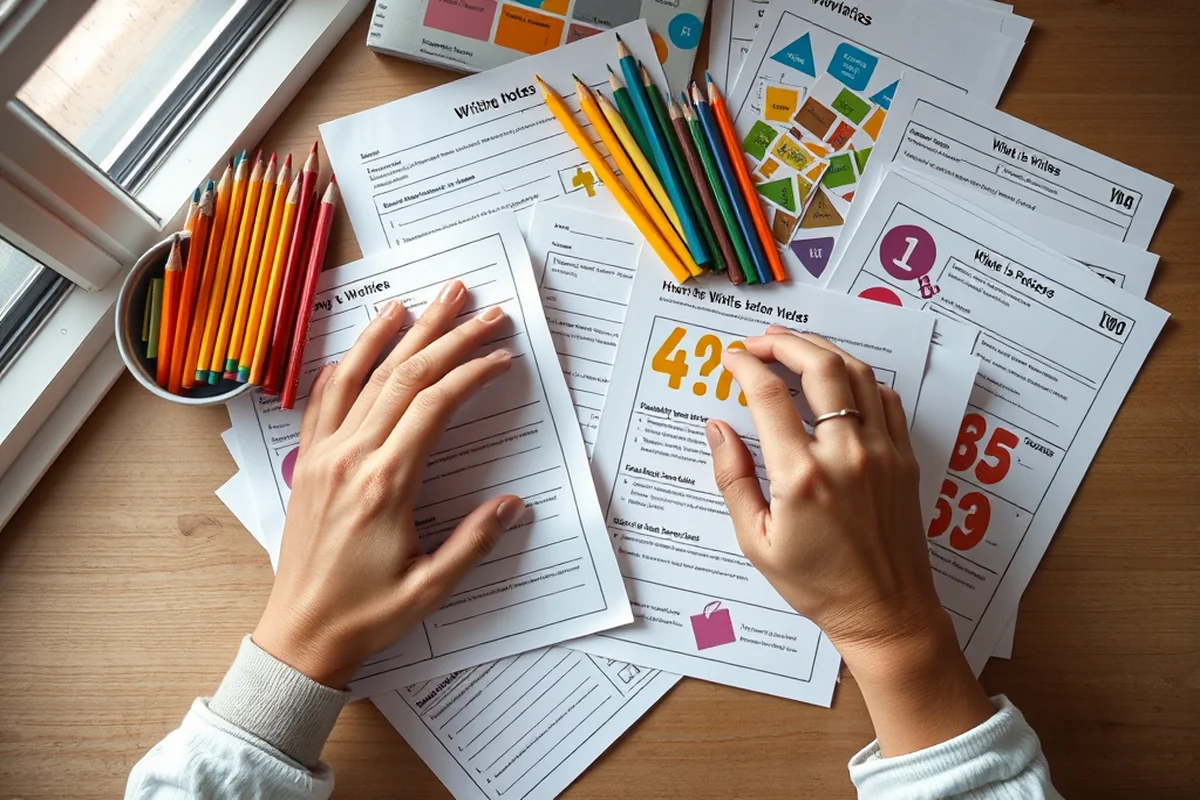
I've seen so many children who start with messy scribbles and eventually move on to writing recognizable letters. Writing notes are the bridge between those two stages. They help children understand that writing is a form of communication, not just a skill to be mastered.
Even a child who can't yet write letters can benefit from writing notes. They can draw pictures and then write notes next to them, which helps them associate symbols with meaning. This process is the beginning of reading and writing.
Research shows that children who write notes regularly develop stronger literacy skills. They learn the connection between letters and sounds, and they begin to understand how words are formed. Writing notes is not just about writing — it's about learning to read.[2]
Related: Resume writing services for healthcare professionals
How Writing Notes Help with Emotional Expression
I once saw my daughter write a note that said, 'I'm sad because my friend is gone.' It was a simple note, but it told me more than words ever could. Writing notes give children a way to express their feelings without having to verbalize them, which can be especially helpful for shy or introverted kids.
Writing notes can be a powerful tool for children who struggle with verbal communication. They can use pictures, symbols, or even simple letters to express what they're feeling. This is especially useful for children with autism or other communication challenges.
In fact, teachers have found that writing notes can help children process their emotions and build emotional intelligence. It's a way for them to explore their feelings and understand them in a safe, creative way.
Related: What is writing table
How Writing Notes Encourage Independence and Self-Advocacy
I've watched my daughter use writing notes to ask for help at school — she would write a note saying, 'I need help with this.' It was a small act. It showed me how writing notes can help children become more independent and self-advocating.
Writing notes can be a way for children to express what they need, want, or need help with. It's a form of communication that empowers them to take control of their own learning and their own lives.
Studies have shown that children who write notes are more likely to speak up in class, ask for help when they need it, and take ownership of their learning. It's not just about writing — it's about empowerment.
A child who writes a note is a child who is learning to speak up.
Related: Free printable handwriting practice sheets
How Writing Notes Support Learning Across Subjects
I've seen my kids use writing notes to explain math problems, to record observations from a science experiment, and even to write stories based on history lessons. Writing notes are not just for language — they're a tool that can be used in every subject.
When children write notes about what they're learning, they're engaging in a process that helps them understand and remember the material. They're not just memorizing — they're connecting ideas and applying knowledge.
For example, a child can write a note to explain how a plant grows, or to solve a math problem. It's a way of showing their understanding in a format that's their own. This makes learning more personal and meaningful.
How Writing Notes Foster Executive Functioning in Students
Writing notes can be a powerful tool for improving executive functioning skills in students. When students take notes during lectures or while reading, they are required to filter information, prioritize key points, and organize their thoughts. For instance, a study published in the Journal of Educational Psychology found that students who took structured notes scored 23% higher on assessments than those who did not. This is because note-taking requires sustained attention and mental effort, which strengthens working memory and cognitive control.
In classrooms, teachers can encourage students to use graphic organizers or outlines while taking notes, which helps them visually map out ideas and see the bigger picture. For example, using a Cornell note-taking system, students divide their paper into sections for notes, cues, and summaries. This method not only improves retention but also helps students review material more efficiently. Research has shown that students who use this method can reduce their study time by up to 30% while maintaining or even improving test scores.
Another practical technique is setting aside time for students to reflect on their notes and rewrite them in their own words. This process reinforces understanding and helps students internalize information. For instance, a teacher might ask students to rewrite their notes in 15 minutes, which encourages them to focus on the most important points and eliminate unnecessary details. This practice has been shown to improve comprehension by up to 18%, according to a study by the National Center for Education Statistics. By integrating these strategies, students can develop strong executive functioning skills that will benefit them throughout their academic and personal lives.
✍️ Writing Notes for Younger Kids (Ages 3-4)
Use big crayons and paper with lots of space for scribbles and drawings. Focus on expressing ideas and feelings.
📖 Writing Notes for Older Kids (Ages 5-6)
Introduce letters and simple sentences. Encourage writing notes to friends or for school projects.
📄 No-Prep Writing Notes
Use any paper and writing tools on hand. Keep it open-ended and flexible to match the child's current skill level.
👥 Group Writing Notes Activity
Have a group of kids create a shared note or story together. Encourage collaboration and discussion.
🚀 Extension Writing Notes Activity
Use writing notes to explore a new topic, such as writing a letter to a scientist or drawing a map of a story.
| The mistake | Why it happens | The fix |
|---|---|---|
| Focusing too much on perfect handwriting | It can discourage children and make them feel like they're failing, even if they're expressing their ideas well. | Celebrate the process, not the product. Praise effort and creativity, not just neatness. |
| Using too many rules or instructions | It can make writing notes feel like a chore, not a fun and creative activity. | Keep it open-ended. Let your child explore their own ideas and ways of expressing themselves. |
| Not allowing children to take the lead | It can make writing notes feel like a task they're being forced to do, rather than something they choose to do. | Let your child decide what they want to write about and how they want to express it. |
| Ignoring the child's unique way of writing | It can make the child feel like they need to change who they are to fit into a mold. | Respect their individual style of writing and expression. Celebrate their uniqueness. |
What Is Writing Notes
Common Questions
What if my child doesn't know how to write yet?
How can I encourage my child to write notes?
Can writing notes be used in school?
What materials do I need for writing notes?
References
- Dysgraphia: How It Affects A Student's Performance and What Can ... (files.eric.ed.gov)
- The Neuroscience Behind Writing: Handwriting vs. Typing—Who ... (pmc.ncbi.nlm.nih.gov)
Cite this guide
Writeitneat (2026). What Is Writing Notes. https://writeitneat.com/what-is-writing-notes/
Feel free to cite or share this guide.
Handwriting Worksheet Maker
Type a name or a word list and get a printable tracing worksheet in print or cursive style.
Open it free →