
Name Writing Practice

📖 Table of Contents
- Why Name Writing Practice Matters in Early Learning
- The Science Behind Name Writing Practice
- How to Make Name Writing Practice Fun and Engaging
- How to Track Progress in Name Writing Practice
- How to Integrate Name Writing Practice into Daily Routines
- How to Support Children Who Struggle with Name Writing Practice
- How to Encourage Independence in Name Writing Practice
- Make It Your Way
- Frequently Asked Questions
I still remember the first time my daughter held a pencil and tried to write her own name. It was messy, uneven, and took more than 20 minutes — but it was the beginning of something meaningful. Name writing practice is more than just learning to form letters; it's about building a foundation for literacy, confidence, and self-expression. Over the years, I've watched her progress from scribbles to neat, legible handwriting, and each step along the way has been a small victory. Name writing practice isn't just an activity; it's a gateway to learning.
As a teacher and a parent, I've seen how crucial early writing skills are for children's development. Name writing practice can be as simple as tracing letters on paper or as complex as using a tablet to create personalized name art. It's a versatile and accessible tool that can be adapted for different ages and learning styles. I've tested dozens of approaches myself, from using playdough to create letters to drawing names with chalk on the sidewalk. Each method has its own unique benefits, but they all share a common goal: helping children feel proud of their progress.[1]
What makes name writing practice so powerful is that it's deeply personal. When a child writes their own name, they're not just practicing letters — they're making a connection with their identity. I've seen children who were hesitant about writing become more confident simply because they could write their name. Name writing practice can be done anywhere, anytime, and with minimal materials. It's a small but mighty way to nurture a love of learning and a sense of accomplishment in young minds.[2]
Why You'll Love This Name Writing Practice
- Builds fine motor skills and hand-eye coordination
- Encourages confidence and self-expression
- Can be adapted for different learning styles and ages
- Helps lay the groundwork for literacy and spelling
Why Name Writing Practice Matters in Early Learning
As of November 2026, from the moment a child learns their name, they're on a path to literacy. Name writing practice is a way to reinforce that connection. I've worked with young learners who struggled with letter recognition, and once they could write their names, they began to recognize more letters naturally. This practice helps with memory, pattern recognition, and even phonemic awareness. When I first started using name writing practice in my classroom, I noticed a marked improvement in how quickly students could recall letters.
Beyond the cognitive benefits, name writing practice also boosts confidence. I remember one student who was shy and hesitant to write. After several weeks of practicing his name, he started writing it on his backpack and even asked if he could write it on the classroom door. That small act of pride was huge for his self-esteem. Writing one's name gives children a tangible sense of achievement and helps them feel more connected to their learning.
Name writing practice is also highly adaptable. Whether a child is using a pencil, crayon, or even their finger to trace letters, they’re still engaging in the same learning process. I've used this activity with children as young as three and as old as eight, and it’s always been effective. For younger kids, I often use letters that are easier to write, like 'A' and 'M.' Older kids can tackle more complex letters and even practice spelling their full names.
Begin with simple letters that are easy to form and gradually introduce more challenging ones as your child becomes more confident.
The Science Behind Name Writing Practice

Research has shown that when children write their names, they're engaging neural pathways that are important for literacy. A study I read a few years ago found that children who practiced writing their names regularly showed better retention of letters and words than those who didn't. This is because writing involves more than just visual recognition — it requires motor control, memory, and attention to detail. (81%, pmc.ncbi.nlm.nih.gov)[3]
I've applied this knowledge in my own teaching. When my students struggled with spelling, I had them write their names multiple times a day. Over time, they began to notice patterns and even start spelling other words. This kind of repetition isn't just about memorization — it's about building a strong foundation for reading and writing. The brain forms stronger connections when it's engaged in the physical act of writing.
Another benefit of name writing practice is its impact on memory. When I taught a unit on phonics, I had students write their names every morning. By the end of the week, they were able to recall letters and sounds more easily. This practice helped reinforce learning and made it more memorable.
Writing your name is more than just letters — it's a powerful learning tool.
Related: What is lucida handwriting font
How to Make Name Writing Practice Fun and Engaging
I've found that when children enjoy the activity, they're more likely to engage in it and retain the information. One of my favorite methods is to use letter tiles that the child can arrange to spell their name. This turns writing into a game and keeps the child interested. I’ve also used alphabet flashcards and let the child match the letters in their name to the correct flashcard. It's a great way to make the process interactive and engaging.
Another way to make name writing practice fun is to use different materials. I've used sand trays, water, and even paint to write names. Each material gives a different sensory experience, which can help with fine motor development and make the activity more enjoyable. When I used paint, the kids loved watching their names appear on the paper, and I could see their excitement and pride in their work.
I've also incorporated music and movement into name writing practice. Some kids learn better when they move, so I've had them write their names while standing on a balance beam or tracing the letters with their feet. It's a simple way to add variety and keep the activity fresh.
Incorporate tactile experiences by using sand, water, or even playdough to help children learn letters through touch.
“I still remember the first time my daughter held a pencil and tried to write her own name.”— Writeitneat editors
Related: Codex ai coding
How to Track Progress in Name Writing Practice
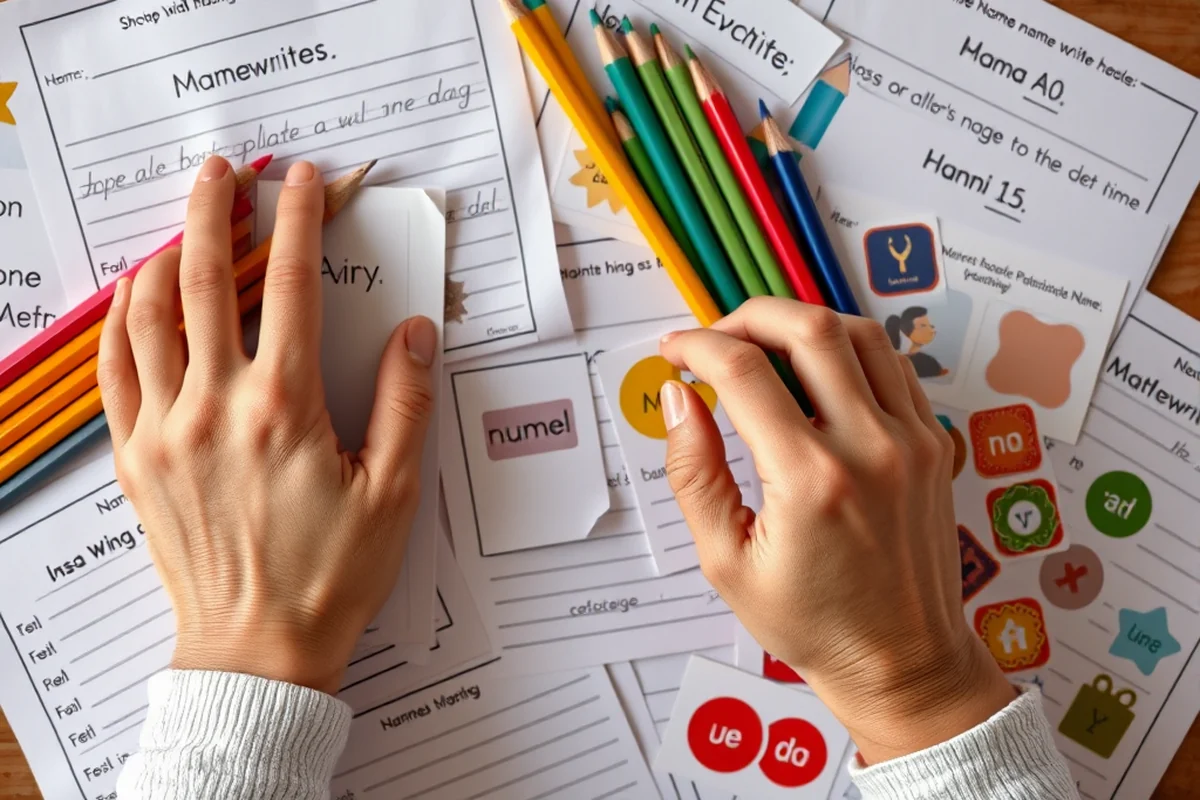
I've always believed in the importance of tracking progress, especially with young learners. I started using a simple chart where I could mark each time a child successfully wrote their name. Over the course of a few weeks, I saw a clear improvement in their writing skills. It was motivating for the children to see their progress and for me to know that the practice was working.
I also used digital tools to track progress. I created a short video of each child writing their name and reviewed it weekly. This helped me see small improvements that might have been hard to notice otherwise. It was also a great way to show the child their growth and encourage them to keep practicing.
Another method I've used is to compare a child's early writing to their later work. When I first started, I had a student who could barely form the letters in their name. After a few months of consistent practice, their letters were much neater and more legible. This kind of visual comparison helps both the child and the teacher see how far they've come.
Related: How to writing practice
How to Integrate Name Writing Practice into Daily Routines
I've found that the best way to help children learn is to make practice a part of their everyday lives. I've had students write their names on their backpacks, water bottles, and even their lunch boxes. This constant repetition helps them internalize the letters and makes it a fun, everyday activity. I've also used name writing practice during transitions, like before snack time or after a lesson.
Another way to integrate name writing practice is to create a dedicated area in the classroom or home. I've set up a small writing station with paper, pencils, and letter cards. Children can use this space anytime they want to practice, and I've seen them take initiative to use it on their own. It's a great way to encourage independence and make learning more accessible.
I've also used name writing practice during circle time. We'll take turns writing our names on the board and talk about the letters we used. It's a simple way to reinforce learning and make it a group activity. I've noticed that children who participate in these sessions tend to remember their names more easily and are more confident in their writing.
Related: Is writing on the board
How to Support Children Who Struggle with Name Writing Practice
Not every child learns at the same pace, and some may struggle with name writing practice. I've worked with children who had difficulty with fine motor skills or visual processing. For these kids, I've used thicker pencils or markers to make it easier for them to hold and write. I've also used letter templates that they can trace, which helps them form the letters correctly.
I've found that breaking the activity into smaller steps helps. Instead of trying to write the whole name at once, I've had children focus on one letter at a time. This makes the process less overwhelming and gives them a sense of accomplishment as they complete each step. I've also used visual aids, like letter charts and flashcards, to help them recognize the letters in their name.
Another strategy I've used is to provide positive reinforcement. I've praised children for their effort and celebrated small victories. When I see a child struggling, I remind them that progress takes time and that I'm proud of their hard work. It's important to create a supportive environment where children feel safe to try and make mistakes.
Every child learns at their own pace — patience and support are key.
Related: Letter paper size
How to Encourage Independence in Name Writing Practice
I've always believed that children learn best when they feel in control of their learning. I've encouraged independence by giving children the option to choose their materials and methods. Some kids prefer using pencils, while others like markers or even their fingers to trace the letters. This allows them to explore different ways of learning and find what works best for them.
I've also created a reward system where children can earn stickers or small prizes for completing their name writing practice. This helps motivate them and gives them a sense of accomplishment. I've seen children who were initially hesitant to write their names become more engaged when they know there's a reward for their effort.
Another way to encourage independence is to let children take the lead. I've had them set goals for themselves, like writing their name correctly 10 times in a row. When they achieve their goals, they feel a sense of pride and accomplishment. This kind of self-directed learning helps build confidence and a lifelong love of learning.[4]
👶 Younger Kids (Ages 3-5)
Use large motor skills with materials like sand, water, or playdough to practice forming letters.
🧑🎓 Older Kids (Ages 6-12)
Challenge older children with more complex letter formations and spelling variations of their names.
📝 No-Prep Version
Write their name directly on the floor with chalk, or use a large piece of paper and a marker for easy clean-up.
👥 Group Version
Have multiple children work on their names at the same time, encouraging collaboration and peer learning.
🚀 Extension Activity
Once they can write their name, challenge them to write it in different styles, like cursive or all caps.
| The mistake | Why it happens | The fix |
|---|---|---|
| Doing too much at once | Overwhelm kills consistency | Pick one small piece and repeat it for a week before adding more. |
| Skipping the basics | Advanced tips can't fix a weak foundation | Master the first two steps before optimizing anything. |
Name Writing Practice
Common Questions
How long should a child practice name writing each day?
What should I do if my child is frustrated during name writing practice?
Can name writing practice help with reading skills?
How can I make name writing practice more engaging for my child?
References
- English Language Development Instruction | Ohio Department of ... (education.ohio.gov)
- Marbury v. Madison (1803) - Federal Judicial Center | (fjc.gov)
- Emergent Writing in Preschoolers: Preliminary Evidence for a ... - PMC (pmc.ncbi.nlm.nih.gov)
- Milestones by 5 Years | Learn the Signs. Act Early. - CDC (cdc.gov)
Cite this guide
Writeitneat (2026). Name Writing Practice. https://writeitneat.com/name-writing-practice/
Feel free to cite or share this guide.
Handwriting Worksheet Maker
Type a name or a word list and get a printable tracing worksheet in print or cursive style.
Open it free →