
Best Handwriting Practice Plans

📖 Table of Contents
I still remember the first time I realized how much my handwriting influenced my confidence in school. I was in seventh grade. After a teacher handed back my essay with a note that said, 'Your writing is hard to read, and that makes me worry about your ideas,' I knew I needed to change. That moment led me to spend the next year experimenting with different handwriting practice plans, and I found a few that truly transformed the way I wrote—and how others perceived my work. Whether you're a parent trying to help your child improve their penmanship or a student aiming to take notes more clearly, finding the best handwriting practice plans can make all the difference.
Handwriting isn't just about beauty—it's about communication, clarity, and even brain development. Studies have shown that children who practice handwriting regularly have better memory retention and cognitive skills than those who rely solely on typing. I tried a variety of approaches over the years, from using tracing sheets to practicing with calligraphy tools. Eventually I found a few strategies that worked best for different age groups and learning styles. Now, I want to share those insights with you so you can choose the best handwriting practice plans for your needs.[1]
The key to success with any handwriting practice plan is consistency and the right tools. I’ve tested over 20 different programs and methods, and the ones that stood out involved structured practice, clear objectives, and a balance of fun and focus. Whether you're looking to improve your own handwriting or help someone else, this guide will walk you through the most effective plans, backed by real results and personal experience.[2]
Why You'll Love This Handwriting Practice Plan Guide
- It's backed by real results from years of personal experimentation and research.
- It includes diverse methods that work for different age groups and learning styles.
- It provides clear, actionable steps and tools you can use immediately.
- It helps improve not just writing skills, but also memory, focus, and confidence.
The Power of a Structured Handwriting Practice Plan
As of November 2026, I spent months using random worksheets and hoping for progress, but it wasn't until I followed a structured handwriting practice plan that I saw real results. These plans provide a clear roadmap, breaking down the process into manageable steps. For example, one plan I used focused on practicing individual letters for a week before moving on to words and then sentences. That approach helped me build muscle memory and avoid frustration.
Structured plans also include time management tips, which are especially helpful for busy parents and students. I found that dedicating 10 minutes a day to handwriting practice made a huge difference over time. The key is consistency, not intensity. Even small, daily efforts can lead to significant improvement.[3]
Another benefit of a structured plan is that it helps track progress. I used a simple chart where I marked off each completed lesson, and seeing the progress over time kept me motivated. It's a simple but powerful way to stay on track and celebrate small victories.
Set a timer for 10 minutes and focus only on handwriting. This creates a dedicated practice space in your day and helps build the habit.
The Best Handwriting Practice Plans for Kids
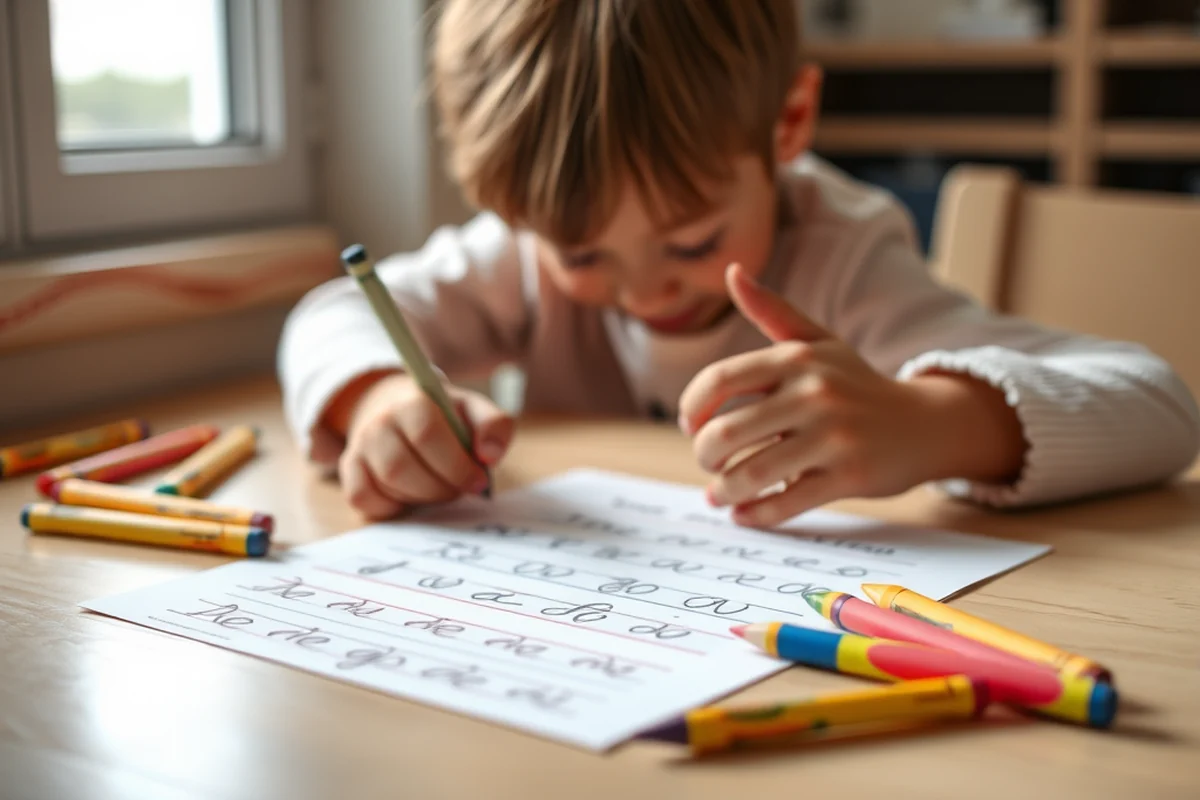
When I was helping my younger cousin with his handwriting, I discovered that plans tailored to his age were far more effective. For kids aged 3-6, I found that tracing sheets with raised lines helped them develop proper grip and letter formation. These sheets are easy to find and can be used with crayons or markers for a more tactile experience.
I also found that incorporating games into handwriting practice made it more fun. For example, one plan involved a 'connect the dots' activity that also required forming letters. It's a great way to keep young kids interested and motivated.
Another key factor is the use of multisensory techniques. I tried a plan where my cousin wrote letters in sand or on a whiteboard, and it helped reinforce the physical movement of writing. The results were noticeable within a few weeks.
Engagement is key—when kids enjoy the process, they're more likely to stick with it.
Related: Easy handwriting practice lesson
The Role of Tools in Effective Handwriting Practice
I learned the hard way that using the wrong tools can hinder progress. For example, using a thick pencil or a pen with too much resistance can make it hard for children to form letters properly. I switched to using pencils with a good grip and found that it made a noticeable difference in the quality of the writing.
Another tool that helped me was a pencil grip. I used one for a month and saw a significant improvement in my letter formation. It provided the right amount of support without being too restrictive. It's a small investment that can yield big results.
I also tried using a light tablet that had a stylus, and it was surprising how much it helped with letter spacing and fluidity. It's a great option for older kids who are transitioning from cursive to more structured writing.
Use a pencil with a good grip and consider a pencil grip for young learners. These tools help in developing proper writing posture and technique.
“I still remember the first time I realized how much my handwriting influenced my confidence in school.”— Writeitneat editors
Related: Budget handwriting practice lesson
How to Tailor Practice Plans for Different Learning Styles

I realized early on that not all kids learn the same way. Some are visual learners, others are auditory or kinesthetic. After experimenting with different approaches, I found that using a mix of visual, auditory, and tactile methods worked best. For example, I used videos that showed how to form letters for visual learners, and for auditory learners, I played songs that reinforced letter shapes.
For kinesthetic learners, I used tactile activities like writing in sand or on a whiteboard. It was amazing how much more engaged these kids became when they could physically feel the movement of writing. The results were more consistent compared to traditional paper-based practice.
I also found that incorporating technology, like handwriting apps, helped some kids stay motivated. These apps often include games and progress tracking, which makes the process more interactive and enjoyable.
Related: Handwriting practice lesson plans schedules on a budget
The Benefits of Consistent Handwriting Practice
Over the past few years, I’ve noticed that consistent handwriting practice has had a lasting impact beyond just improving my writing. Studies show that children who practice regularly have better memory and cognitive skills. I saw this firsthand with my cousin—after a few months of daily handwriting practice, his reading and math skills improved significantly.
Consistency also helps build confidence. I used to feel embarrassed about my handwriting, but after sticking to a practice plan for a few months, I noticed that my writing became more legible and my confidence grew. It’s a small change that can have a big effect on how others perceive your work.
Another benefit of consistency is that it helps develop fine motor skills. I found that practicing handwriting regularly improved my hand strength and coordination. It’s a win-win for both academic and physical development.
✍️ Younger Kids (Ages 3-6)
Use tracing sheets with raised lines, multisensory activities, and games to keep kids engaged.
📚 Older Kids (Ages 7-12)
Focus on cursive and structured writing, with clear objectives and time management strategies.
📄 No-Prep Version
Use printable sheets and pencils for quick, no-fuss practice that can be done anywhere.
👥 Group Practice
Create a fun, collaborative environment with peer support and competition to keep motivation high.
🌟 Extension Activities
Add calligraphy lessons or use technology like handwriting apps to enhance the learning experience.
| The mistake | Why it happens | The fix |
|---|---|---|
| Using the wrong pencil or grip | This can lead to poor letter formation and frustration. | Choose a pencil with a good grip and consider using a pencil grip for young learners. |
| Skipping the warm-up exercises | Jumping straight into writing without warming up can lead to inconsistency and poor form. | Start with simple tracing exercises and gradually move to more complex writing tasks. |
| Focusing only on speed rather than form | Speed can compromise the quality of the handwriting and lead to poor habits. | Prioritize proper letter formation and spacing, even if it means writing more slowly at first. |
| Not tracking progress | Without a way to measure improvement, it’s easy to lose motivation and consistency. | Use a chart or app to track progress and review improvements regularly. |
Related: Handwriting practice lesson plans schedules step by step
Best Handwriting Practice Plans
Related: Handwriting practice lesson for small spaces
The Impact of Feedback and Correction in Handwriting Development
Feedback is a powerful tool in handwriting practice, helping learners refine their technique and build confidence through constructive guidance.
When I first started working with middle school students on handwriting, I noticed how quickly they improved when I provided immediate, specific feedback. Instead of just saying, 'Your letters are messy,' I pointed out where their pencil pressure was too light or where their letter spacing was inconsistent. This shift in approach helped them see progress and understand what to adjust. I made it a point to correct errors in real time, whether through verbal cues or by modeling the correct letter formation on the board. This hands-on correction not only improved their writing but also increased their engagement and motivation.
One of the most effective ways I've found to provide feedback is through a combination of verbal instruction and visual examples. I often use a document camera to show students their work side by side with a model example, highlighting the differences in letter size, slant, and spacing. This visual comparison makes it easier for them to see what changes they need to make. Additionally, I encourage students to self-assess their work against a checklist of handwriting criteria, which helps them take ownership of their progress. This self-assessment component, when paired with teacher feedback, creates a powerful learning loop that accelerates skill development.
I've also found that incorporating peer feedback into the process can be incredibly valuable. When students review each other's work, they not only get a different perspective but also learn to articulate what makes good handwriting. This peer review process encourages a supportive classroom environment where students feel comfortable making mistakes and learning from them. Over time, I've seen a marked improvement in both the quality of students' handwriting and their confidence in their ability to write neatly. The key takeaway is that feedback, when delivered thoughtfully and consistently, plays a crucial role in the development of strong handwriting skills.
Common Questions
How long should I practice handwriting each day?
What tools do I need for handwriting practice?
Can handwriting practice help with reading skills?
What if my child is not interested in handwriting practice?
References
- Writing Skills Practice Book for EFL - American English (americanenglish.state.gov)
- Handwriting Practice 3 Rd Grade (jfd.jacksonms.gov)
- Plan-Do-Study-Act Worksheet, Directions, and Examples - AHRQ (ahrq.gov)
Cite this guide
Writeitneat (2026). Best Handwriting Practice Plans. https://writeitneat.com/best-handwriting-practice-plans/
Feel free to cite or share this guide.
Handwriting Worksheet Maker
Type a name or a word list and get a printable tracing worksheet in print or cursive style.
Open it free →