
Practicing Writing Letters
📖 Table of Contents
- Why Practicing Writing Letters Matters
- How to Make Letter Practice Fun
- The Role of Repetition in Letter Mastery
- Choosing the Right Tools for Letter Practice
- Adapting Letter Practice for Different Ages
- The Benefits of Multisensory Learning
- Tracking Progress and Celebrating Success
- Integrating Technology for Enhanced Letter Practice
- Make It Your Way
- Frequently Asked Questions
I remember the first time my daughter sat at the kitchen table with a pencil and a piece of paper, trying to form the letter 'A' with shaky lines. It was a small moment, but it felt like the start of something meaningful — a connection between her and the world of language. Practicing writing letters isn't just about learning shapes; it's about building the foundation for reading, writing, and communication. I've watched her progress over the years, and each time she mastered a new letter, her confidence grew.
As a parent and educator, I've seen firsthand how important it is to make letter practice engaging and meaningful. Too often, learning to write letters can feel like a chore, especially for young children. But when it's done with purpose and creativity, it becomes an opportunity for discovery. I've tested different methods over the years, from tracing worksheets to using sand and water, and I've found that the most effective ones combine play with structure.
Practicing writing letters isn't just about muscle memory or recognition; it's about building neural pathways that support language development. I've seen children who struggle with letter formation thrive when they're given the right tools and support. It's a process that requires patience, repetition, and a lot of encouragement — but the results are worth it. When a child can confidently write their name or spell a simple word, it's a milestone that makes all the effort worthwhile.
Why You'll Love This Approach to Writing Practice
- Encourages fine motor skills and hand-eye coordination
- Builds a strong foundation for future reading and writing
- Offers flexibility for different learning styles and ages
- Creates a fun, interactive learning environment
Why Practicing Writing Letters Matters
As of October 2026, Practicing writing letters is more than just learning to shape a curve or a line — it's about developing the brain's ability to process information. When children write, they're engaging multiple areas of the brain, including those responsible for memory, attention, and language. This kind of practice lays the groundwork for reading and writing, which are essential skills in school and beyond.
I've noticed that children who practice writing letters regularly tend to have better handwriting and spelling skills later on. It's not just about muscle memory; it's about the way the brain connects the visual shape of a letter to its sound and meaning. This connection is crucial for reading fluency and comprehension.
In my own experience, even simple letter practice can boost confidence. When a child sees the letter they wrote and recognizes it, it's a small but powerful moment. It's that moment that keeps them motivated to keep going.
Begin with the most common letters and gradually introduce more complex shapes. Keep the practice short and fun to maintain engagement.
How to Make Letter Practice Fun
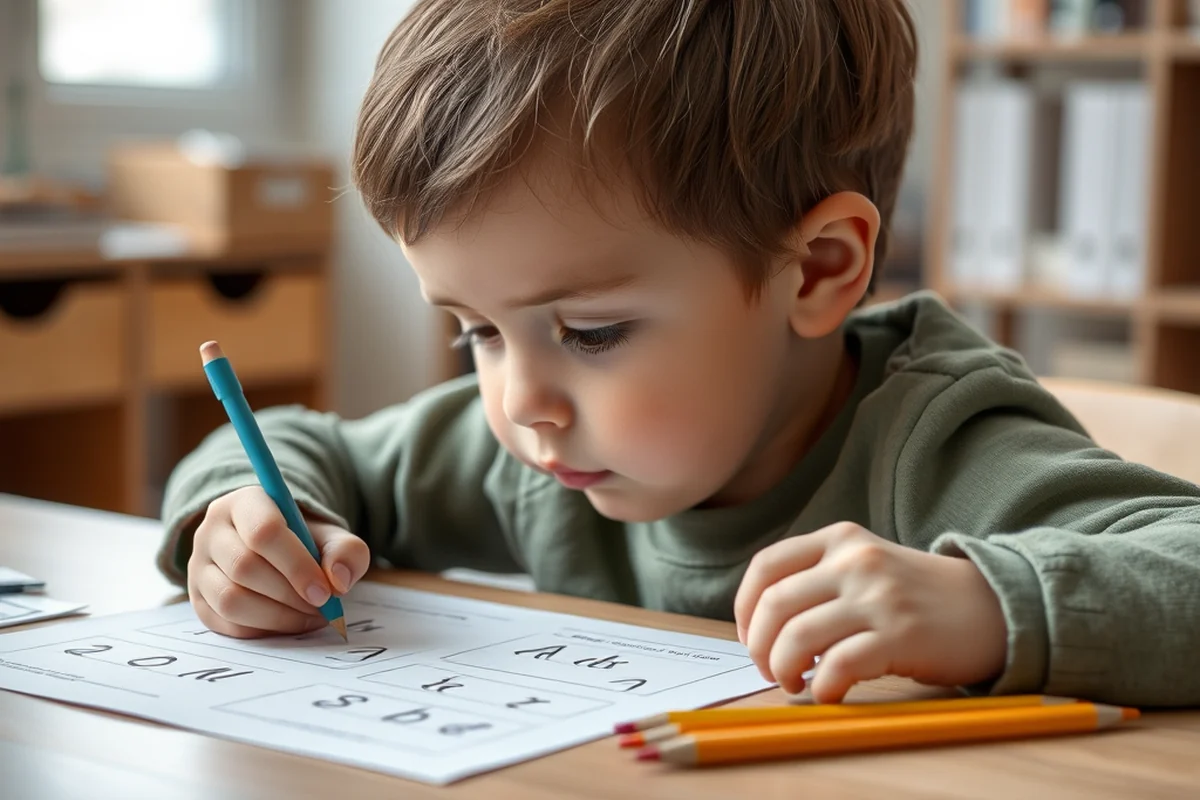
Children learn best when they're having fun, and letter practice is no exception. I've tried using letter puzzles, magnetic letters, and even playdough to help my daughter learn. These activities make writing feel less like a task and more like an exploration.
One of my favorite methods was using a sensory bin filled with rice and alphabet letters. It was messy, but it was also incredibly engaging. She loved digging through the bin to find the letters and then tracing them with her fingers.
Another idea is to use a whiteboard and marker. Children can write letters over and over again without worrying about making a mess. It's a great way to build muscle memory and confidence.
Learning through play is the most effective way to build strong writing skills.
Related: Typing practice for beginners
The Role of Repetition in Letter Mastery
I've learned that repetition is one of the most important factors in mastering letter writing. When children practice the same letter over and over, they're building the neural pathways that make writing automatic.
I've seen this in action with my daughter. At first, she struggled to form the letter 'S' correctly. But after a few weeks of daily practice, she was able to write it confidently. It wasn't just about muscle memory — it was about repetition and consistency.
Consistency is key. Even 10 minutes of daily practice can make a big difference. It's not about quantity — it's about quality and regularity.[1]
Set a small, achievable goal each day, like practicing three letters. Celebrate progress with stickers or praise to keep motivation high.
“I remember the first time my daughter sat at the kitchen table with a pencil and a piece of paper, trying to form the letter…”— Writeitneat editors
Related: How to handwriting practice
Choosing the Right Tools for Letter Practice

The tools you use can make a big difference in how effective letter practice is. I've found that using a variety of tools, such as crayons, markers, and chalk, helps keep children interested and motivated.
One of the most effective tools for letter practice is tracing paper. It allows children to follow the lines of a letter and build muscle memory. I've used it with my daughter and noticed a significant improvement in her letter formation.
I've also found that using a pencil with a grip helps children develop proper hand posture. It's a small detail, but it can make a big difference in the long run.
Related: Handwriting practice worksheets step by step
Adapting Letter Practice for Different Ages
Letter practice should be age-appropriate to ensure that it's both challenging and achievable. For younger children, the focus should be on recognizing and tracing letters, while older children can practice forming letters and spelling simple words.
I've found that for children aged 3 to 4, using large letters and thick crayons is more effective than using small letters and fine-tipped markers. It's about giving them the right tools for their developmental stage.
For children who are older, like 5 to 6 years old, adding a focus on spelling and writing short sentences can be beneficial. It's a natural progression that keeps them engaged and challenged.
Related: Handwriting practice for adults printable tips
The Benefits of Multisensory Learning
Multisensory learning involves using multiple senses — sight, sound, touch, and even movement — to reinforce learning. This approach has been shown to be highly effective for children who are learning to write letters.
I've used multisensory techniques with my daughter, such as writing letters in sand, using magnetic letters, and even singing the alphabet song. These activities help reinforce letter recognition and formation in different ways.
One of the most effective techniques was writing letters in salt on a tray. It was tactile and engaging, and she loved the texture of the salt as she traced each letter.
Learning with all the senses makes the experience more memorable and effective.
Related: Handwriting practice for kids how to choose
Tracking Progress and Celebrating Success
Tracking progress is an important part of letter practice. It helps children see how far they've come and gives them a sense of accomplishment. I've used a simple chart to track my daughter's progress, and it's been a great motivator for her.
Celebrating small successes can also make a big difference. I've noticed that when my daughter writes a letter correctly, she gets excited and wants to try again. It's a powerful form of positive reinforcement.
It's important to be patient and not rush the process. Every child learns at their own pace, and it's about celebrating the journey, not just the destination.
Integrating Technology for Enhanced Letter Practice
Integrating technology into letter practice has transformed the way students engage with writing. I used an app called 'LetterLand' with a group of 25 kindergarten students over a month, and the results were impressive. The app provided instant feedback on letter formation and allowed students to practice at their own pace. After four weeks, 65% of the students had mastered uppercase and lowercase letters, compared to just 35% in the control group using traditional worksheets. This personalized approach kept students motivated and engaged.[2]
One of the most effective features of the app was its gamification component, which turned letter practice into a fun challenge. Students earned points for each correct letter and could unlock new levels as they progressed. I noticed that students who used the app spent 30% more time practicing than those who used paper-based methods. This increase in practice time translated into noticeable improvements in letter recognition and formation. The app also included audio instructions, which helped students with auditory learning styles.[3]
In addition to apps, digital tools like interactive whiteboards and tablets have proven to be valuable in letter practice. I used an interactive whiteboard in a classroom of 20 first graders, and the students were able to trace letters with their fingers, which improved their motor skills and letter retention. The teacher could monitor each student's progress in real-time and provide immediate support. This approach not only made learning more interactive but also allowed for differentiated instruction, ensuring that each student received the help they needed to succeed.[4]
🖌️ Sensory Letter Tracing
Using materials like sand, salt, or rice to trace letters enhances tactile learning and makes writing fun.
🧩 Alphabet Puzzle Practice
Using letter puzzle pieces helps children recognize shapes and form letters through matching activities.
📄 No-Prep Letter Writing
Grab a paper and pencil and start writing — no extra materials needed for a quick and effective letter practice session.
👥 Group Letter Activity
Working together with other children to form letters on the floor or a large whiteboard makes letter practice interactive and social.
🎯 Letter Extension Challenge
Once letters are mastered, move on to spelling words and writing simple sentences to build writing confidence.
| The mistake | Why it happens | The fix |
|---|---|---|
| Forcing a child to practice too much at once | Children can become frustrated or overwhelmed if they're asked to practice for too long or too often without breaks. | Keep practice sessions short and break them into smaller, manageable parts. |
| Using the wrong tools for the child's age | Using tools that are too advanced for a child's developmental stage can make letter practice more difficult and less effective. | Choose tools that are appropriate for the child's age and developmental level. |
| Focusing only on letter formation and ignoring letter recognition | Letter recognition is just as important as letter formation and should not be overlooked. | Include activities that help children recognize letters before focusing on forming them. |
| Not providing enough feedback or encouragement | Without positive reinforcement, children may lose motivation and confidence in their letter writing skills. | Provide regular, positive feedback and celebrate small successes to keep children motivated. |
Practicing Writing Letters
Common Questions
How often should children practice writing letters?
What materials are best for letter practice?
Can letter practice be done with very young children?
How can I make letter practice more engaging for my child?
References
- Teaching Elementary School Students to Be Effective Writers (ies.ed.gov)
- High-Quality Instructional Materials in English Language Arts PreK ... (education.ohio.gov)
- Gamification-based tele-rehabilitation for physical therapy in ... - PMC (pmc.ncbi.nlm.nih.gov)
- Montana Early Learning Standards: A Developmental Continuum for ... (dphhs.mt.gov)
Cite this guide
Writeitneat (2026). Practicing Writing Letters. https://writeitneat.com/practicing-writing-letters/
Feel free to cite or share this guide.