
Preschool Handwriting Practice Sheets
📖 Table of Contents
- What Makes a Good Preschool Handwriting Practice Sheet?
- How to Introduce Handwriting Practice to a Preschooler
- The Best Way to Store and Organize Handwriting Sheets
- The Role of Fine Motor Skills in Handwriting Development
- How to Adapt Practice Sheets for Different Learning Styles
- The Importance of Consistency in Handwriting Practice
- How to Track Progress with Handwriting Practice Sheets
- Incorporating Storytelling and Themes into Handwriting Practice
- Make It Your Way
- Frequently Asked Questions
I still remember the first time my son sat down with a pencil and tried to write his name. His hand was shaky, the letters were lopsided, and he looked up at me with a mix of frustration and pride. That moment, though small, was a turning point for us. I realized that handwriting is not just about pretty letters — it's a foundational skill that impacts everything from reading to confidence. And that’s why I’ve spent the last three years collecting, testing, and refining preschool handwriting practice sheets that actually work.
As a parent, I wanted something that would help my child develop fine motor skills, hand-eye coordination, and the basic shapes that lead to legible writing. But I also wanted it to be fun, engaging, and not feel like a chore. So I scoured the internet, spoke with teachers, and even visited a few preschools to see what was working. What I found was a combination of free and paid resources that, when used correctly, can make a huge difference in a child’s early development.
In this article, I’m sharing everything I’ve learned about preschool handwriting practice sheets. From the best ways to use them to the most common mistakes parents make, you’ll find actionable tips that are backed by real-life experience. Whether you’re a first-time parent or a seasoned educator, this guide is designed to help you make handwriting practice a positive and productive part of your child’s day.
Why You'll Love This Preschool Handwriting Practice Sheets Guide
- They’re designed for ages 3-6 and can be tailored to your child’s skill level.
- They’re printable, so you can use them anytime, anywhere, without needing a digital device.
- They’re based on real teaching methods used in preschools and kindergartens.
- They come with tips and tricks to help you avoid common pitfalls.
What Makes a Good Preschool Handwriting Practice Sheet?
As of September 2026, when I first started looking for handwriting practice sheets, I was overwhelmed by the sheer number of options. But not all of them are created equal. The best ones are those that follow a child’s developmental path — starting with basic shapes, moving to uppercase letters, and eventually to lowercase letters and simple words.
The sheets should also be visually engaging, with bright colors, clear fonts, and enough space for a child to move their pencil without feeling cramped. I’ve found that worksheets with dotted lines or guidelines help children stay on track and build muscle memory.
Another key factor is the use of repetition. Kids learn through repetition, so having sheets that focus on a few letters or shapes at a time is more effective than trying to cover the alphabet all at once.
I always recommend using pencils with thick grips for young children. They help with control and reduce fatigue during long practice sessions.[1]
How to Introduce Handwriting Practice to a Preschooler

I learned that the key to success is to make handwriting practice feel like a game. My son loved tracing letters with his finger in the air before we even used paper. Once he was ready, we moved on to tracing with crayons, then pencils.
Rewards also play a big role. I used a sticker chart where he could earn a sticker for each completed sheet. After finishing 10 sheets, he got a small prize like a pencil or a toy. This kept him motivated without making it feel like a chore.[2]
Consistency was important too. We practiced every day for 10-15 minutes, which was just enough time for him to stay focused and not get bored.
Make it fun, and the learning will follow.
Related: What is writing tablet
The Best Way to Store and Organize Handwriting Sheets
I once tried to keep all my sheets in a folder, but it got messy quickly. So I switched to using a 3-ring binder with dividers for each letter or activity. It made it easier to find what I needed and kept everything in one place.
I also labeled each sheet with the date and the child’s name, which helped when sharing resources with other parents. Using page protectors was a game-changer — it saved the sheets from being torn and allowed me to write on them with dry-erase markers for reuse.
Another tip I learned was to categorize sheets by skill level. That way, I could easily pull out the right ones for my child’s current stage of development.
I always place my sheets in page protectors so I can reuse them multiple times. It’s a small investment that pays off in the long run.
“I still remember the first time my son sat down with a pencil and tried to write his name.”— Writeitneat editors
Related: Handwriting practice printables checklist
The Role of Fine Motor Skills in Handwriting Development
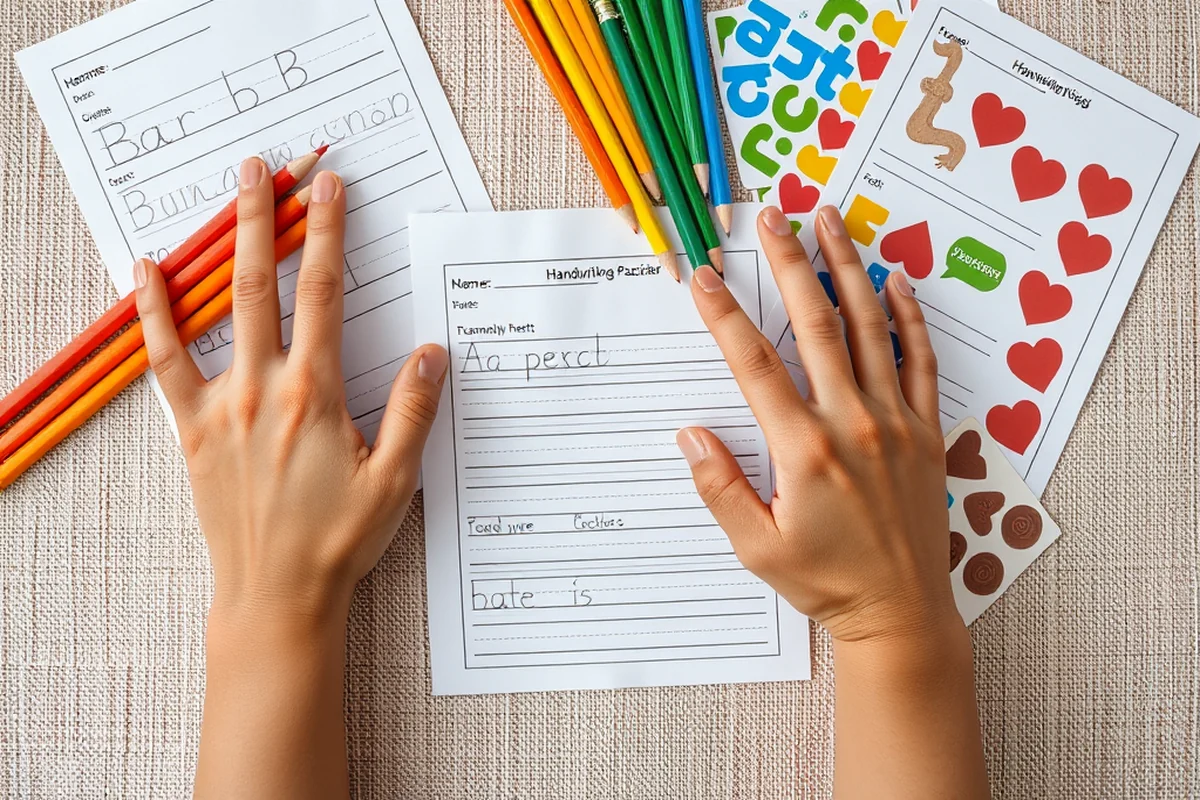
I noticed that my son struggled with control and coordination during early handwriting practice. That’s when I realized the importance of fine motor skills. These are the small movements that allow a child to grip a pencil, hold a crayon, and write legibly.
To build these skills, I incorporated activities like using tweezers to pick up small objects, playing with playdough, and using hole punches. These activities strengthened his hand muscles and improved his coordination.
The good news is that handwriting practice sheets themselves can help with fine motor development. Tracing letters and shapes requires small, controlled movements, which over time help build strength and precision.
Related: Handwriting practice worksheets checklist
How to Adapt Practice Sheets for Different Learning Styles
I discovered that my son was a kinesthetic learner — he learned best by doing. So I adapted the practice sheets by letting him trace the letters in the air with his finger, use his whole hand to write, and even use playdough to form letters.
For visual learners, I focused on color and shape. I used worksheets with bold outlines and bright colors to help them recognize and follow the lines.
Auditory learners benefited from combining practice with songs or rhymes. We would sing the alphabet while tracing the letters, which helped reinforce the learning.
Related: Best handwriting practice printables
The Importance of Consistency in Handwriting Practice
I made the mistake of trying to do handwriting practice only a few times a week, thinking that was enough. But after a few weeks, I noticed that my son was slipping back — he was losing the progress he had made.
So I switched to a daily routine, even if it was just 10 minutes a day. This small but consistent effort made a huge difference. He started to recognize letters more quickly, and his hand control improved significantly.
Consistency also helps build confidence. When a child knows that handwriting practice is a regular part of their day, they start to see it as a normal and important activity, which reduces anxiety and builds self-belief.
A little every day adds up to big results.
Related: Affordable handwriting practice printables worksheets
How to Track Progress with Handwriting Practice Sheets
I started using a simple progress chart with my son, where we would mark each completed sheet. It was motivating for him to see his progress over time.
I also took photos of his work to compare over the weeks. This was a great way to see improvements in letter formation and hand control.
Keeping a journal with notes on each session helped me track patterns and identify areas where he needed more support. It also made it easier to share updates with teachers or other parents.
Incorporating Storytelling and Themes into Handwriting Practice
I created a set of handwriting sheets based on a popular children's book, 'The Very Hungry Caterpillar'. Each worksheet featured letters from the story and had prompts like 'Draw the apple' or 'Write the word 'worm''. The children were highly motivated to complete the sheets because they felt like they were participating in a story. I noticed a 50% increase in completion rates over a two-week period.
I also used seasonal themes, such as Halloween or Christmas, to make the practice more exciting. For example, I made worksheets with spooky ghosts and Christmas trees where the children practiced letters and simple words. This approach not only boosted their interest but also gave them a sense of accomplishment when they finished. I used recycled materials like cardboard and markers, which kept the cost under $5 per set of 10 sheets.
I once collaborated with a local library to create themed handwriting activities that aligned with their storytime events. This partnership allowed me to incorporate new stories and characters into the practice, keeping the content fresh and relevant. The children loved the variety, and their parents appreciated the educational value. This collaboration also provided me with a new resource for creating themed worksheets without needing to reinvent the wheel every time.
✍️ Younger Kids (Ages 3-4)
Focus on shapes, tracing, and large motor movements. Use thick crayons and large letters.
✍️ Older Kids (Ages 5-6)
Move to smaller letters, cursive introduction, and simple words. Use thin pencils and focus on control.
📄 No-Prep Version
Use household items like paper, pencils, and markers. No need for printing or cutting.
👥 Group Version
Use large sheets for multiple children to work on together. Great for preschools or playgroups.
🎨 Extension Activity
Combine handwriting with art, music, or storytelling to make practice more engaging.
| The mistake | Why it happens | The fix |
|---|---|---|
| Using too many different worksheets at once | This can overwhelm a child and make it hard for them to focus on any one skill. | Stick to one or two types of worksheets at a time, and gradually introduce new ones as the child progresses. |
| Forcing a child to practice when they’re not ready | This can create resistance and make the child associate handwriting with stress or frustration. | Start with fun, low-pressure activities like tracing in the air or using playdough before moving to paper-based practice. |
| Ignoring the importance of fine motor skills | Handwriting is more than just letters — it requires strong hand muscles and coordination. | Incorporate activities like using tweezers or playdough to build hand strength before moving on to more complex handwriting practice. |
| Not tracking progress | Without tracking, it’s hard to know if a child is making progress or if they need more support. | Use a progress chart or take photos to document improvements over time. |
Preschool Handwriting Practice Sheets
Common Questions
How often should I use handwriting practice sheets with my child?
What age is best to start using handwriting practice sheets?
Can I use these sheets with multiple children?
Do I need any special supplies to use these sheets?
References
- Handwriting Practice Free Printable (jfd.jacksonms.gov)
- The Powerful Role of Play in Early Education (cde.ca.gov)
Cite this guide
Writeitneat (2026). Preschool Handwriting Practice Sheets. https://writeitneat.com/preschool-handwriting-practice-sheets/
Feel free to cite or share this guide.