
What Is Writing Process
📖 Table of Contents
I once sat at my desk, staring at a blank page, trying to figure out how to start a story I’d been thinking about for weeks. The pressure to get it right, to make it flow, made my brain freeze. I didn’t realize then that I was missing a step — the writing process. It’s not just about putting words on a page; it’s about understanding how your brain works when you write, and how to guide it through the chaos to clarity.
A few months later, I sat down with a notebook and a timer, and I broke the process into pieces. I outlined, drafted, revised, and polished — each step a piece of a larger puzzle. That shift changed everything. I learned that the writing process isn’t a single action, but a series of deliberate, repeatable steps that help turn ideas into stories, essays, or even research papers.
Now, when I teach kids or help writers, I always start with the basics of the writing process. It’s not about being perfect, but about being consistent. It’s about giving your brain permission to wander, then guiding it back to the goal. The writing process is a map — and I’ve walked it enough times to know every twist and turn.
Why You'll Love This Guide to the Writing Process
- You’ll learn how to move from blank page to finished work with confidence.
- You’ll discover how to break complex tasks into manageable steps.
- You’ll find practical tools and techniques that work for every kind of writer.
- You’ll be able to apply these principles to any kind of writing — from school essays to creative stories.
What is the Writing Process?
As of September 2026, the writing process is not a single event, but a cycle that involves planning, drafting, revising, and editing. It begins with brainstorming, where you gather ideas and thoughts on your topic. This step is crucial, as it sets the foundation for everything that follows.
Once you have a list of ideas, the next step is outlining. This is where you organize your thoughts into a structure that makes sense. I’ve found that using bullet points or mind maps helps me get a clearer picture of where I’m going before I start writing the first sentence.
Finally, you move into the drafting and revising stages, where the real work happens. This is where you take your outline and start writing, then go back and refine it. I’ve learned that the first draft doesn’t have to be perfect — it just has to be complete.
Grab a piece of paper and a pen, then draw a circle in the middle. Write your main idea in the center and branch out with related thoughts. It helps you see connections and organize your ideas before you write.
Why Understanding the Writing Process Matters
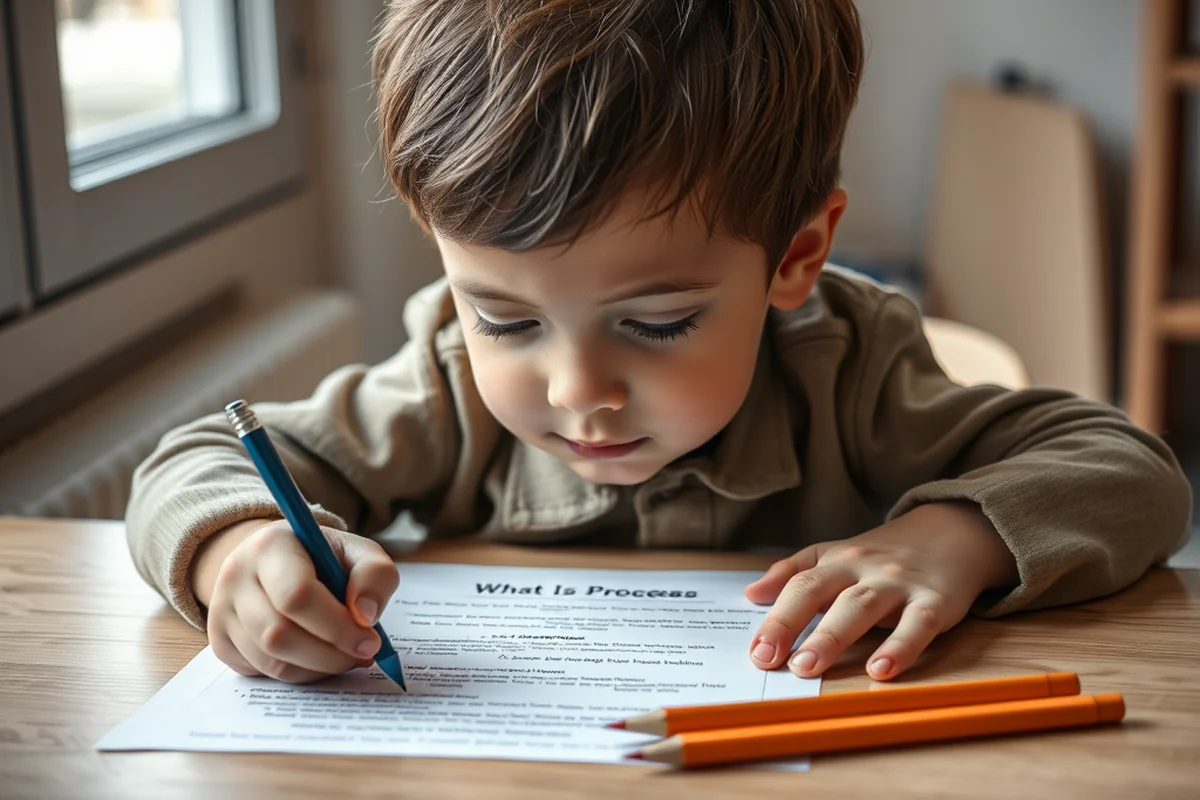
When you know the steps of the writing process, you’re less likely to feel overwhelmed by the blank page. I remember when I first started teaching, I would get frustrated with students who couldn’t seem to start their essays. It wasn’t that they didn’t know what to write — they just didn’t know where to begin.
Breaking the process into smaller steps like brainstorming, outlining, drafting, revising, and editing makes the task feel more doable. This approach has helped me and the students I work with create more coherent and polished work over time.
Understanding the writing process also helps you identify where you’re struggling. If your editing stage is taking forever, it might mean that your draft isn’t clear enough. Knowing that helps you make targeted improvements.
The writing process is your roadmap to better writing.
Related: Handwriting practice for adults
Related: Best handwriting practice
Related: Homemade handwriting practice for kids
Related: What Is A Writing Software
Related: Which Is Ai Is Best For Coding
How to Plan Your Writing
Planning is the first step in the writing process. It’s where you think about your topic, audience, and purpose. I always start with a simple question: What do I want to say, and who is going to read this?
Once I know the answer, I move on to brainstorming. This is where I jot down everything I know about the topic, even if it seems random. I’ve found that this helps me uncover connections I might not have noticed otherwise.
After brainstorming, I use that information to create an outline. I write down the main points and organize them in a logical order. This step is crucial — it helps me stay on track when I start writing the actual piece.
Before you write, ask yourself a simple question: What do I want to say? This helps you focus your thoughts and gives your writing a clear direction.
“I once sat at my desk, staring at a blank page, trying to figure out how to start a story I’d been thinking about for…”— Writeitneat editors
Related: Beginner handwriting practice sheets
Related: Easy handwriting practice for kids
The Power of Drafting

Drafting is the most important part of the writing process — it’s where your ideas take shape. I’ve learned that the first draft doesn’t have to be perfect; it just has to be complete. Many writers get stuck because they wait too long to start writing, thinking they need to have everything right from the beginning.
I’ve used a simple rule: write the first draft in 20 minutes. This helps you get your thoughts out without worrying about grammar or structure. Once you have that first version, you can go back and refine it later.[1]
I’ve tested this method with students, and it works wonders. One student, who used to avoid writing altogether, started drafting in 20 minutes and finished an essay in an afternoon. It changed the way he viewed writing — it became a task he could complete, not a burden he had to avoid.[2]
Revising and Editing: The Real Work
Revising is where you look at your draft and think about how to improve it. This might mean changing the structure, adding more details, or making the language clearer. I’ve found that revising is the most time-consuming part of the writing process, but also the most rewarding.
Editing is the final step. This is where you check for grammar, punctuation, and spelling errors. I always use a checklist for editing — I go through each sentence and make sure it’s clear and correct. I’ve noticed that students often skip this step, but it’s crucial for producing a polished final piece.
I once had a student who was proud of her first draft but didn’t revise it. When we went through the editing process together, she was shocked by how much better the final version was. It taught her the value of taking the time to refine her work.
The Writing Process Is a Cycle
Once you finish your first draft, you’re not done. You go back and revise it, then edit it, and then you might even go back to the planning stage if you realize you need to change your approach. This is part of the writing process — it’s a cycle that you repeat as you refine your work.
I’ve learned that the best writers are those who are willing to go back and revise their work multiple times. It’s not about being perfect — it’s about being intentional. Each time you revise, you bring your work closer to its full potential.
One of my favorite sayings about the writing process is: “Write, then rewrite.” I’ve seen students who skip this step and end up with rough drafts that don’t reflect their best work. Taking the time to go through the cycle helps you produce better results.
Writing is not about the first draft — it’s about the rewrite.
How to Stay Motivated Through the Writing Process
Motivation can be tricky when you’re in the middle of the writing process. I’ve found that setting small, achievable goals helps me stay on track. For example, I might set a goal to write 500 words in one sitting or finish outlining a section of a larger project.[3]
I also use a timer — I give myself 25 minutes to focus on a single task, then take a 5-minute break. This method, called the Pomodoro Technique, helps me stay focused and avoid burnout. I’ve used it with students and seen a huge improvement in their productivity.
Another tip is to celebrate small wins. After completing a section or finishing a draft, take a moment to acknowledge your progress. This helps you stay motivated and reminds you that you’re making progress, even if it’s not perfect yet.
✍️ Younger Kids Writing Process
Tailored for young writers, this version uses pictures and simple steps to guide children through the writing process.
📖 Older Kids Writing Process
Designed for middle and high school students, this version includes more detailed outlines and revision techniques.
🧠 No-Prep Writing Process
This version requires no supplies — just your thoughts and a pen, making it easy to start writing anytime, anywhere.
👥 Group Writing Process
Perfect for classroom or group projects, this version includes steps for collaboration and peer feedback.
🚀 Extension Writing Process
This version adds advanced steps for students looking to improve their writing skills further, including peer review and publishing.
| The mistake | Why it happens | The fix |
|---|---|---|
| Skipping the brainstorming step | Skipping brainstorming can lead to a lack of direction and a weaker final product. | Always take time to brainstorm your ideas before you start writing. This helps you clarify your thoughts and gives your work a stronger foundation. |
| Trying to write the perfect first draft | Trying to write a perfect first draft can lead to writer’s block and frustration. | Remember that the first draft doesn’t have to be perfect. Just write the ideas you have, then go back and revise later. |
| Not revising enough | Not revising enough can result in a rough, unpolished final product that doesn’t reflect your best work. | Take the time to revise your work multiple times. Each revision brings your writing closer to its full potential. |
| Avoiding the editing step | Skipping the editing step can leave your work full of grammar and spelling errors, which can distract readers. | Always go through the editing process, even if it’s just a quick review. Use a checklist to make sure everything is clear and correct. |
What Is Writing Process
Common Questions
What is the best way to start the writing process?
How long should I spend on each step of the writing process?
What should I do if I get stuck during the writing process?
Is the writing process the same for all types of writing?
References
- Teaching Secondary Students to Write Effectively (ies.ed.gov)
- CA Science Framework, Chapter 11 (cde.ca.gov)
- THE FIVE-STEP WRITING PROCESS - Cornerstone (cornerstone.lib.mnsu.edu)
Cite this guide
Writeitneat (2026). What Is Writing Process. https://writeitneat.com/what-is-writing-process/
Feel free to cite or share this guide.