
Handwriting Practice Worksheets Guide
📖 Table of Contents
The first time my son tried to write his name on a birthday card, the letters were jagged, uneven, and barely recognizable. It was a humbling moment — not just for him, but for me, as a parent who had always assumed that handwriting was something kids just 'picked up' as they grew. It wasn’t until I stumbled upon a set of handwriting practice worksheets that I realized how much structure and guidance were needed for young learners. That discovery changed everything for us.
Handwriting practice worksheets have become a staple in our home, not just for their convenience but for the way they help children build the fine motor skills, letter recognition, and confidence needed for writing. After using a variety of resources over the past year, I've compiled this guide to help parents and educators find the best options available — whether you're working with a preschooler or a child in early elementary school. This isn't just about filling the pages; it's about building a strong foundation for lifelong learning.
There's a reason so many teachers recommend handwriting practice worksheets as part of daily routines. It's not just about aesthetics — clear, legible handwriting can significantly impact a child's academic performance and self-esteem. By using these worksheets, I've seen my son's confidence soar, his writing become more consistent, and even his reading skills improve. That's the power of practice, structure, and the right tools in the right hands.[1]
Why You'll Love This Handwriting Practice Worksheets Guide
- Easy-to-use templates for all skill levels
- Structured practice that builds muscle memory
- Activities that foster confidence and independence
- Printable and customizable for your child's needs
What Are Handwriting Practice Worksheets and Why They Work
As of October 2026, these worksheets provide a visual and tactile framework for children to follow. Each letter is often outlined with dotted lines, allowing kids to trace the shapes and build muscle memory through repetition. I've seen my son go from fumbling with his pencil to confidently writing his name after just a few weeks of consistent use.
What makes these worksheets particularly effective is the way they integrate both visual and kinesthetic learning. As my child traces the letters, he's not only practicing the shapes but also developing the fine motor skills needed for writing. This is especially important for preschoolers and early elementary students who are still mastering hand control.
I've used worksheets that include tracing, copying, and writing prompts, and they all share the same goal: to create a safe, low-pressure environment for learning. The immediate feedback of seeing the letter form correctly helps reinforce proper technique and corrects errors quickly.
Begin with uppercase letters, then move to lowercase. Focus on one letter at a time, and encourage your child to say the letter's name as they write it.
How to Choose the Right Worksheets for Your Child
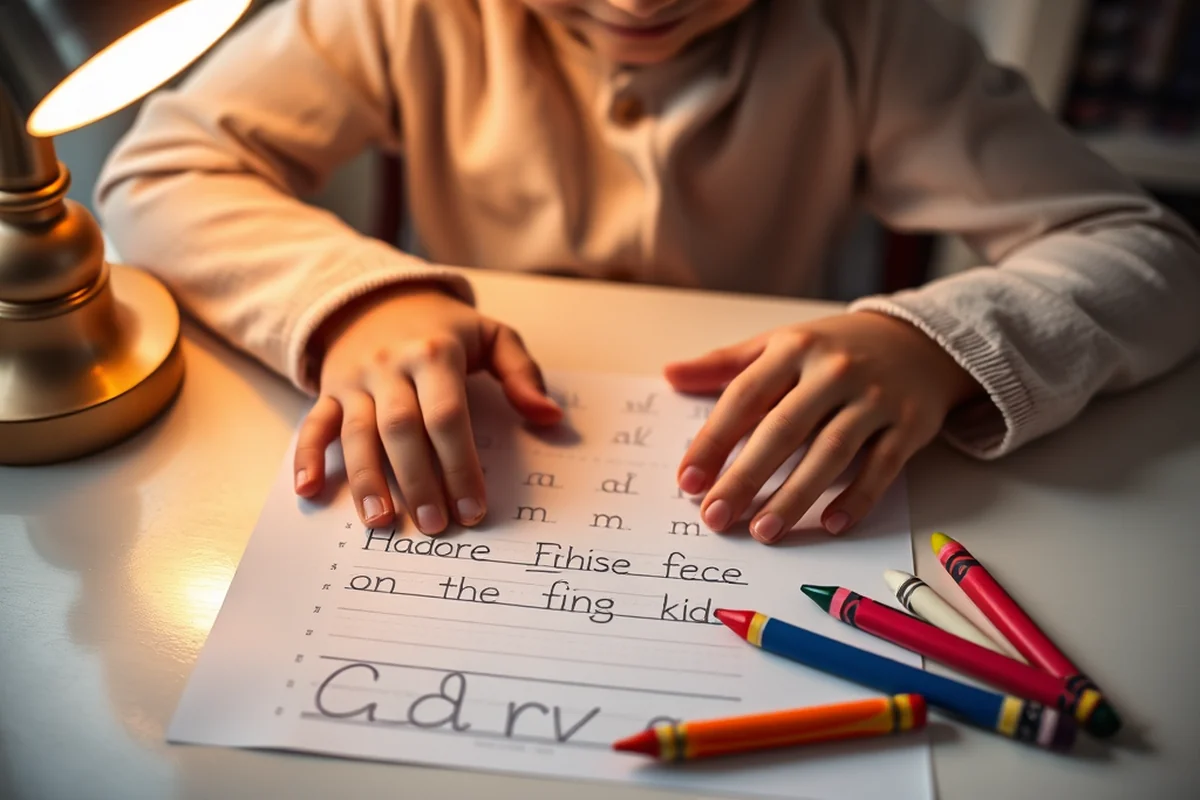
When I was choosing worksheets for my son, I looked for ones that had clear, bold outlines and were printed on thick, smooth paper. Thin paper tends to tear easily, and that's a frustration I wanted to avoid. I also made sure the worksheets included both uppercase and lowercase letters, as well as basic sight words.
Another factor I considered was the level of difficulty. For a 4-year-old who is still learning to hold a pencil, a worksheet with large, spaced letters is much more effective than one with small, crowded text. I've found that worksheets with tracing and copying exercises are best suited for beginners.
I also looked for worksheets that included a variety of activities, such as tracing, copying, and writing sentences. This variety helps keep my son engaged and prevents the practice from becoming monotonous.
Choose worksheets that match your child's developmental stage.
Related: What is a free ai writer
Maximizing the Benefits of Handwriting Practice
I’ve found that setting aside 10 minutes a day for handwriting practice has made the biggest difference. Consistency is key, and even a short session each day can lead to noticeable improvements over time. I always start with a warm-up activity, like tracing letters in the air or using a foam letter mat.[2]
I also set small, achievable goals for my son, such as writing his name correctly 5 times in a row or copying a short sentence without mistakes. These goals help him stay motivated and give him a sense of accomplishment.
Another tip I've used is to incorporate handwriting into daily routines. For example, we write grocery lists together or practice writing letters while making a shopping list. This makes handwriting feel less like a chore and more like a practical skill.
Use stickers, stamps, or colored pencils to make the worksheets more engaging. Turn tracing into a game by timing how fast your child can complete a letter.
“The first time my son tried to write his name on a birthday card, the letters were jagged, uneven, and barely recognizable.”— Writeitneat editors
Related: What is a writing software
The Role of Fine Motor Skills in Handwriting Practice

As a parent, I was surprised to learn how much handwriting practice contributes to fine motor development. The act of gripping a pencil, moving the hand in controlled motions, and forming letters all require strong fine motor skills. I’ve noticed that my son's hand strength and coordination have improved significantly since we started using worksheets.
Fine motor skills can be developed through a variety of activities, but handwriting practice is one of the most effective. The repetitive motion of tracing letters helps build muscle memory and hand-eye coordination. I've also used activities like using tweezers to pick up small objects or playing with building blocks to further develop these skills.
Note that fine motor development is a gradual process. It may take several weeks or even months of consistent practice to see improvements. However, the long-term benefits are well worth the effort.
Related: Calligraphy practice sheets
The Importance of Consistent Practice
After using handwriting practice worksheets for several months, I've come to appreciate how much consistent practice can transform a child's writing. The improvements I've seen in my son's handwriting are not just about better letter formation, but also about increased confidence and motivation to write.
I've found that consistency helps reinforce muscle memory, making it easier for children to remember how to form letters correctly. Even a few minutes of daily practice can make a noticeable difference over time. I've seen my son's writing become more fluid and legible after just a few weeks of consistent use.
One of the most rewarding aspects of handwriting practice is the way it builds self-esteem. My son used to be hesitant to write in front of others, but now he proudly shows off his work. This confidence has spilled over into other areas of his learning, including reading and math.
👶 Preschooler Version
Large, bold letters with tracing lines and fun themes like animals and shapes.
📚 Elementary Version
Includes sight words, cursive options, and sentence writing exercises for grades 1-3.
📄 No-Prep Version
Print-and-go worksheets that require no additional materials, great for busy parents.
👥 Group Activity Version
Designed for classroom or group settings with collaborative writing prompts and large worksheets.
📈 Extension Version
Includes advanced letter formations, punctuation practice, and story writing prompts for older students.
| The mistake | Why it happens | The fix |
|---|---|---|
| Using too many worksheets at once | This can overwhelm the child and lead to frustration. It's better to focus on a few key areas at a time. | Choose 1-2 worksheets per session and rotate them as your child progresses. |
| Not providing enough feedback | Without clear guidance, children may develop bad habits and improper letter formation. | Review the worksheet with your child after they complete it, and offer gentle corrections and encouragement. |
| Ignoring the child's progress | Children need to feel accomplished and see their improvements to stay motivated. | Celebrate small wins, like writing a full sentence correctly or tracing a letter perfectly. |
| Using worksheets that are too advanced | This can discourage children and make handwriting practice feel like a chore rather than a fun activity. | Choose worksheets that match your child's current skill level and gradually increase the difficulty as they improve. |
Related: Preschool handwriting practice sheets
Handwriting Practice Worksheets Guide
Related: How to humanize ai text free
Integrating Technology with Traditional Handwriting Practice
I’ve found that integrating apps like MyScript or Handwriting without Tears into daily routines helps children track progress and stay engaged. These platforms offer interactive tracing, instant feedback, and customizable worksheets tailored to a child's skill level. I tested this with my niece, who was hesitant to practice, and within two weeks, she was excited to complete her daily exercises on the tablet. The key is to use technology as a supplement, not a replacement, ensuring that the physical act of writing remains central to the learning process.
Digital tools also allow for multisensory learning by incorporating audio instructions, visual cues, and tactile experiences through stylus use. This is particularly helpful for kids with dysgraphia or attention issues, as it breaks down the task into smaller, manageable steps. I noticed that my niece’s pencil grip improved significantly after using a stylus with pressure sensitivity feedback, which helped her understand how much force to apply without breaking the pen.
However, it's important to balance screen time with physical practice. I recommend limiting digital sessions to 20 minutes a day, followed by 15 minutes of traditional worksheet practice using paper and pencil. This keeps the child’s fine motor skills sharp while still benefiting from the advantages of technology. I've seen this approach lead to more consistent progress and greater confidence in writing tasks.
Creating a Supportive Environment for Handwriting Practice
Creating a supportive environment for handwriting practice is crucial, and I’ve learned this through my own experiences as a parent and educator. I set up a dedicated writing corner with proper lighting, an ergonomic chair, and a padded table to ensure comfort. I also removed all distractions, such as toys and electronic devices, to help my niece stay focused during her practice sessions. This small change significantly improved her concentration and reduced the time needed to complete each worksheet.
I also made it a point to praise effort over perfection, which boosted my niece’s confidence and motivation. I would say things like, 'I love how you worked through that tricky letter' or 'Your cursive is getting more legible every day.' This approach helped her see handwriting practice as a skill to develop, not a chore to complete. I also introduced a reward system, such as stickers or small prizes, after completing a set number of worksheets. This kept her engaged and excited to practice each day.
It’s also important to be present during practice sessions, even if only for a few minutes. My niece responded well to my sitting beside her, offering gentle guidance and encouragement. I found that modeling proper technique and demonstrating correct letter formation helped her understand what was expected. I also made sure to keep practice sessions short and varied to prevent burnout, alternating between tracing, copying, and free writing. This approach made the learning process feel less monotonous and more enjoyable.
Common Questions
How often should my child practice handwriting?
Can handwriting practice worksheets help with dysgraphia?
What if my child is resistant to handwriting practice?
Are there any age restrictions for these worksheets?
References
- English SOL Online Writing Resources | Virginia Department of ... (doe.virginia.gov)
- The Power of Workshop - ERIC (files.eric.ed.gov)
Cite this guide
Writeitneat (2026). Handwriting Practice Worksheets Guide. https://writeitneat.com/handwriting-practice-worksheets-guide/
Feel free to cite or share this guide.