
What Is Pencil Drawing
📖 Table of Contents
- What is pencil drawing and how does it work?
- The importance of pencil drawing in education
- The history and evolution of pencil drawing
- The different types of pencil drawing techniques
- How to get started with pencil drawing
- The benefits of pencil drawing for children
- Tips for improving your pencil drawing skills
- Make It Your Way
- Frequently Asked Questions
I still remember the first time I held a pencil in my hand and watched my shaky line transform into something I had imagined. Pencil drawing is more than just a hobby or an art form—it’s a language that bridges the gap between imagination and reality. I used to think that drawing required years of training, but the truth is, it starts with a simple line on a page and a willingness to explore.
Pencil drawing is a practice that teaches patience, observation, and control. I discovered this when I tried to sketch a tree one afternoon, only to realize that I had overlooked the intricate details of its bark and the way the light filtered through its leaves. It was a humbling moment, but also an awakening. Pencil drawing is not just about making pretty pictures—it’s about learning to see the world in a more detailed and thoughtful way.
What is pencil drawing? It's a method of creating images using graphite pencils on paper, and it’s one of the most accessible forms of art. I remember when my daughter first tried it at the age of four, and she was able to draw a stick figure with confidence. Pencil drawing is not only a way to express creativity but also a tool for learning and growth. It’s a skill that can be developed by anyone, regardless of their age or experience.
Why You'll Love This Activity
- It builds fine motor skills and hand-eye coordination
- It enhances focus and attention to detail
- It improves visual perception and spatial awareness
- It’s a low-cost, low-stress way to engage with art
What is pencil drawing and how does it work?
As of September 2026, Pencil drawing works by transferring graphite from the pencil to the paper through pressure. The harder the pressure, the darker the line. This simple mechanism allows for a wide range of effects, from light outlines to deep shadows. I once watched a professional artist demonstrate this at a local museum, and it was fascinating to see how different pressures created entirely different textures and tones.
The pencil itself is a tool that is both simple and complex. A standard graphite pencil consists of a wooden casing, a core made of graphite and clay, and a metal ferrule. The harder the pencil (like an HB), the lighter the mark it leaves. The softer the pencil (like a 4B), the darker the line. I used a set of 12 pencils when I first started learning, and I quickly realized how much variation there was in the marks I could create.[1]
Pencil drawing is not just about the tools—it’s about the technique and the intention behind each stroke. I remember my first attempt at shading a sphere, and I struggled to create the illusion of light and shadow. After several failed attempts, I learned that patience and practice were the keys to success.
Begin with simple shapes like circles and squares. Use a light touch for outlines and build up details gradually.
The importance of pencil drawing in education
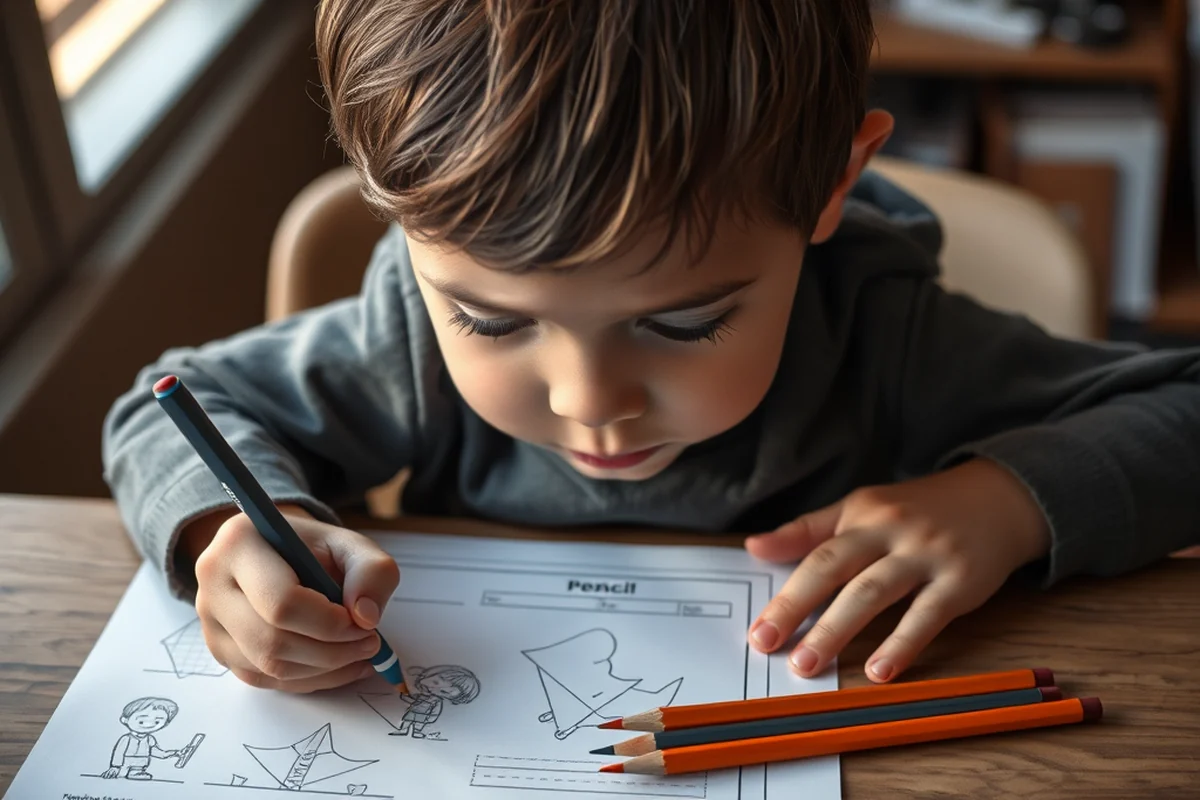
In early childhood education, pencil drawing helps children develop fine motor skills and hand-eye coordination. It also encourages them to think critically and creatively. I used to work with a group of 5-year-olds, and I noticed that those who engaged in regular drawing activities had better concentration and problem-solving abilities.
Pencil drawing is also used in subjects like geometry and science to help students visualize complex concepts. For example, I once had a student who was struggling to understand the structure of the human heart until he drew it by hand. The act of drawing helped him internalize the information in a way that simply reading about it could not.
Beyond academics, pencil drawing teaches perseverance and self-expression. I remember a student who was very shy and hesitant to speak in class. Through drawing, he found a way to communicate his thoughts and feelings, which boosted his confidence and participation in other areas.
Drawing is the language of the child.
Related: Budget handwriting practice ideas
Related: Small handwriting practice worksheets
Related: Handwriting practice for adults that work
The history and evolution of pencil drawing
The history of pencil drawing dates back to ancient civilizations, where early humans used charcoal and other natural materials to create images on cave walls. However, the modern pencil as we know it was not developed until the 16th century when graphite was discovered in England. This discovery led to the creation of the first pencils, which were initially used by miners to mark their tools.
Over the centuries, pencil drawing evolved into a respected art form, with famous artists like Leonardo da Vinci and Michelangelo using pencils to sketch their ideas. I once visited a museum where I saw a collection of da Vinci’s sketches, and it was amazing to see how detailed and precise his lines were.
Today, pencil drawing is used in various fields, from architecture and engineering to fine arts and design. I still use pencils to sketch before painting, and I find that the clarity and precision of pencil drawings make them an invaluable tool in the creative process.
Look up sketches by famous artists like Van Gogh or Dali. Notice how they used pencil to capture their vision before moving to other mediums.
“I still remember the first time I held a pencil in my hand and watched my shaky line transform into something I had imagined.”— Writeitneat editors
Related: Simple handwriting practice for adults printable
Related: Handwriting practice tips for families
Related: Handwriting practice for adults step by step
The different types of pencil drawing techniques
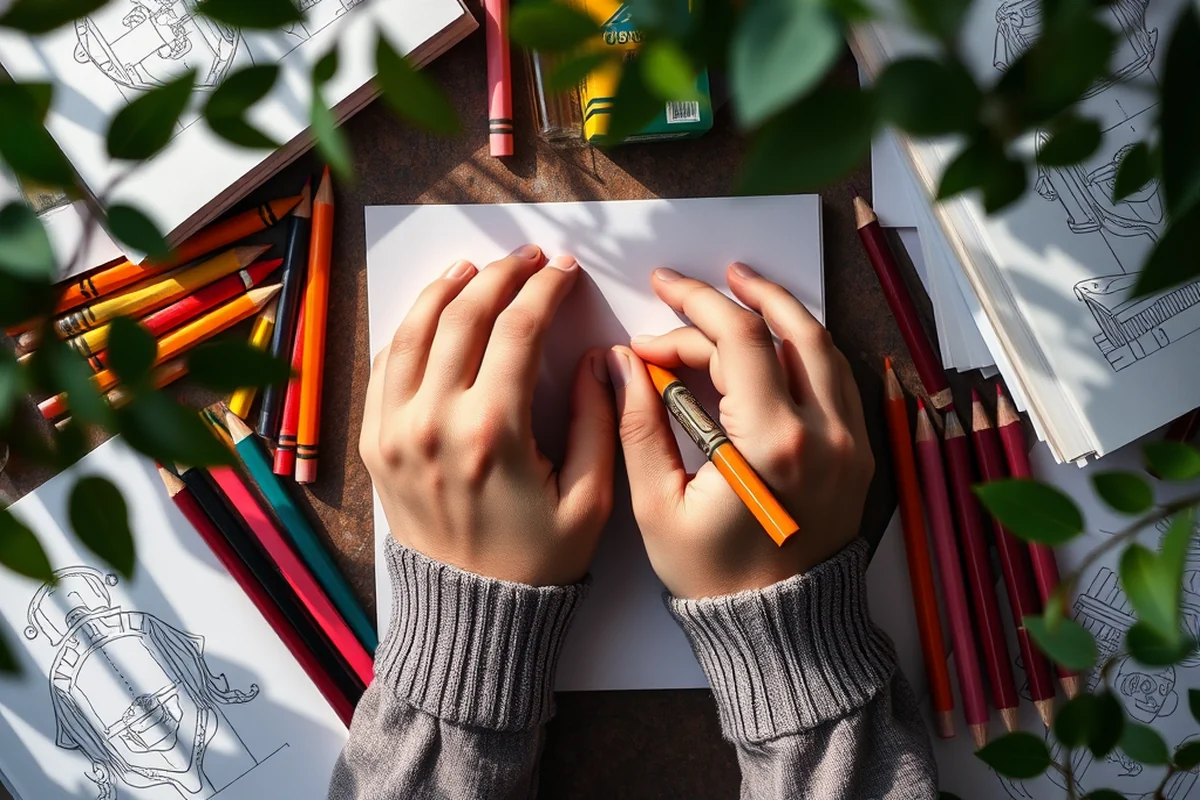
One of the most common techniques is hatching, which involves drawing parallel lines to create shading. This technique is useful for adding depth and dimension to a drawing. I used hatching to create the texture of a tree trunk, and it helped me achieve a more realistic look.
Another technique is cross-hatching, which is similar to hatching but involves drawing lines in different directions to create a denser, more complex pattern. This technique is often used to create darker areas in a drawing. I found that cross-hatching was especially effective when I was trying to draw a shadow under a table.
Blending is another technique that involves using tools like blending stumps or fingers to smooth out the lines and create softer transitions. I used blending to create the illusion of skin tones in a portrait, and the results were much more natural and realistic.
Related: Beginner handwriting practice tips
Related: Small handwriting practice ideas
Related: Natural handwriting practice for adults printable
How to get started with pencil drawing
To begin, you will need a set of pencils, a sketchbook or drawing paper, and an eraser. I recommend starting with a basic set of pencils that includes different hardness levels, such as 2H, HB, and 4B. These pencils will give you a range of line weights and shading options. (9 x, ssfca.gov)[2]
Choosing the right paper is also important. I found that a smooth, thick paper is best for beginners because it allows for more detailed work and is less likely to tear. I used a 100gsm paper when I first started, and it worked well for my needs.
Once you have your supplies, it’s time to practice. Start with simple shapes and gradually move to more complex subjects. I found that practicing regularly was the key to improving my skills. I used to draw for 15 minutes a day, and over time, I noticed a significant improvement in my technique.[3]
Related: Handwriting practice ideas
Related: Best handwriting practice
Related: Handwriting practice for small spaces
The benefits of pencil drawing for children
For children, pencil drawing helps develop fine motor skills, which are essential for writing and other tasks. I used to work with a group of 4-year-olds, and I noticed that those who drew regularly had better grip strength and coordination. They were also more confident in using pencils for writing.
Pencil drawing also encourages creativity and imagination. When children are given the freedom to draw whatever they want, they often create unique and imaginative pieces. I remember one child who drew a flying castle with wings, and it was amazing to see how detailed and imaginative his drawing was.
In addition to these benefits, pencil drawing helps children learn to focus and concentrate. I noticed that my students who engaged in regular drawing activities were more attentive in class and had better problem-solving skills. Drawing also provided them with an outlet for their emotions and thoughts, which was especially helpful during stressful times.
Every child is an artist. The problem is how to remain an artist once we grow up.
Related: Beginner handwriting practice for adults
Related: Easy handwriting practice for kids
Related: Adult easy handwriting practice for families
Tips for improving your pencil drawing skills
One of the best ways to improve your skills is to practice regularly. I used to draw for at least 15 minutes every day, and over time, I saw a noticeable improvement in my technique. Regular practice helps build muscle memory and makes drawing feel more natural.[4]
Another tip is to study the work of other artists and learn from their techniques. I often look up tutorials and watch videos to see how professional artists create their drawings. I also keep a sketchbook where I practice different techniques and track my progress.
Finally, don’t be afraid to make mistakes. Every artist makes mistakes, and they are a natural part of the learning process. I remember my first attempt at drawing a portrait, and it was far from perfect. But I used that experience to learn and improve my skills over time.
🎨 Younger Kids (Ages 3-5)
Use thick crayons or chunky pencils to make drawing easier for little hands. Focus on large shapes and colors.
✏️ Older Kids (Ages 6-12)
Introduce more detailed techniques like shading and blending. Encourage them to draw from life or imagination.
📄 No-Prep Version
Use any paper and a pencil. No need for specialized tools or materials. Perfect for on-the-go learning.
👥 Group Activity
Have children draw the same subject and then compare their work. Encourages collaboration and discussion.
🖼️ Extension Activity
After drawing, have children color their work with colored pencils or markers for a more complete piece.
| The mistake | Why it happens | The fix |
|---|---|---|
| Pressing too hard on the pencil | Pressing too hard can cause the paper to tear and make it difficult to erase mistakes. | Use a light touch for outlines and build up pressure gradually for shading. |
| Skipping the basics and jumping to advanced techniques | Trying to draw complex subjects without mastering the fundamentals can lead to frustration and poor results. | Start with simple shapes and gradually move to more complex subjects as your skills improve. |
| Not practicing regularly | Irregular practice can lead to slow progress and a lack of skill development. | Set aside time each day for practice, even if it’s just 10-15 minutes. |
| Ignoring the importance of erasing and revising | Trying to create perfect drawings from the start can be discouraging and prevent learning from mistakes. | Use an eraser to correct mistakes and revise your work as needed. Every artist revises their drawings. |
What Is Pencil Drawing
Common Questions
What kind of paper is best for pencil drawing?
How long does it take to get good at pencil drawing?
What are the best pencils for beginners?
Can pencil drawing help with school subjects like math or science?
References
- Drawing as a Space for Social-Cognitive Interaction - ERIC (files.eric.ed.gov)
- Activity Guide winter 2025 - City of South San Francisco (ssfca.gov)
- Lesson 6: Investigating an Outbreak - CDC Archive (archive.cdc.gov)
- How To Draw Faces With Pencil (training.jacksonms.gov)
Cite this guide
Writeitneat (2026). What Is Pencil Drawing. https://writeitneat.com/what-is-pencil-drawing/
Feel free to cite or share this guide.